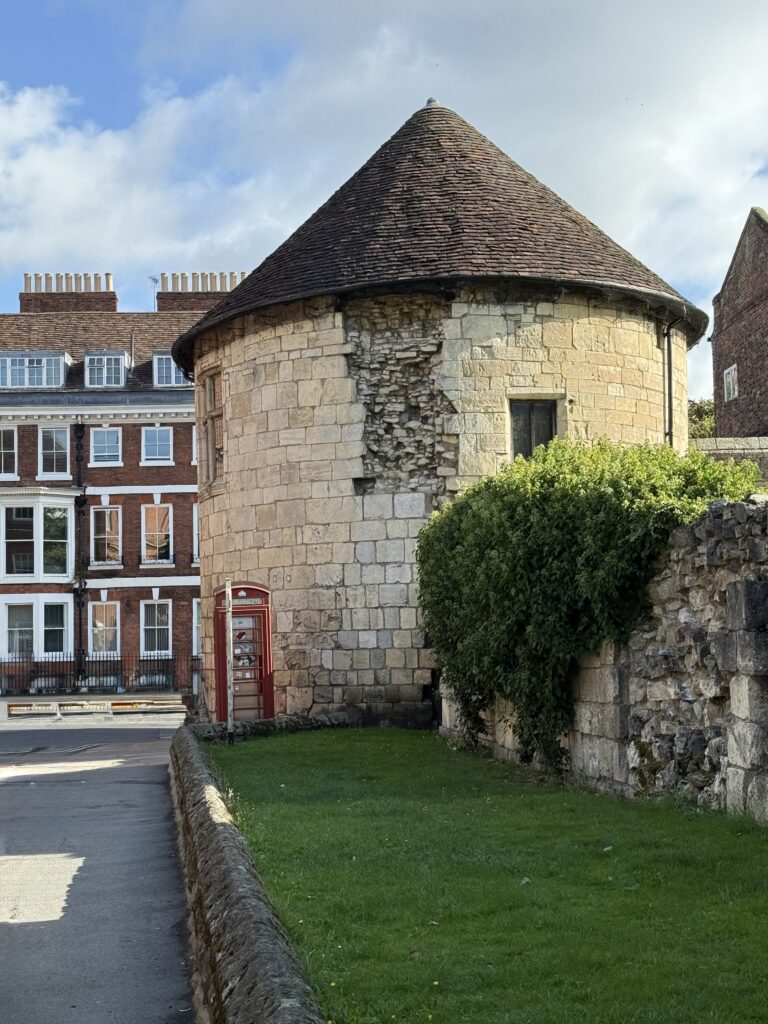
We didn’t waste a moment of our only full day in York, and it was a blast. After a full English breakfast at our B&B (bacon, sausage, egg, grilled tomato, baked beans and toast!), we walked around the Hamlet of St. Marysgate, where the wall and tower had Roman roots.
We got to Exhibition Square in time to meet our guide for a tour of the old city. We had signed up for the free tour, not knowing what a gift it would be. There is an association of volunteer guides that has been operating since the 1950s, and our guide, Nick, was animated, funny, dramatic and informative. We were entranced for the full 2-1/2 hours.

We spent a lot of time in the area of what was originally a Benedictine monastery, where 50 monks lived in luxury while people outside the gates lived in poverty (not very devout followers of St. Benedict, to be sure). The buildings were on the site of a Roman fort.
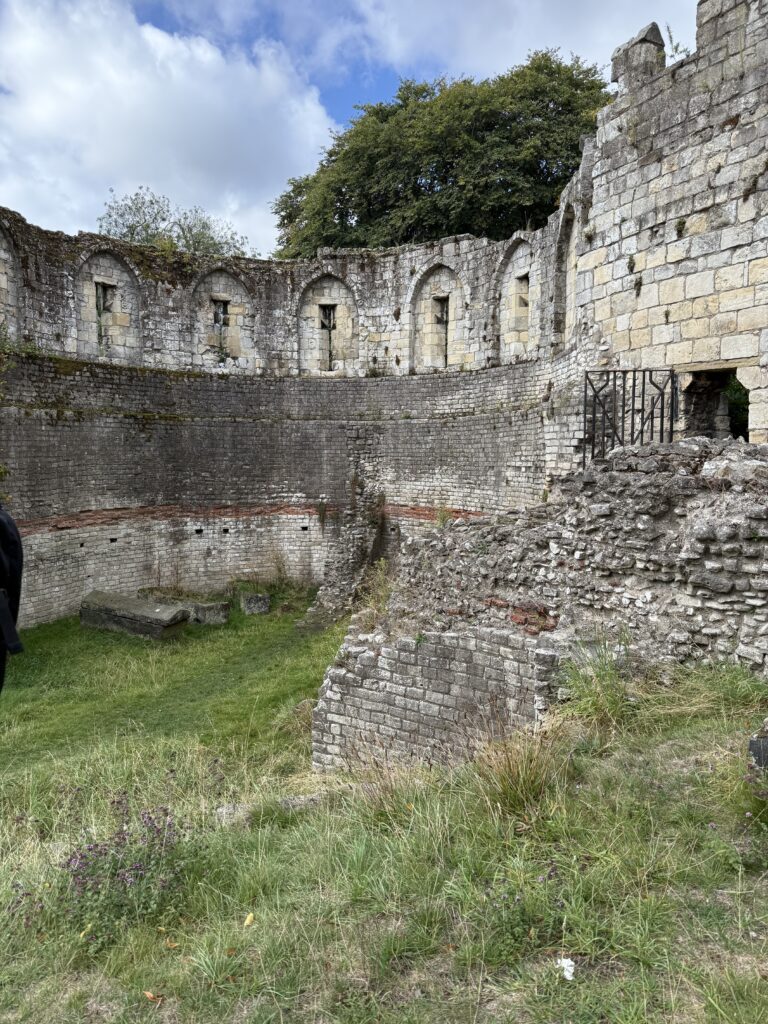
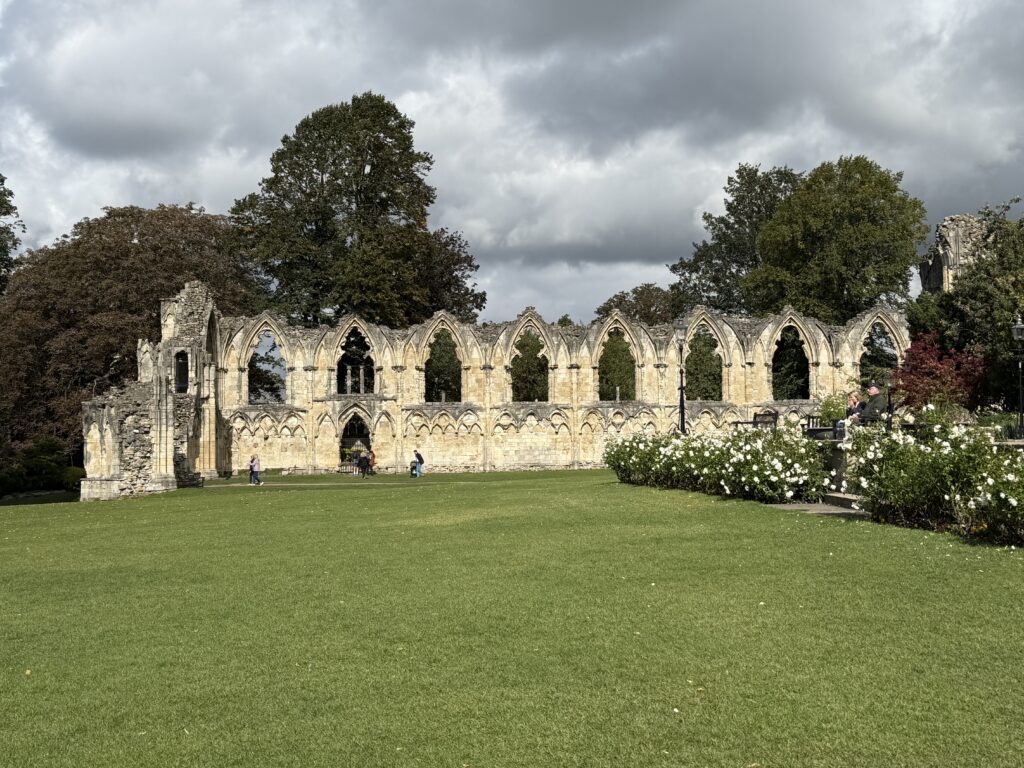
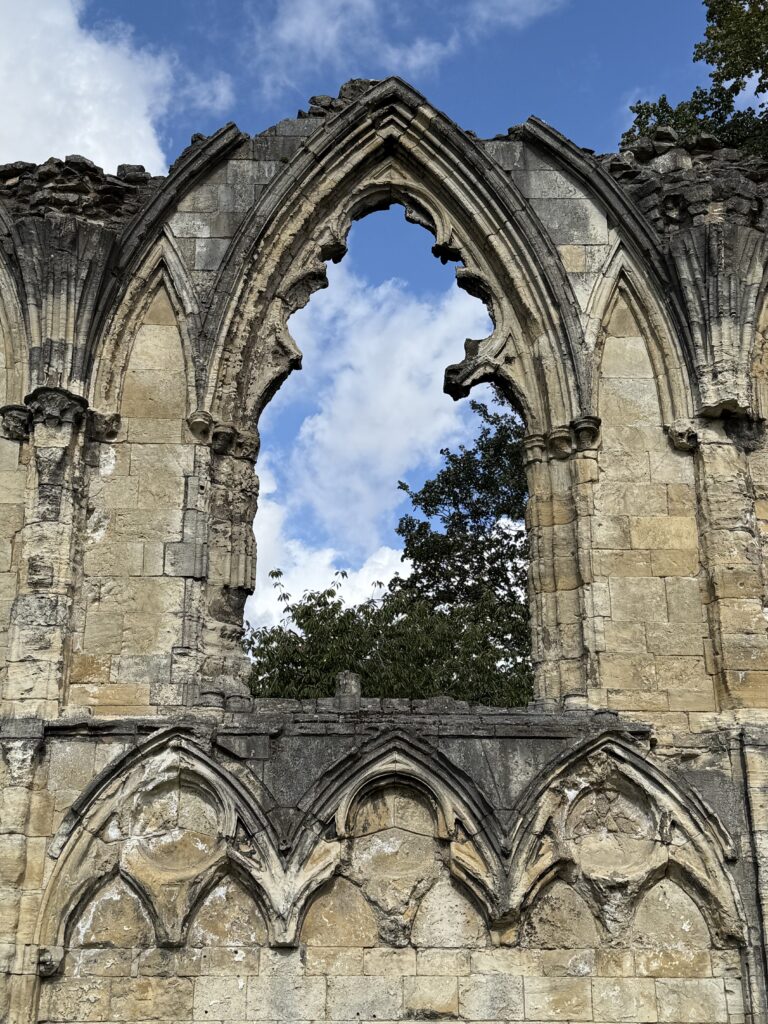
The abbey was destroyed when Henry VIII got rid of monasteries, taking the metal roof and all the gold and silver, and telling the townspeople they could take the stones to build their houses. I wish I could have seen it before its destruction.
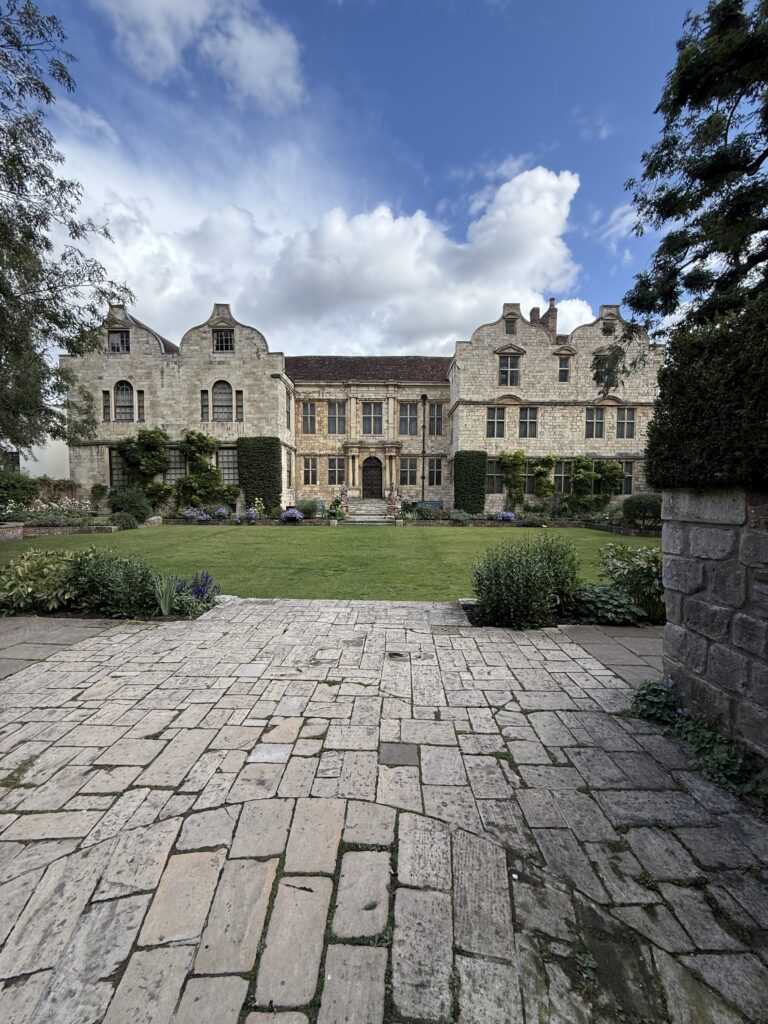
We saw the Treasurer’s House, which has changed hands many times, but at one time in the 1700s was the home of Elizabeth Montagu, a founder of the “Bluestocking Movement,” a precursor to modern feminism.
And examples of Georgian architecture and the Dutch House.
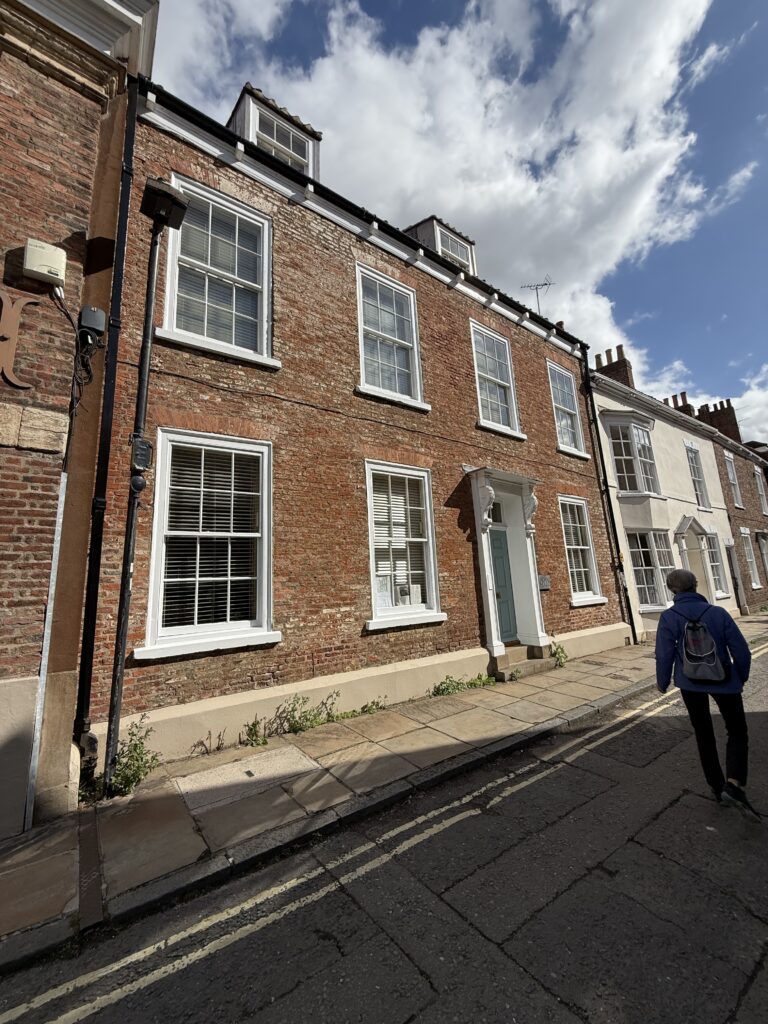
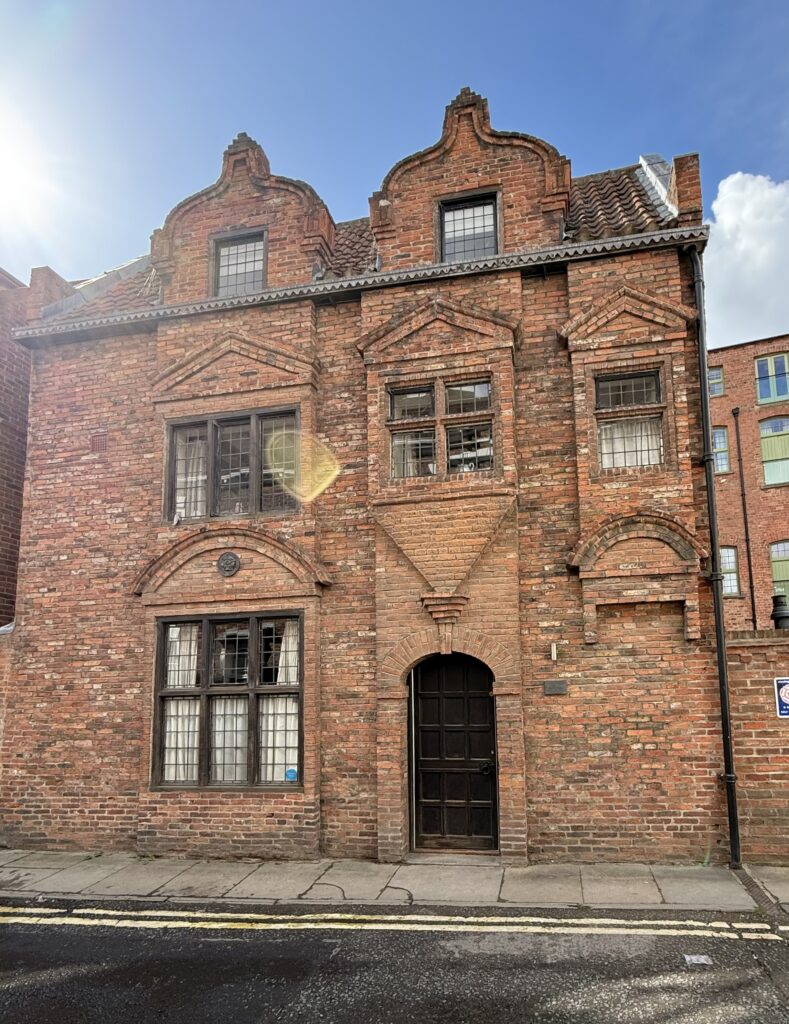
To finance the multiple wars, the monarchs assessed different taxes. One was a window tax, when you were taxed by the number of windows in your house, but then people bricked up some of their windows. Another was a brick tax (the bigger the house, the more bricks), but then they started building houses with bigger bricks. Then there was the chimney tax, and on and on.
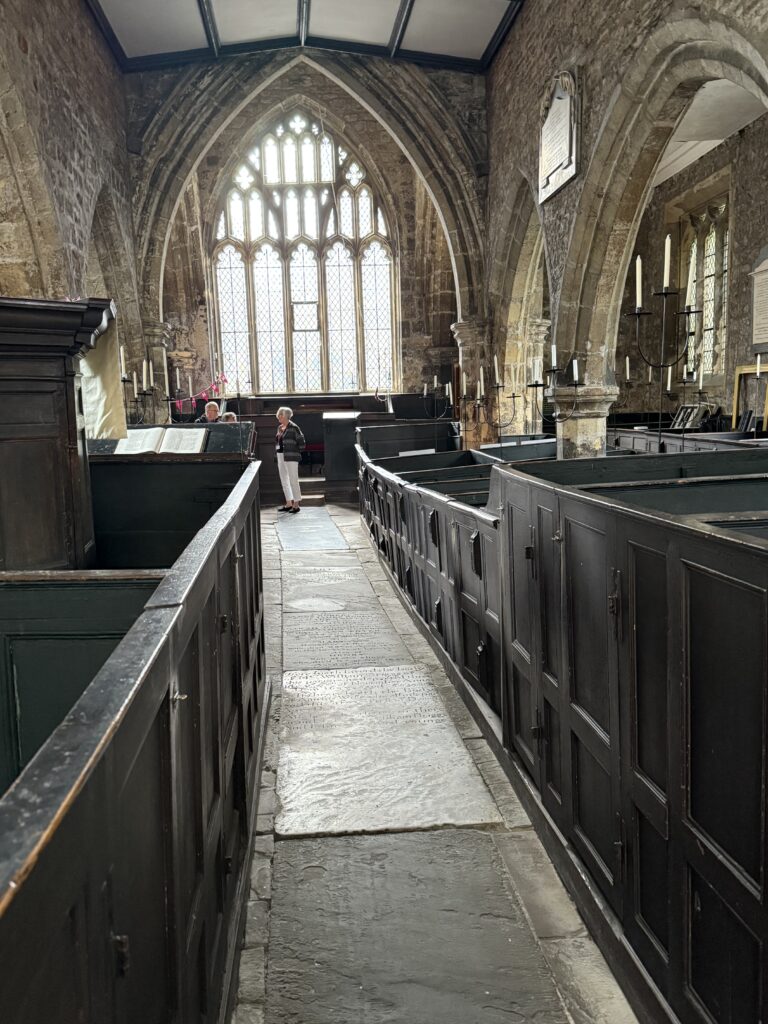
Nick showed us Trinity church, innovative at its time because they had family boxes so they didn’t have to stand during the service—sometimes 2-3 hours long. Of course, you had to pay for the boxes. At one point during the Reformation, if you didn’t go to church and sign your name on a Sunday, you could be hauled to jail!
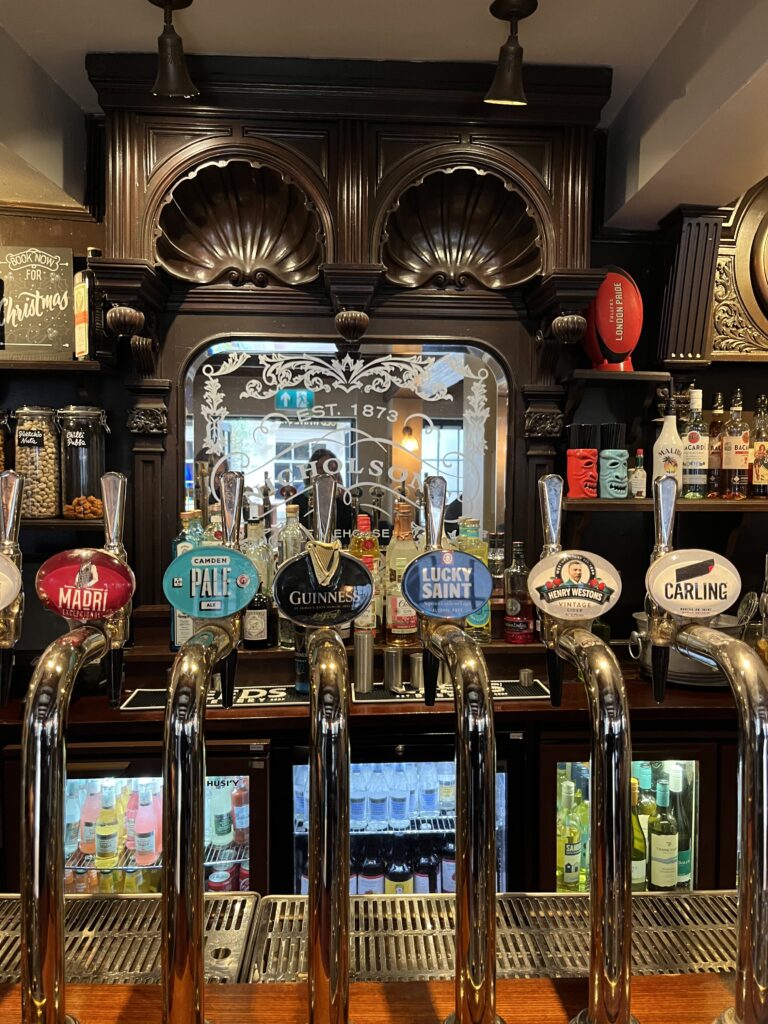
And we went to the Shambles, originally the street housing all the meat butchers, now a charming warren of tiny streets. After the tour, we ate at the Old White Swan, one of the oldest pubs in York, where we dined on fish pie and vegetables.
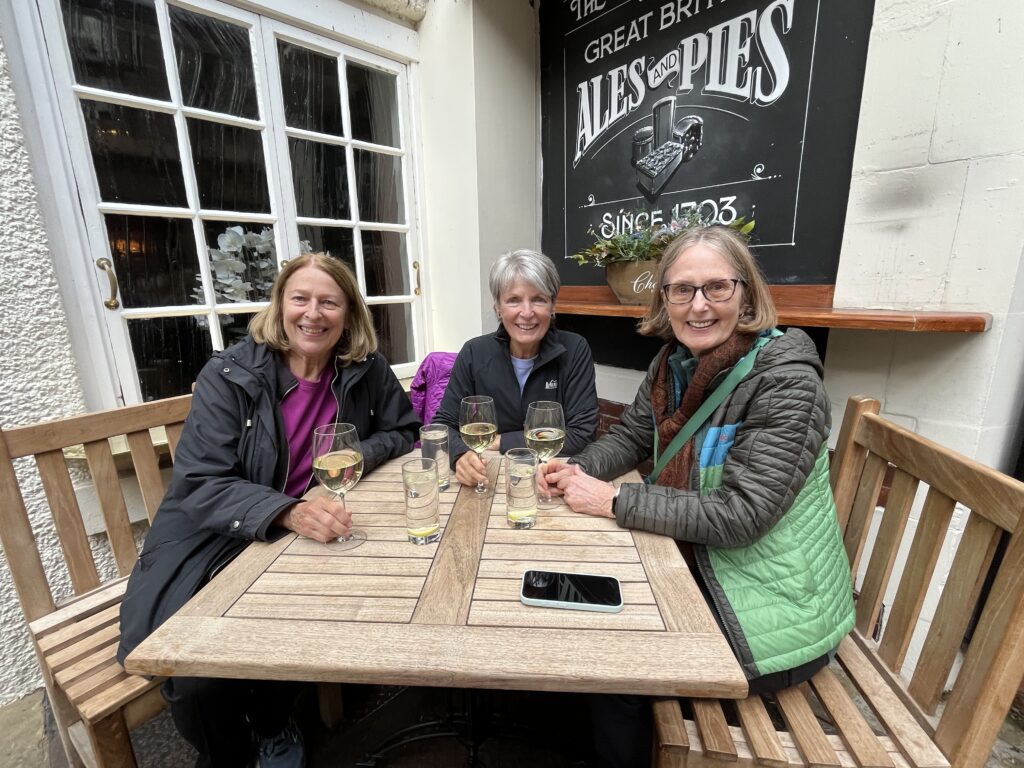
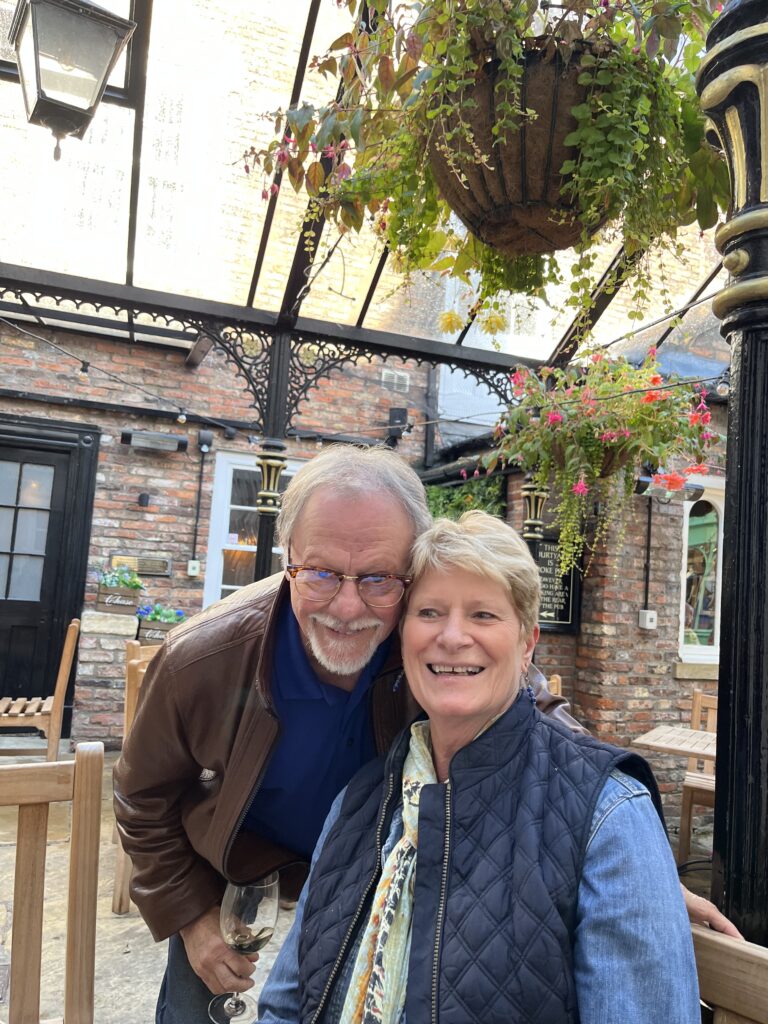
A woman at the next table offered to take our picture. Her accent sounded familiar, so I asked her where she was from—Wauwatosa, Wisconsin! She and her husband ended up joining us as we ate, and we thoroughly enjoyed them. Meet Sue and Steve.
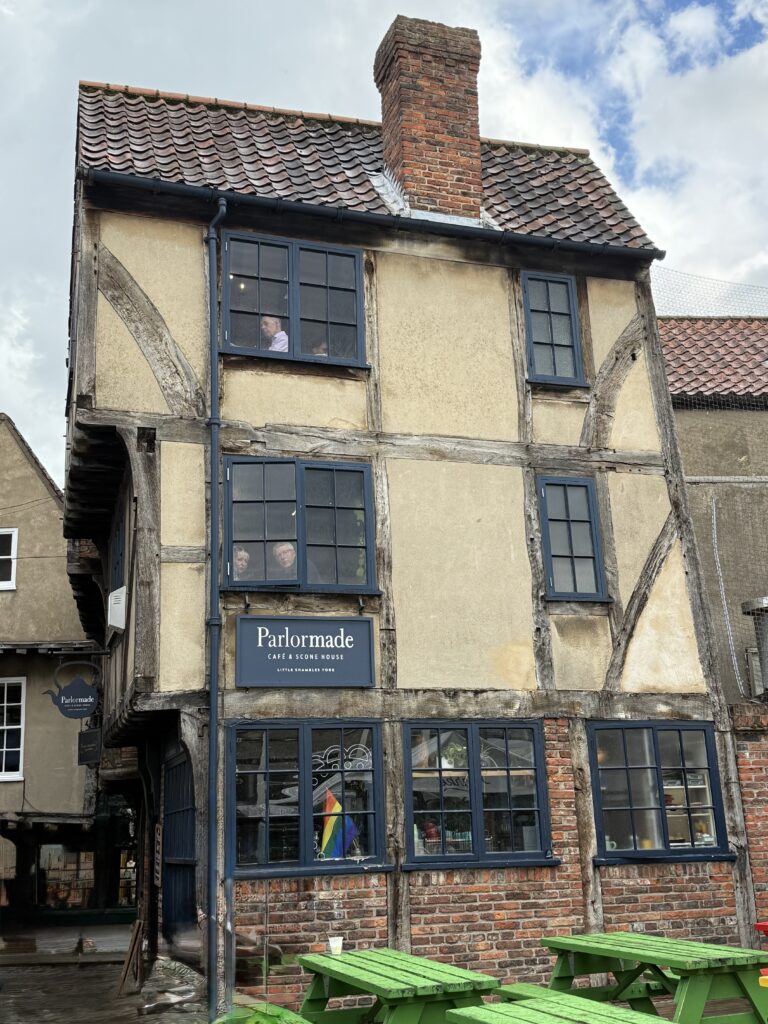
We wandered around the old city, full of unique buildings.

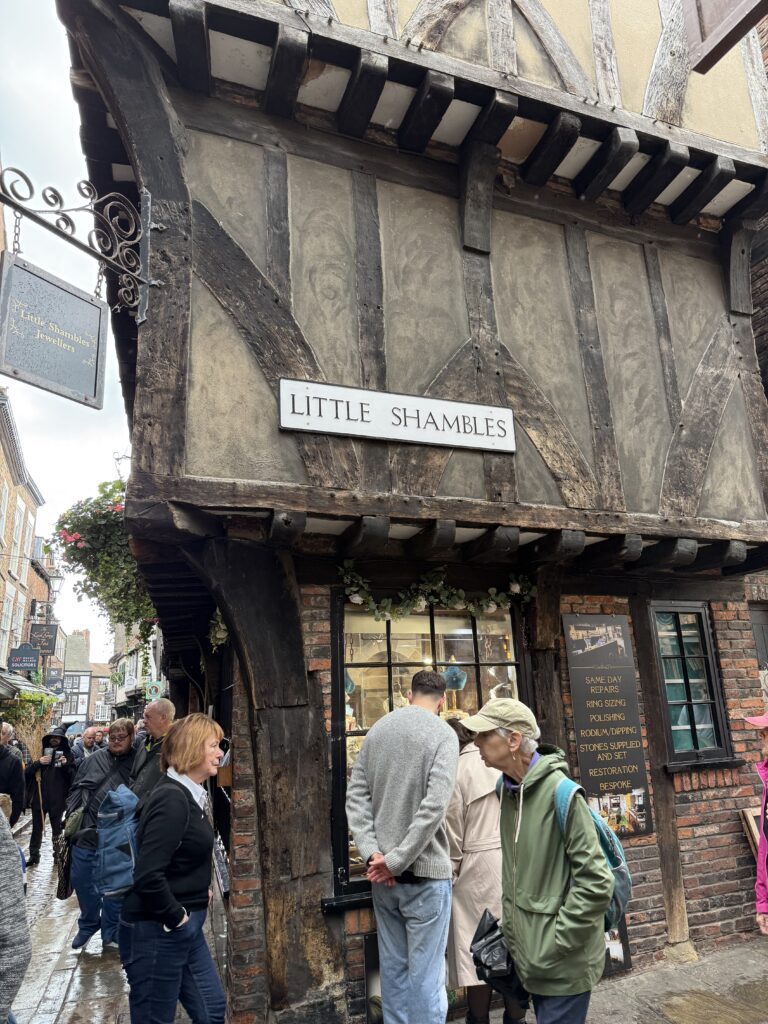
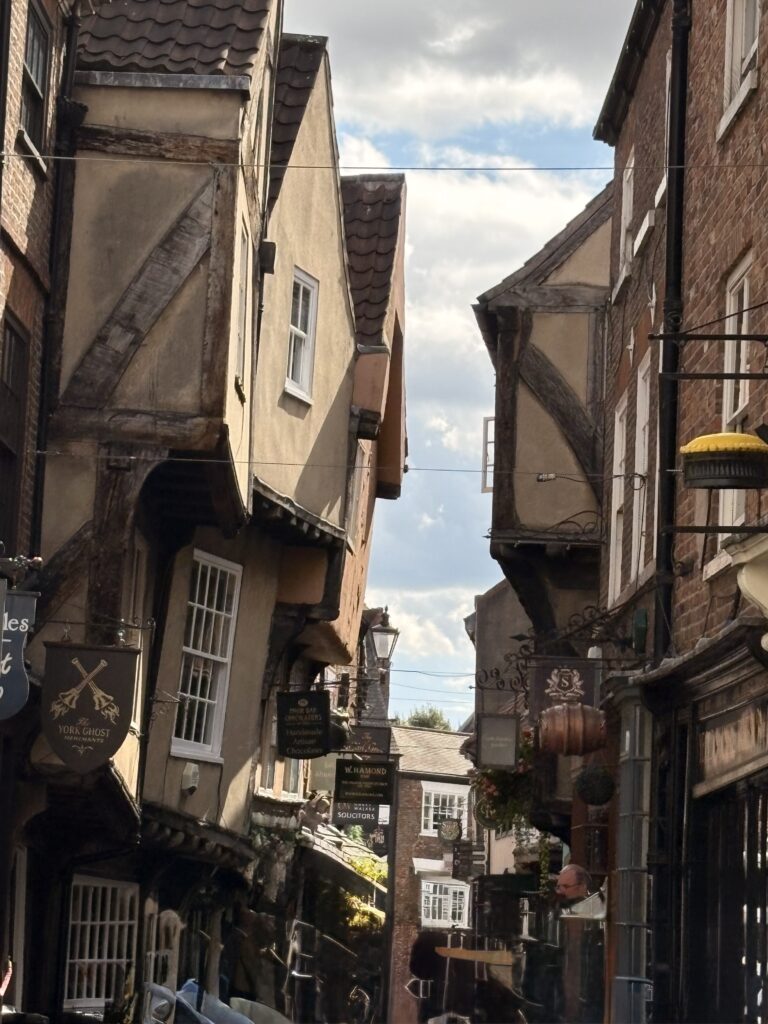
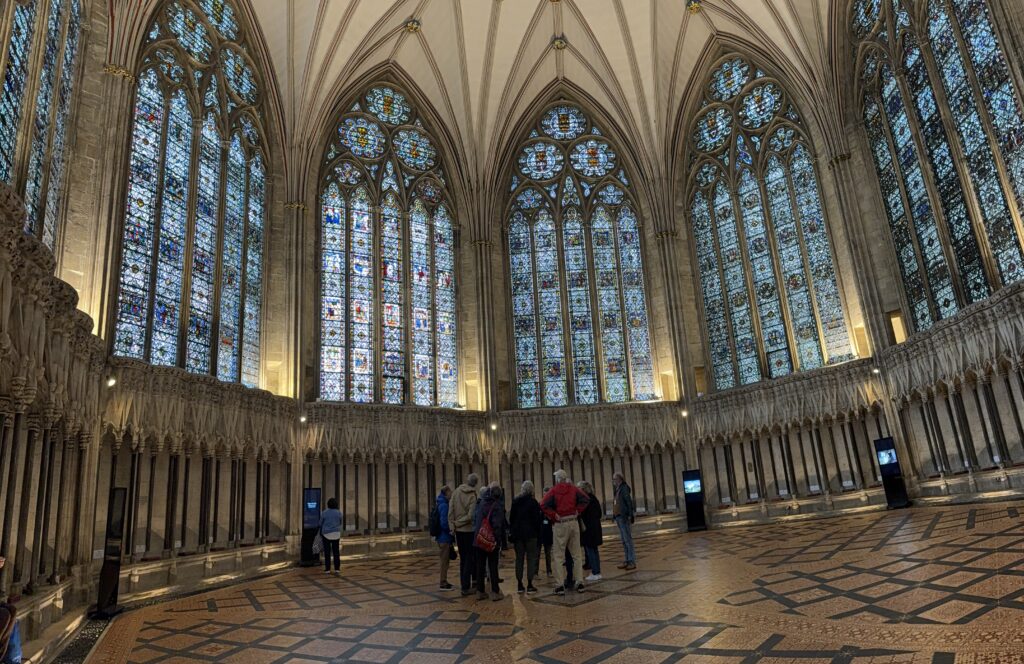
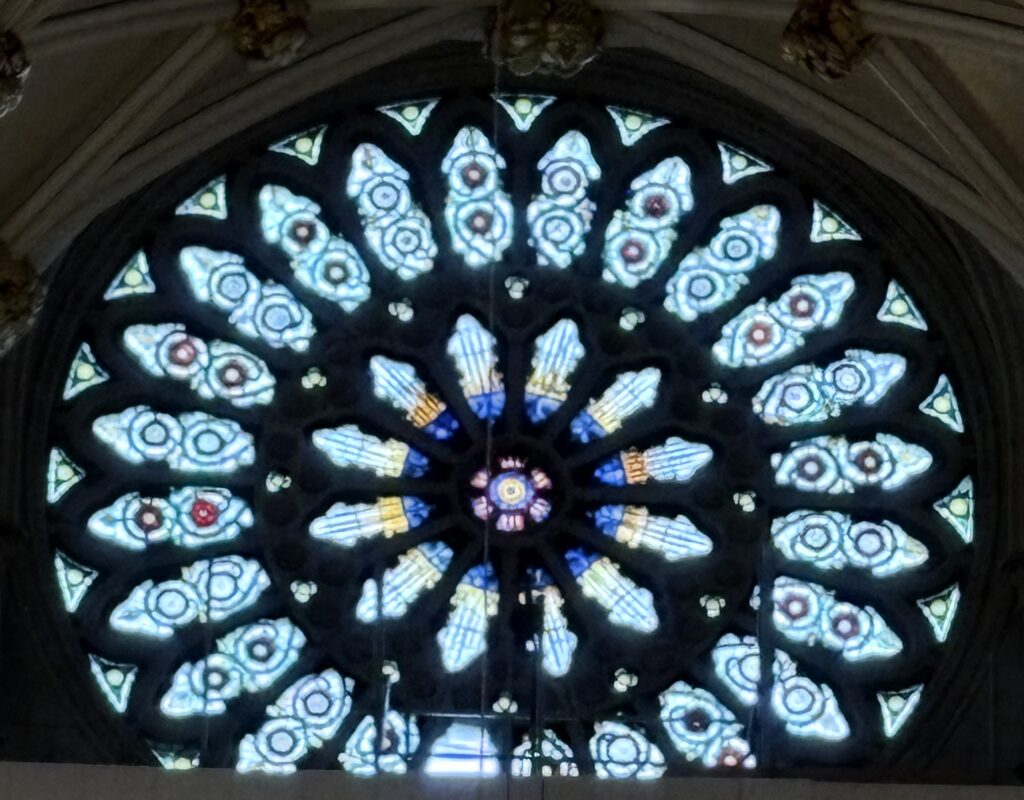
Then, like a magnetic pull, the Minster drew us back in.
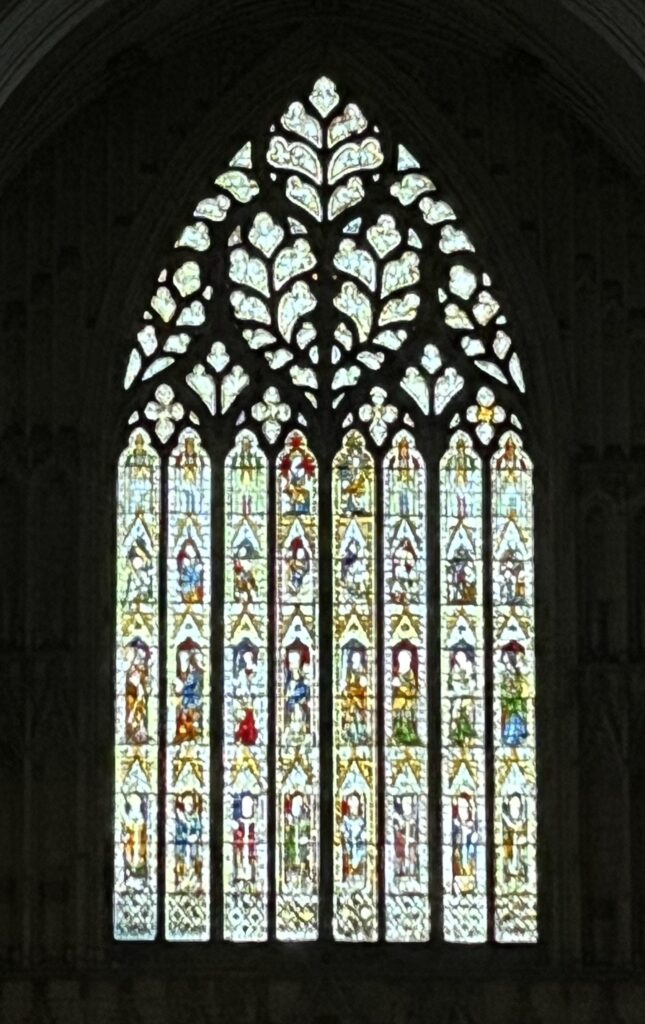
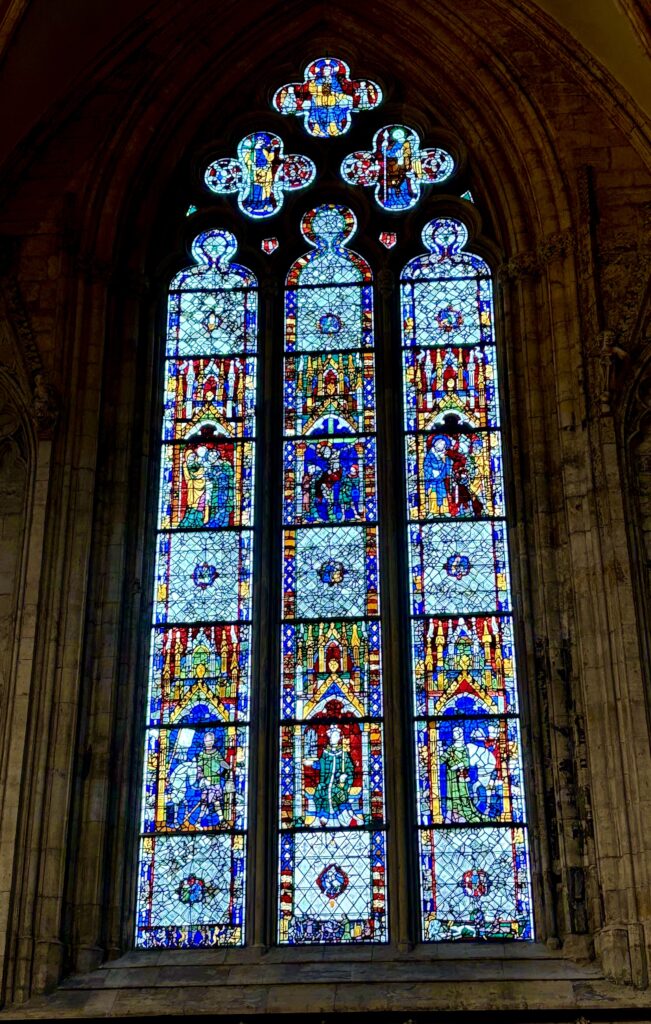
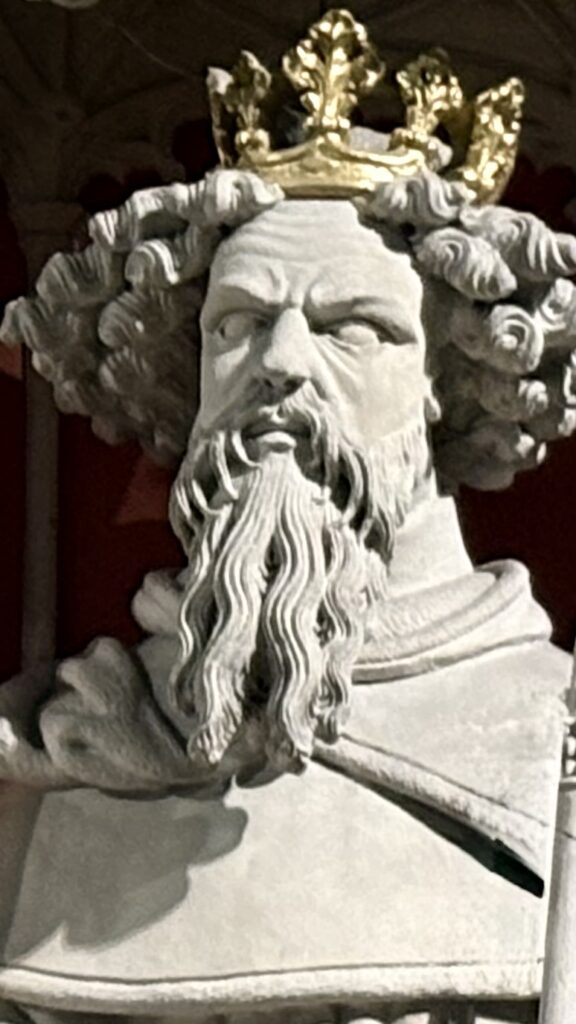
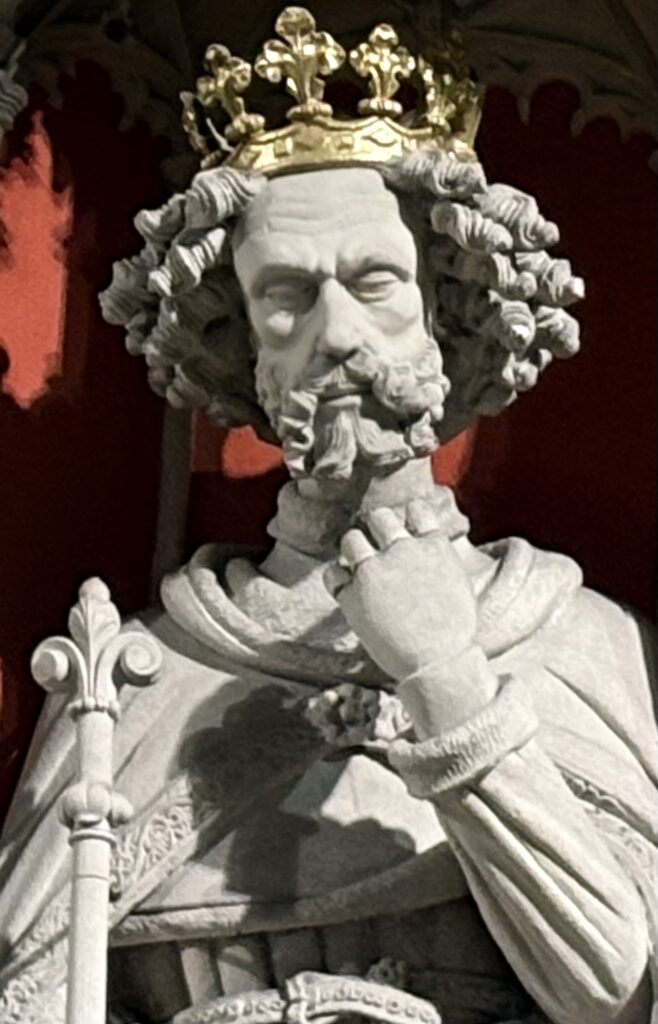
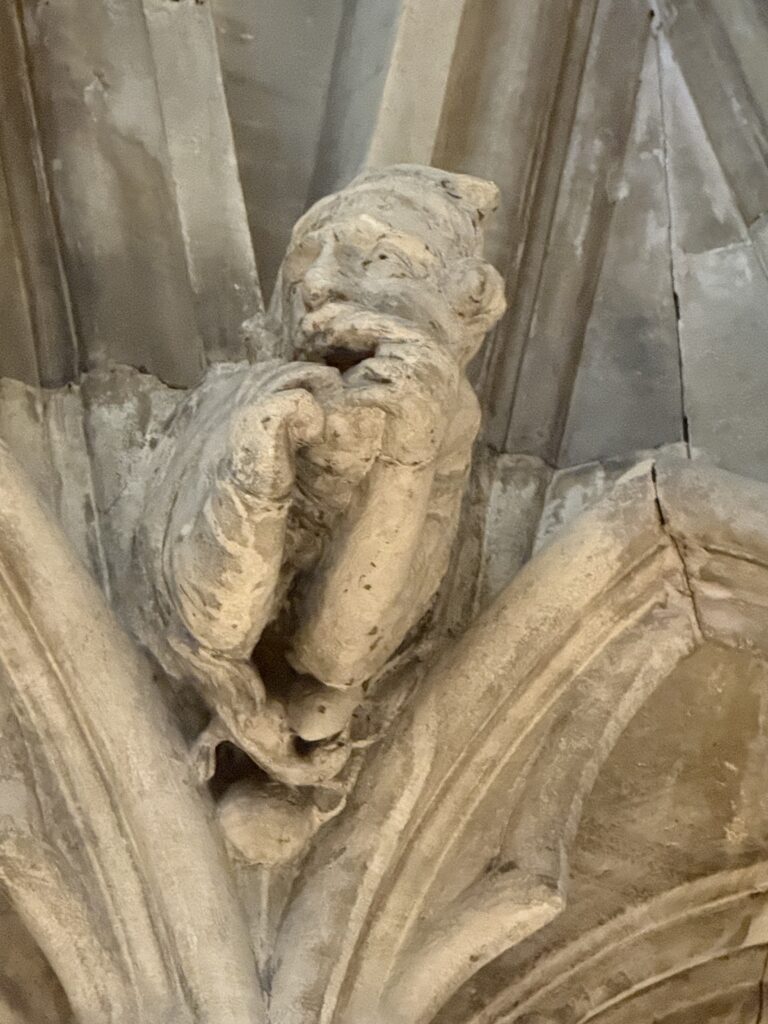
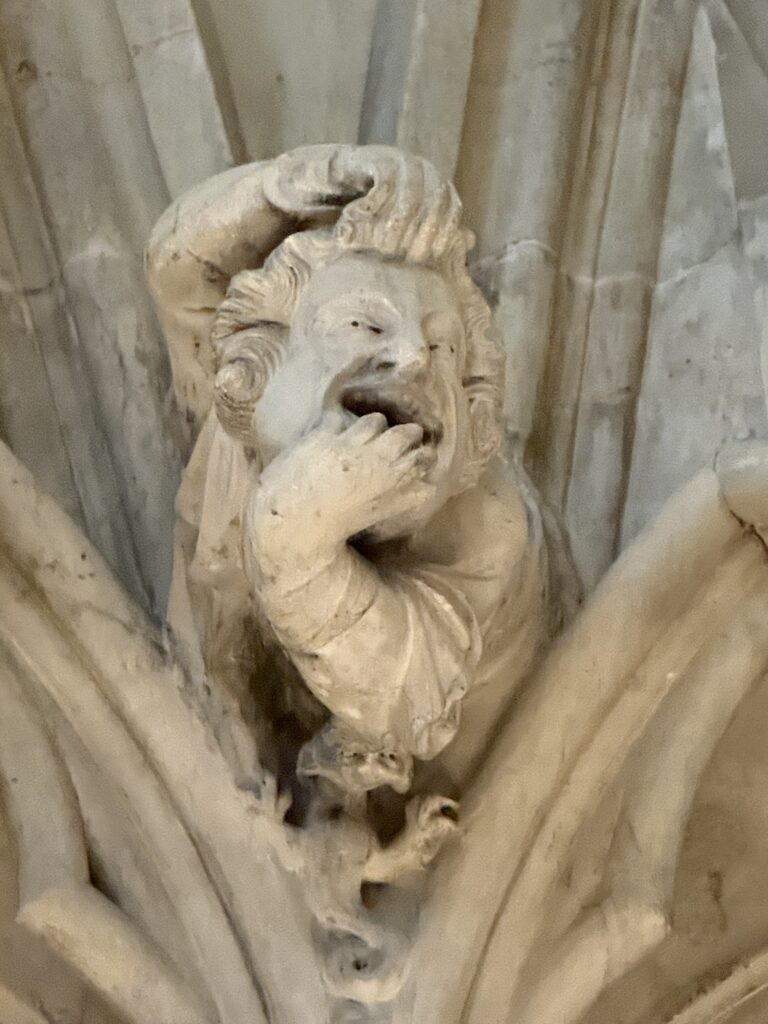
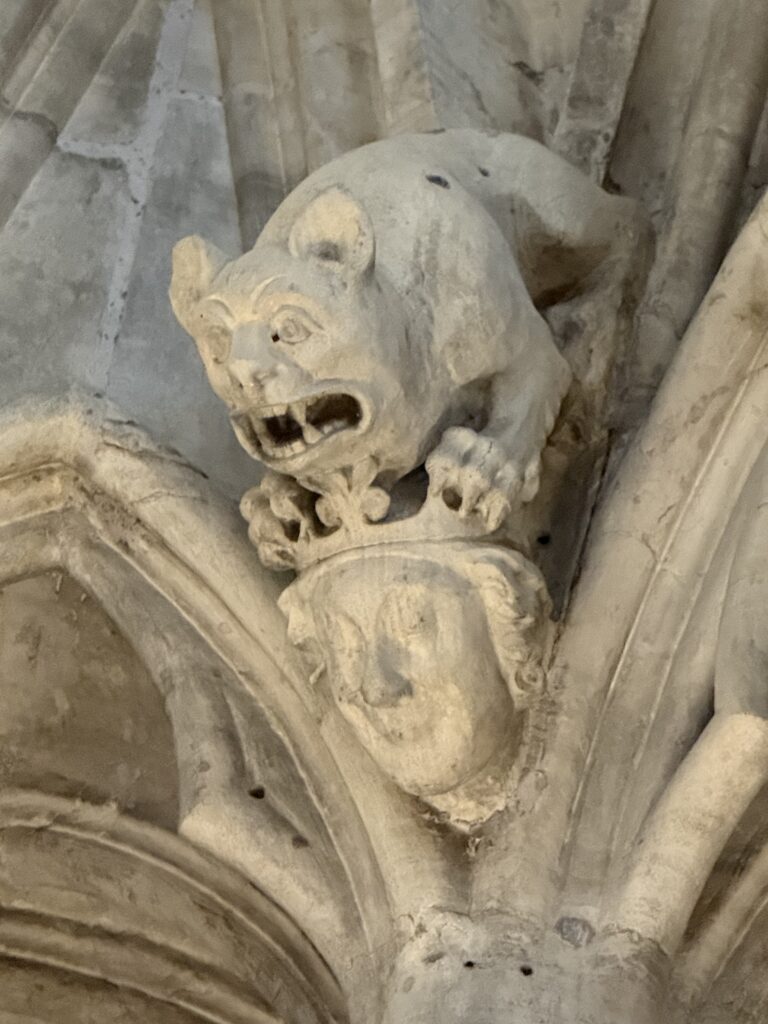
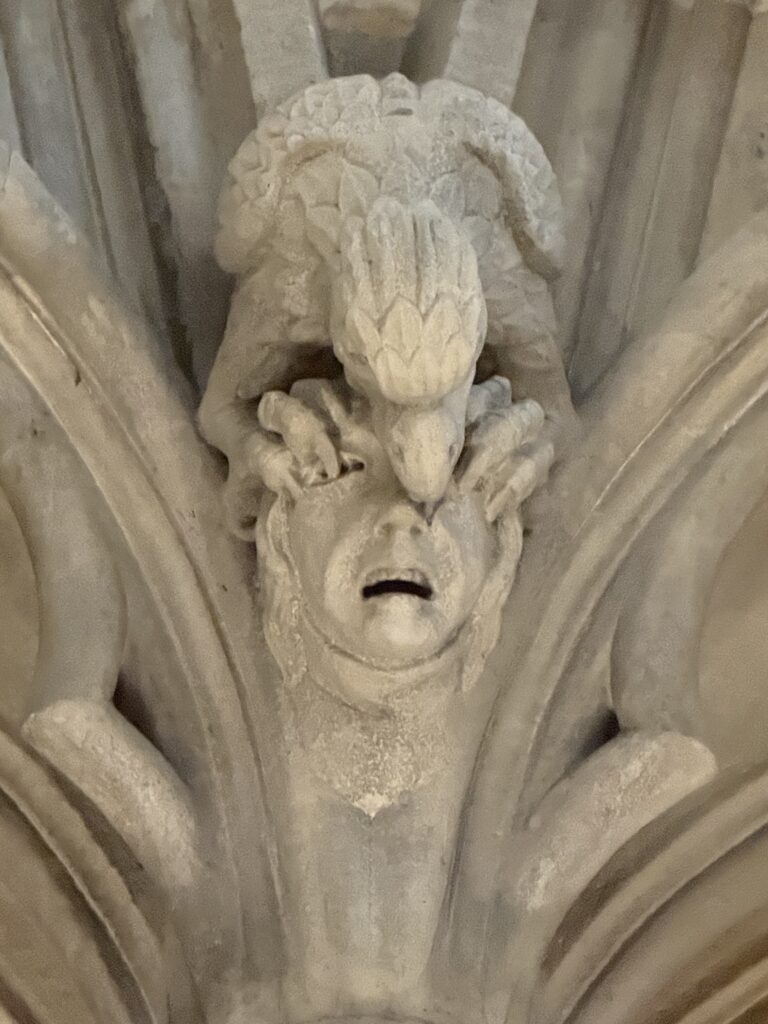
One aspect of old churches that has always intrigued me is the license that was given to the stone carvers to make fanciful figures to intersperse between the serious ones. These are just a few of my favorites!
We wanted to eat at the Fat Badger, to honor Wisconsin, the Badger State, but there were no tables available, so we found a quaint place with indifferent food, sharing an order of “chicken with dirty fries,” that turned out to be essentially chicken nachos with French fries instead of tortilla chips. Odd.
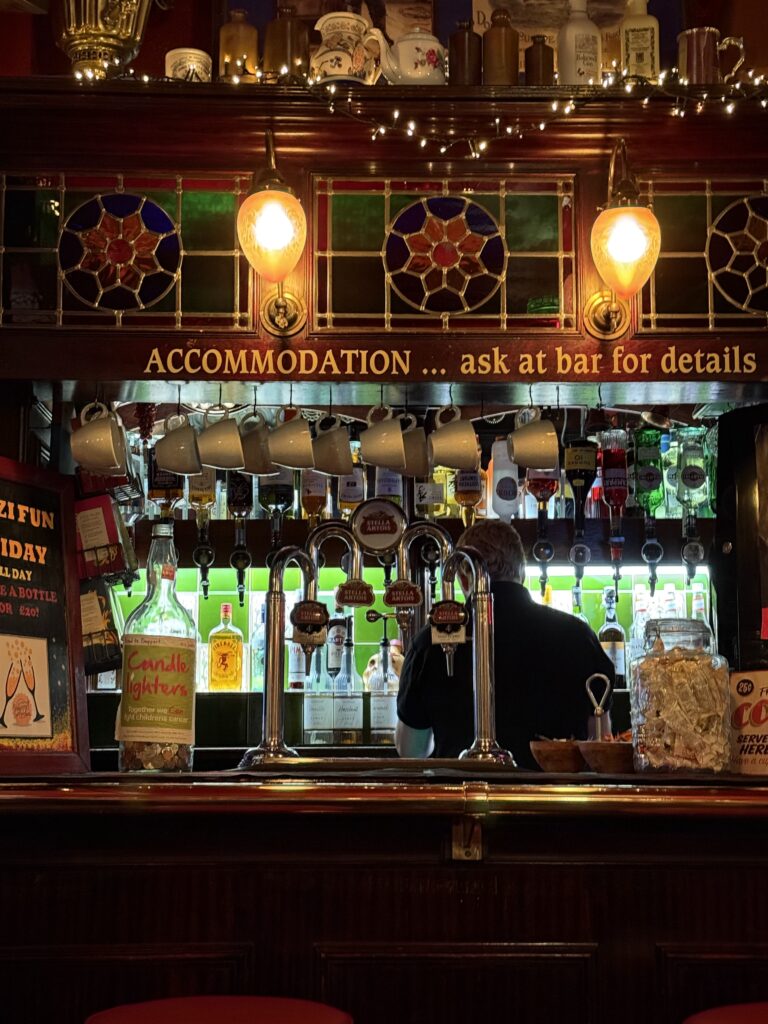
By that time, we were ready to go back to our room and put our feet up. Five miles on concrete and cobblestones are harder than 10 miles on the camino any day.
Now we are on our way to Conwy, in Northern Wales. We have heard that it is as beautiful as New Zealand, but the rain that is forecasted may dampen that impression. We’ll see.
Leave a Reply