The further adventures of Mary Lou

Month: September 2025 (Page 1 of 2)

Old friends…and farewell.

Our last day in England was spent largely with two friends Elaine and I met on our first camino in 2022. Originally, our travel arranger, Garry, was going to walk with us the first 4 days—I figured Amy would feel better if we were with someone who knew what they were doing while going over the Pyrenees. Then Garry said he had another client, Chris, who was starting the same day, and asked if he could join us. Of course. Then a while later he said he had a friend coming to visit him, and did we mind if he walked with us. Ubaid was English, with parents from Pakistan, and he looks like a Pakistani George Clooney, he said. We said of course, of course. And then Garry got covid, and Elaine and I walked with two guys we never met, who both turned out to be great travel companions.
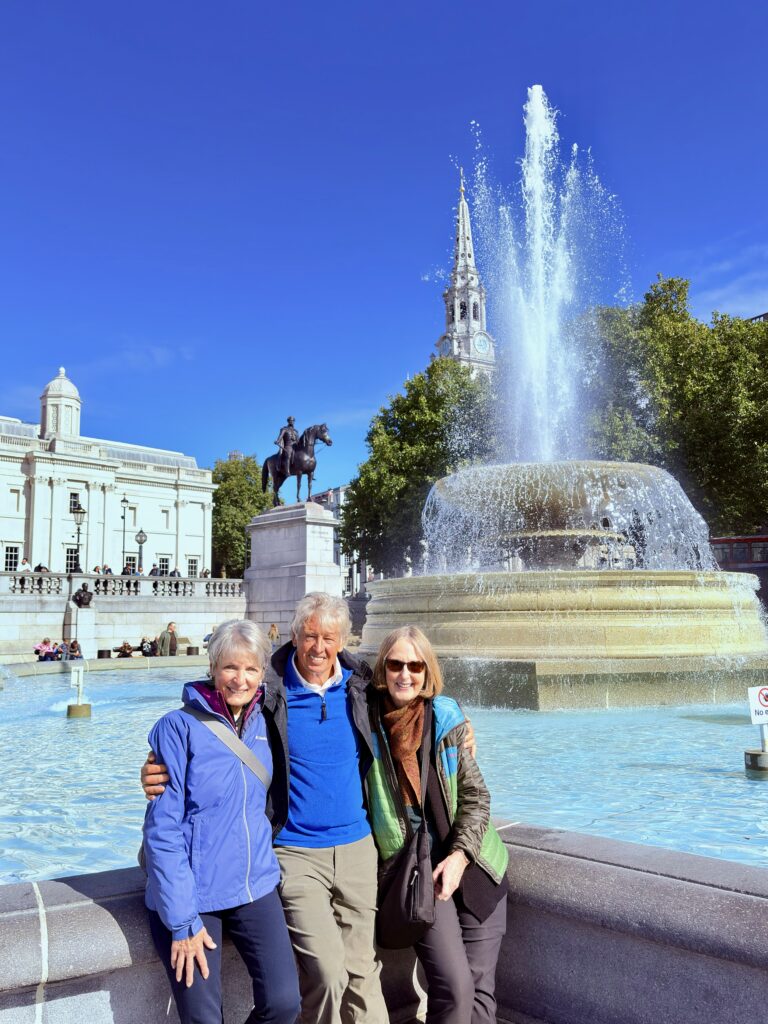
We met Chris at the train station when he arrived from Sussex. He is an Aussie who has lived in England most of his adult life. At 79, he bikes, hikes, runs half-marathons and does qi gong. Not bad for a geezer.

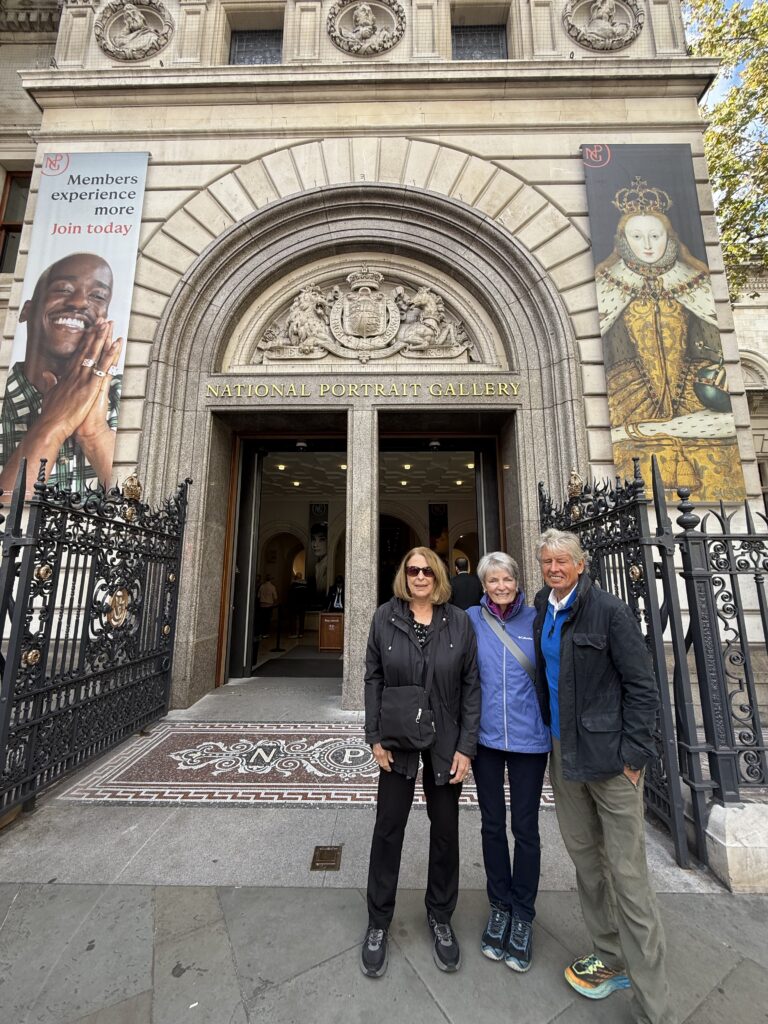
We went to the National Portrait Gallery, recommended by Hilary. Mary was in the first throes of her cold and wanted to just rest in the cafe, so the rest of us explored, getting through a tiny portion of the exhibits. We saw some of the portraits of royals, but they were not as interesting as the portraits of other people—writers, politicians, suffragettes, etc. And there was a special juried exhibit of portraits submitted by people from all over, and that was fabulous.
Then we walked through Chinatown to SoHo to find a place to eat, ending up in an indifferent pub. We should have eaten in Chinatown.

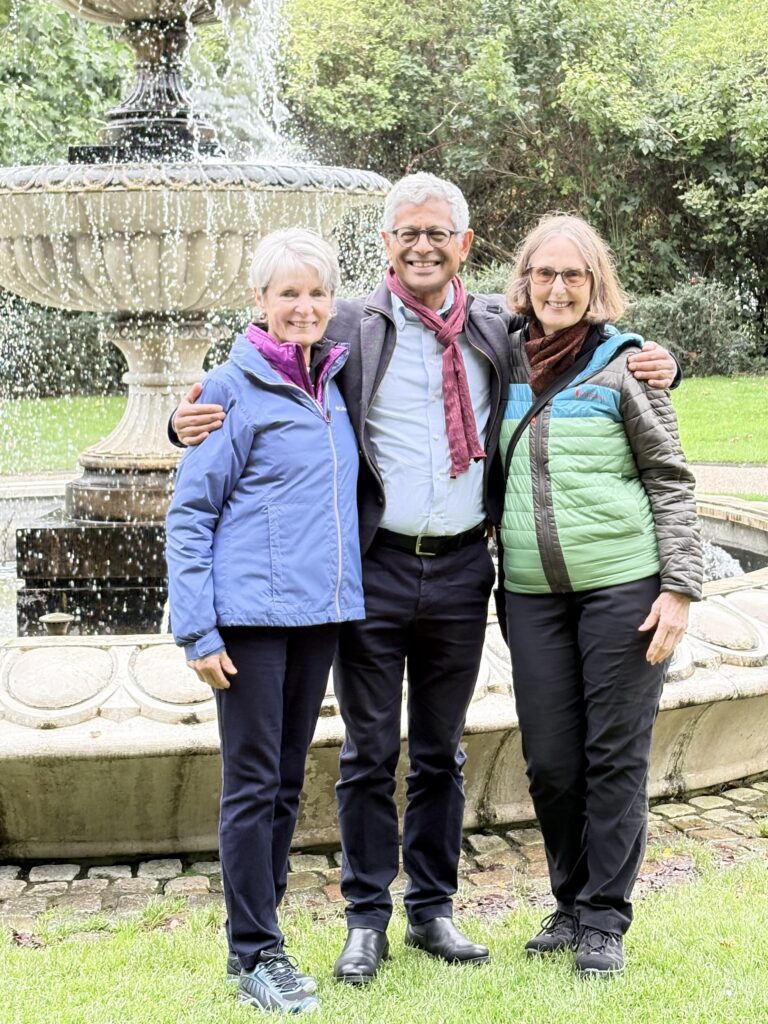
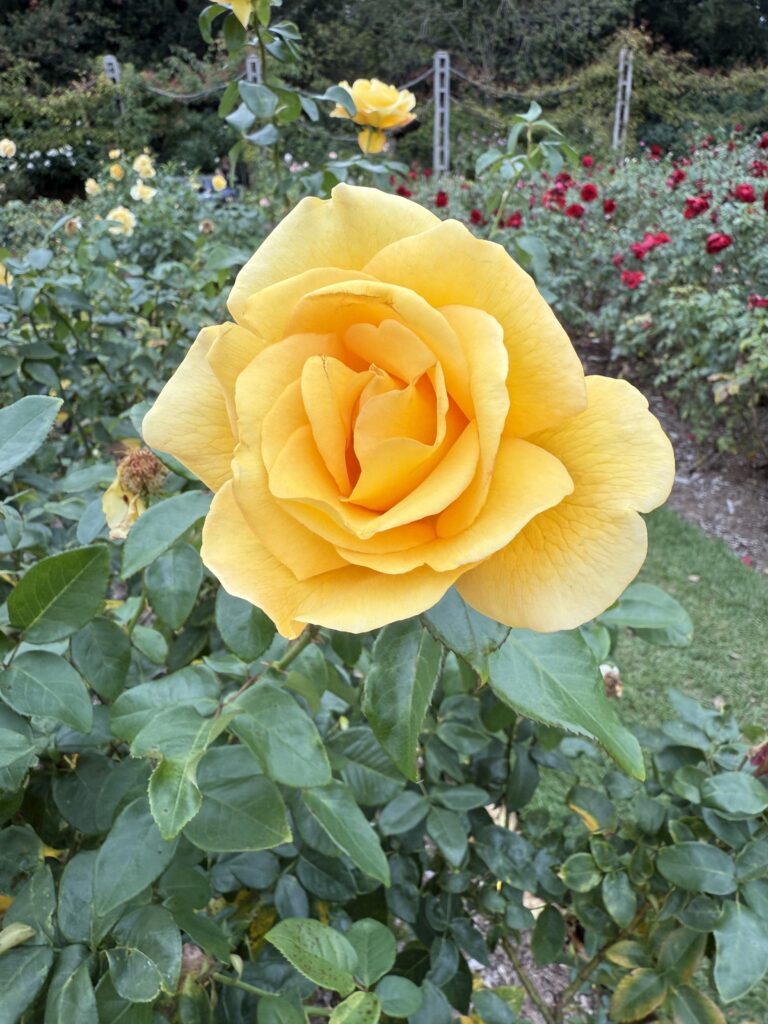
We had to say goodbye to Chris, as he had a train to catch, then walked to Regent’s Park to meet Ubaid. Ubaid works for the Royal Bank of England, but only comes into London a couple times a week, working mostly from his home in Oxford. He is a smart, gentle soul, and I wish I could get to see him more often. It was good to hear that he was out of his former (bad) relationship and with someone who makes him happy. We were able to spend a couple of hours walking around a sculpture exhibit and the beautiful rose garden, stopping for coffee along the way.
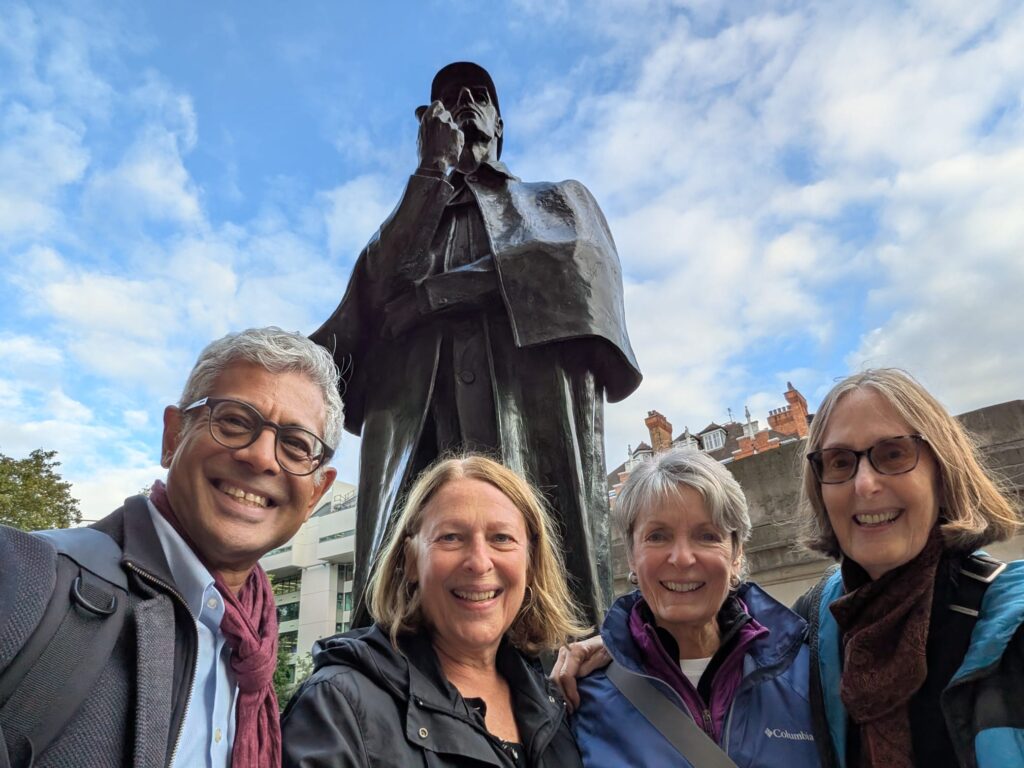
We all walked back to the Baker street tube station, dominated by a statue of Sherlock Holmes, of course, then said goodbye.
Mary, Elaine and I quickly got the underground to our next activity, another play, stopping into a food hall to grab something quick to eat, then going to Matilda. It was cute, but not my favorite. It is a musical about a bright little girl with special powers, played very slapstick. It didn’t help that I missed the majority of what the lead child said—a combination of a high-pitched voice and a thick English accent.

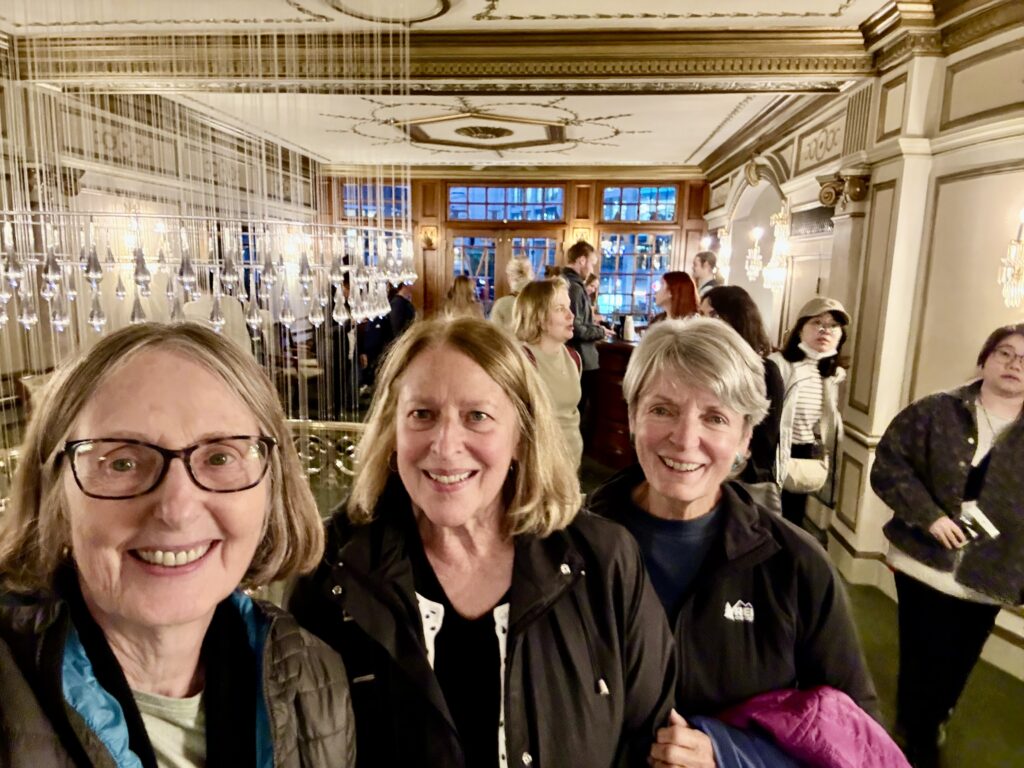
We got home in time to trade photos of the day, eat a few snacks and have a final glass of wine. The next morning we rose early, leaving the apartment at 7 for our journey home. It was 17 hours door-to-door, by the time we got through the Chicago airport, took a Lyft to Mary’s and then drove home.

It was a wonderful trip, though probably the pace was a little too ambitious for three mid-70’s women. We went 24 days with no downtime—maybe it’s not a fluke that we are all coughing and sneezing? Anyway, I feel very lucky to have two friends with whom I can travel that long and still have a good time to the very end. Lucky, indeed.
London!

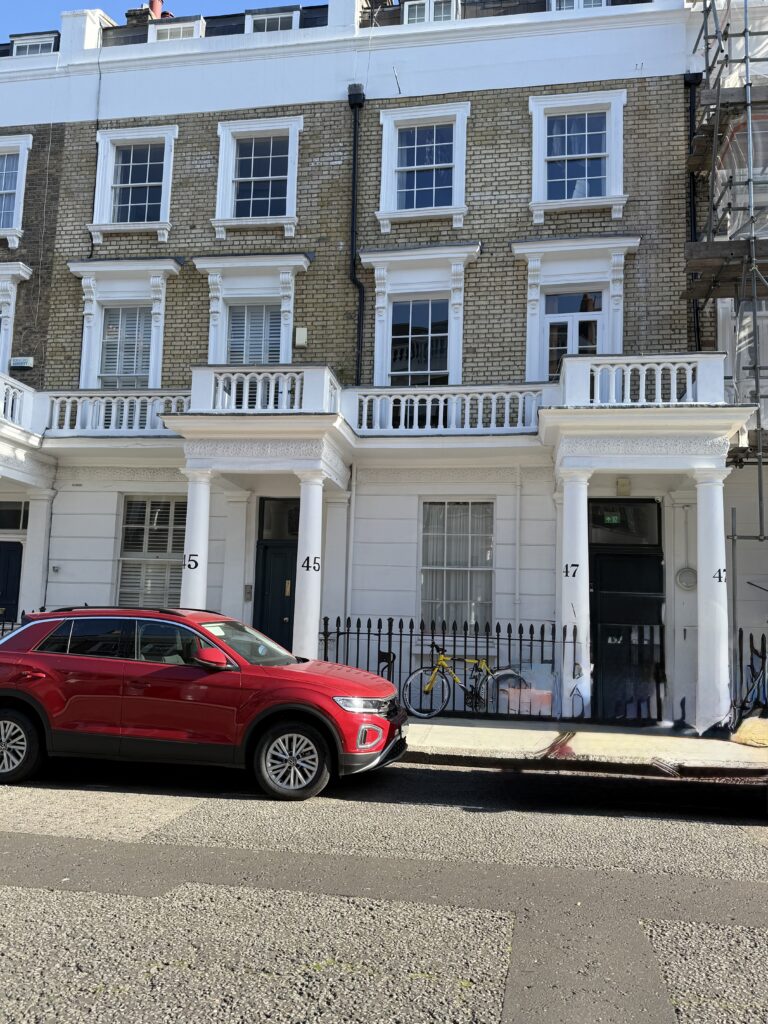
This is our new home, till Wednesday, at least. On Sunday we drove to Heathrow (big roads!), returned our car (no scratches or dents—and we drove 1,328 miles!) and took the tube to Victoria Station.

The London tube system always amazes me. It is complex, extensive and efficient. Now you don’t even have to buy actual tickets—you just tap your credit card at the stile and tap it again when you get off.

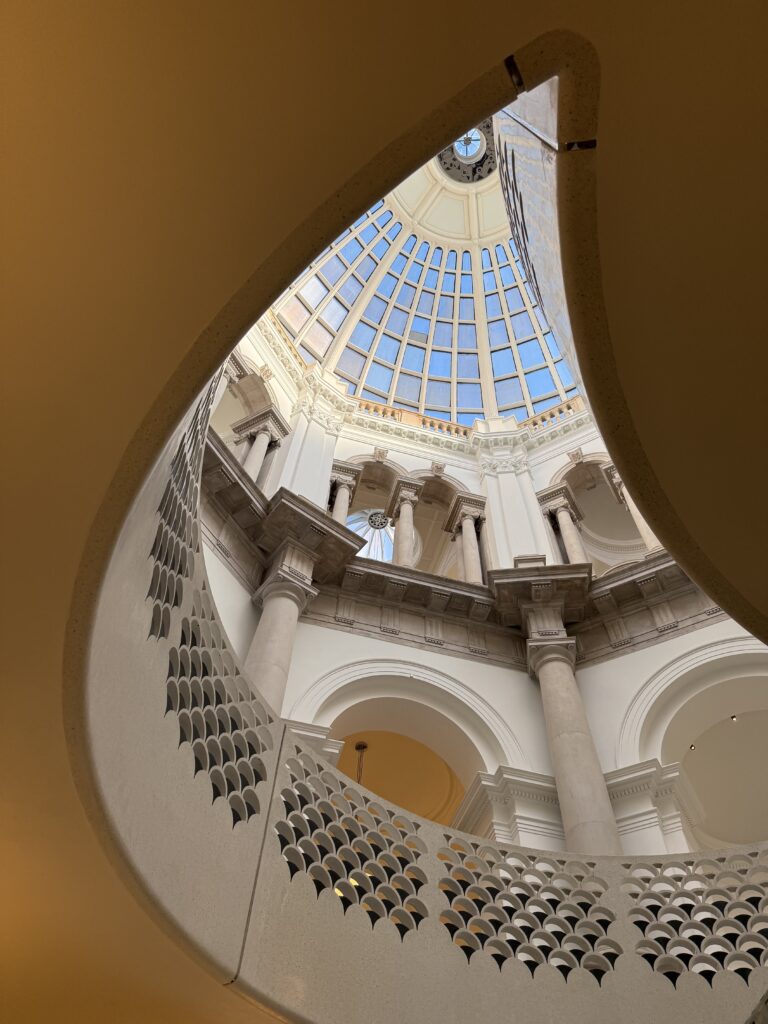
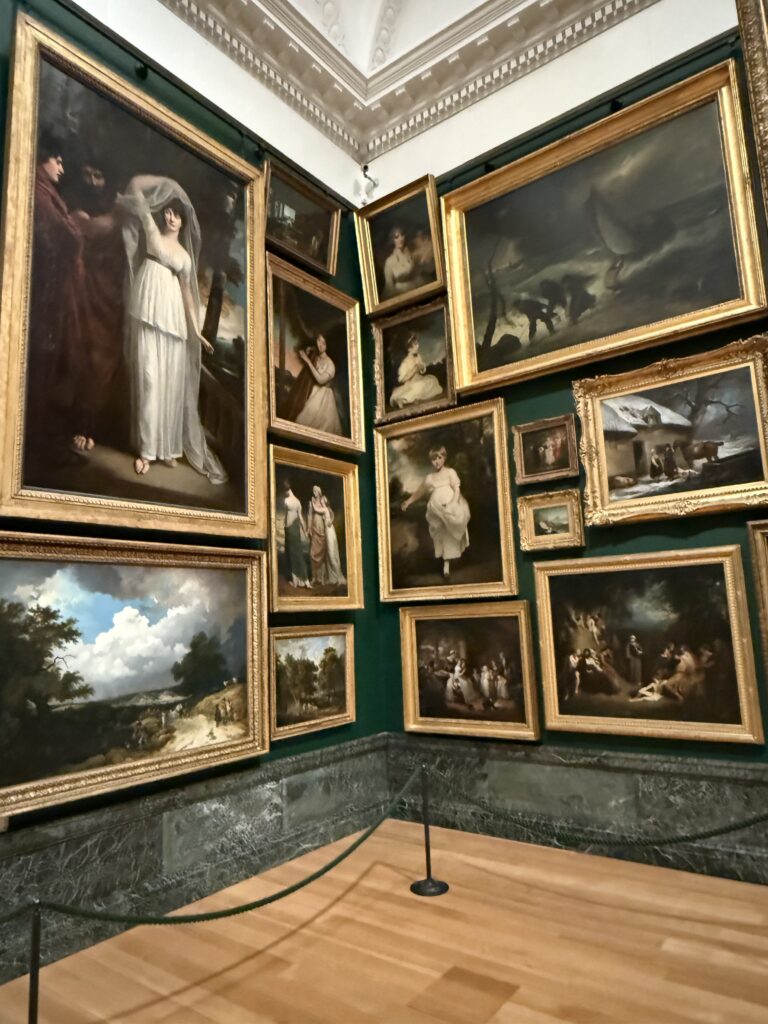
Our first tasks were checking into our Airbnb, finding a grocery for provisions and finding a place to eat—delicious Turkish food this time. Then we went to the Tate Britain, a museum of British artists. It is a beautiful building, jammed with art—in some cases, floor to ceiling. My favorite part was a room of late era Turner pieces, but I failed to take photos of them.

We spent a lot of time there, then found a pub for a snack of baked Camembert, watching a football (soccer) game between Manchester City and Arsenal. (I only knew which teams by googling the different uniforms of the premier league.) It’s such a fast-based sport, and very exciting on a big screen.

Exhausted, we came back home, eating more snacks for dinner, settling in and planning for our time in London.

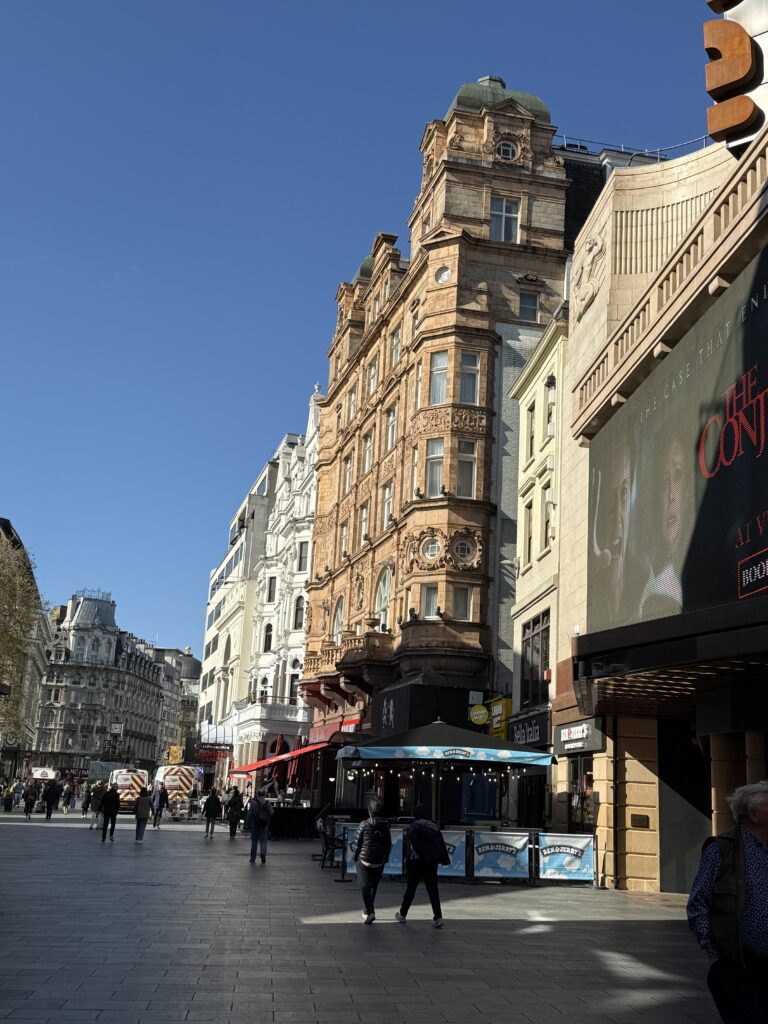
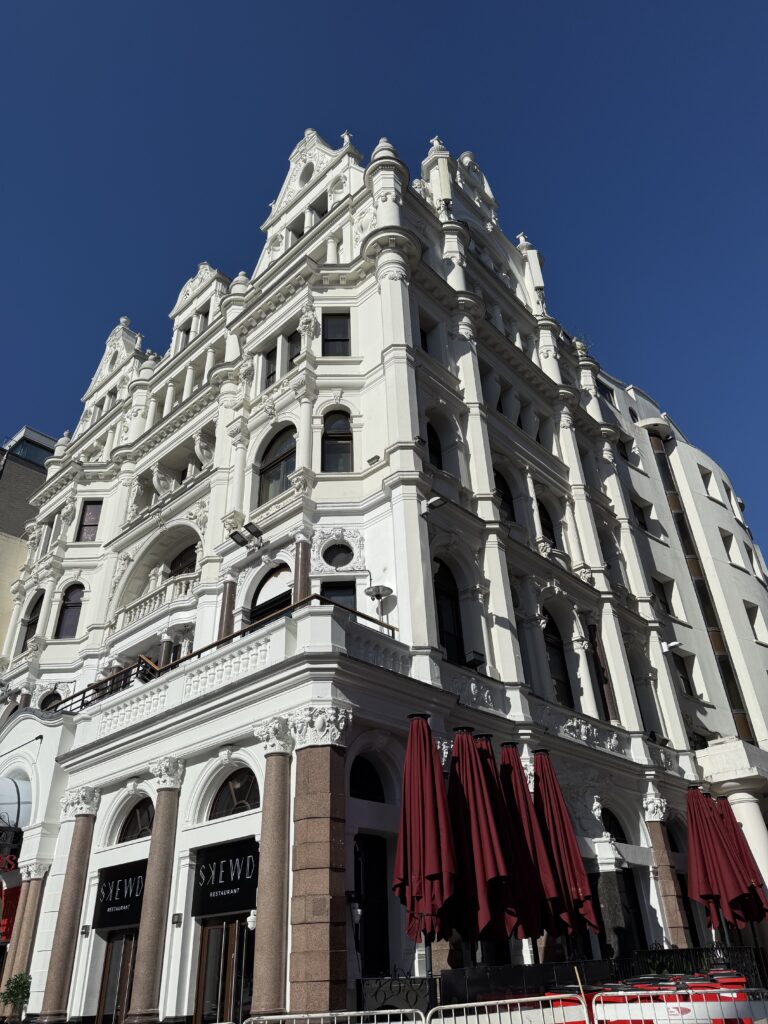
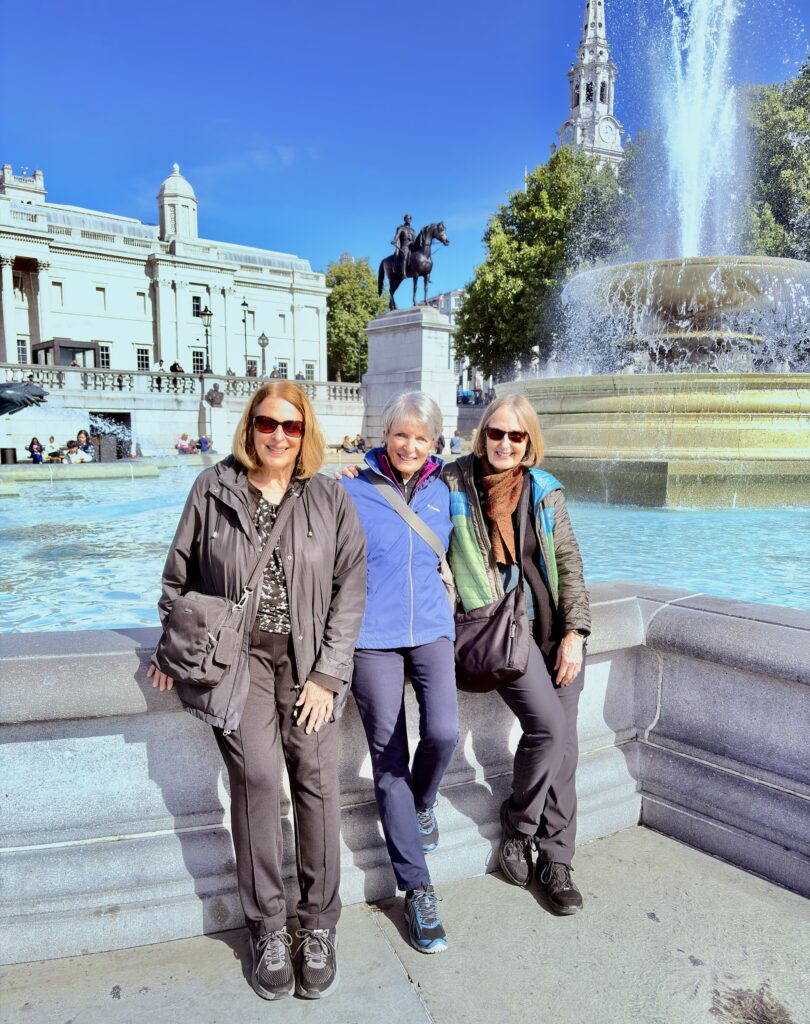
On Monday we got up and organized quickly, then took the tube to Leicester Square to see what theatre tickets we could get at the half-price booth. We scored tickets for Hamilton and Matilda, then walked to the National Gallery, taking in the sights along the way on our first real blue-sky day in Britain.

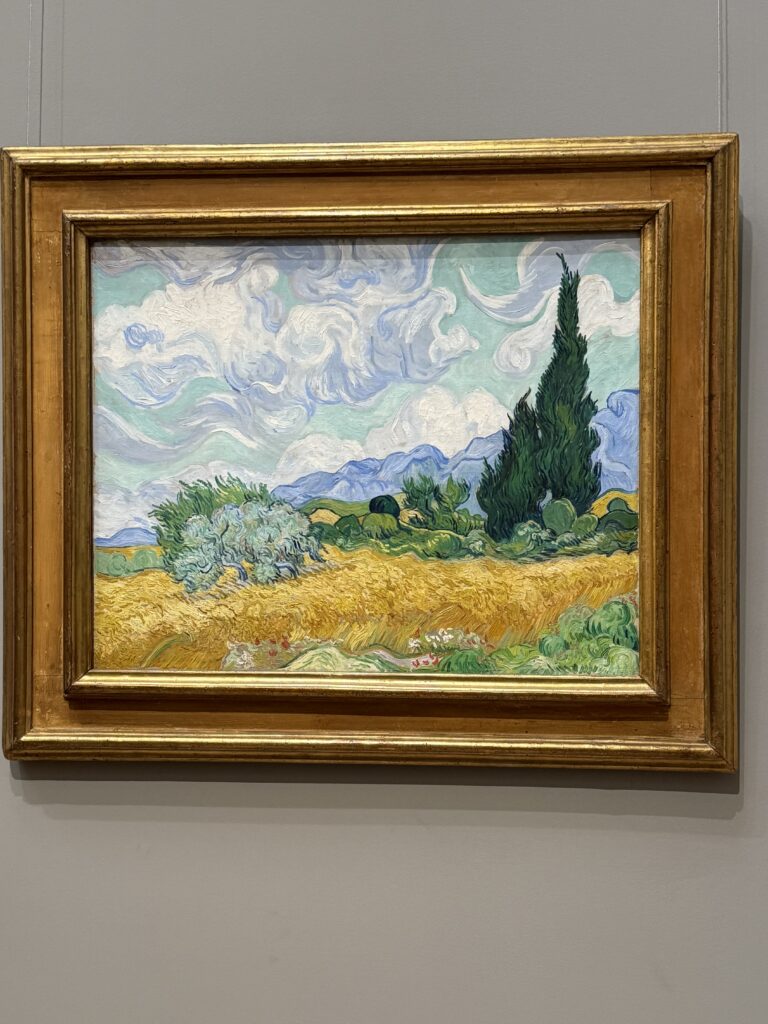
The National Gallery was one of the best museums I’ve ever known. We spent hours, but we could have spent days. We were most interested in the impressionist and post-impressionist areas, but also went to see the amazing collection of Dutch artists, Caravaggios, Rueben’s, and Rembrandts, as well as many others. We were happy to see one of van Gogh’s sunflowers, but this one was a knockout:

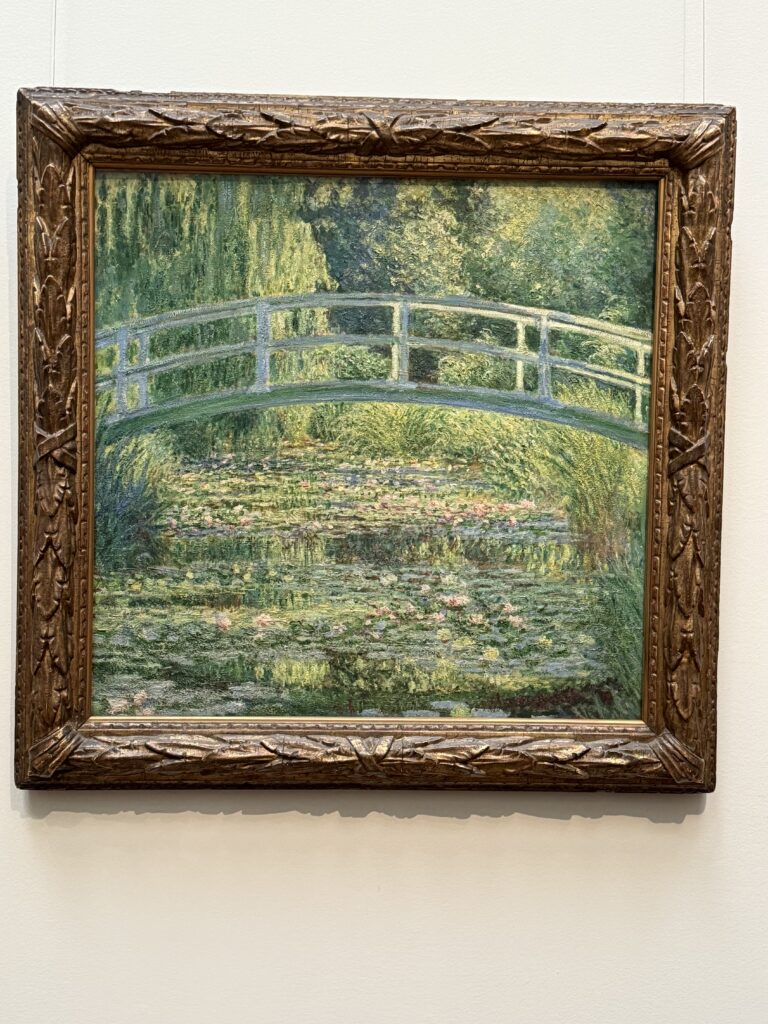
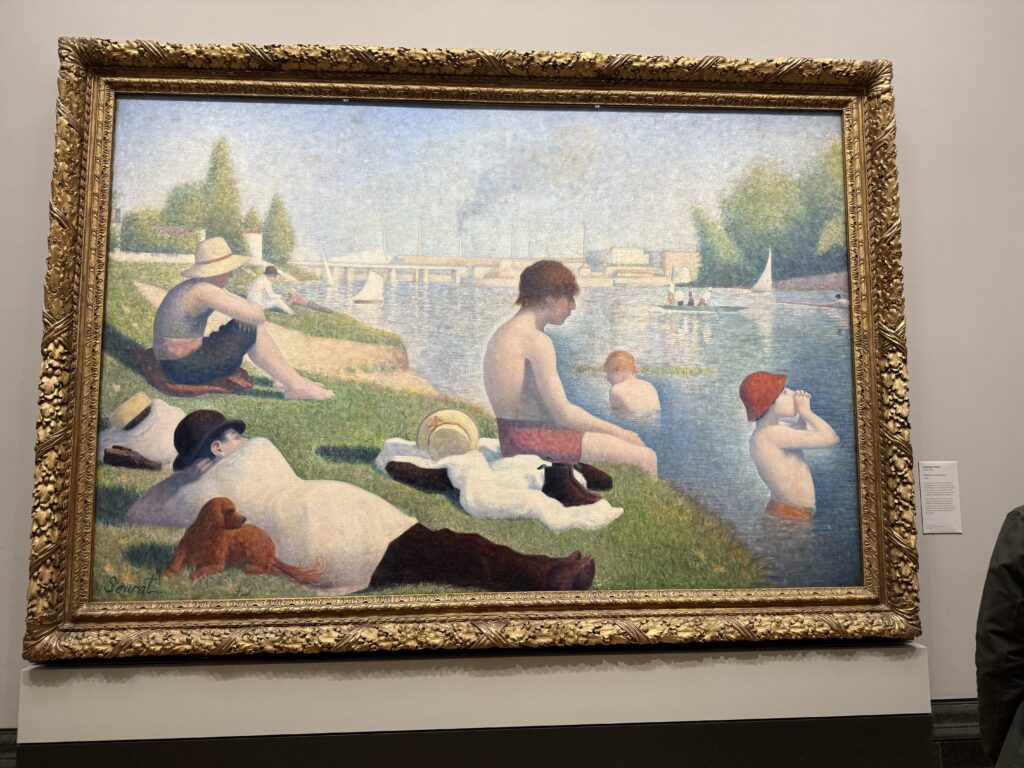
It was so dynamic, you could almost see the clouds moving. Some of my other favorites:

And the building itself was grand.

We ate lunch in the museum cafe, went back to the exhibits, and finally, reluctantly, left to walk to Covent Gardens, stopping in to St. Martin-in-the-Field Church, renown for its music program. Covent Garden (not a garden at all, but a lively collection of markets and shops and restaurants) was a surprise delight. There was a string quintet that was playing really professional music for donations. After a while, an opera singer replaced them and sang several arias, then the group (plus a new violinist) returned. We sat and had a glass of wine and thoroughly enjoyed ourselves.
Finally, we stopped for a bite to eat before going to the Victoria Palace Theatre to see Hamilton. It was a great performance—actors, set, choreography all great. It made for a long night, as we walked home and sat and talked for a while. But altogether a memorable day.

Goodbye, Cotswolds

We are out early this Sunday morning, driving to Heathrow Airport to drop off our car and take the tube into London for the last leg of our journey, saying a sad goodbye to the Cotswolds and looking forward to something completely different.

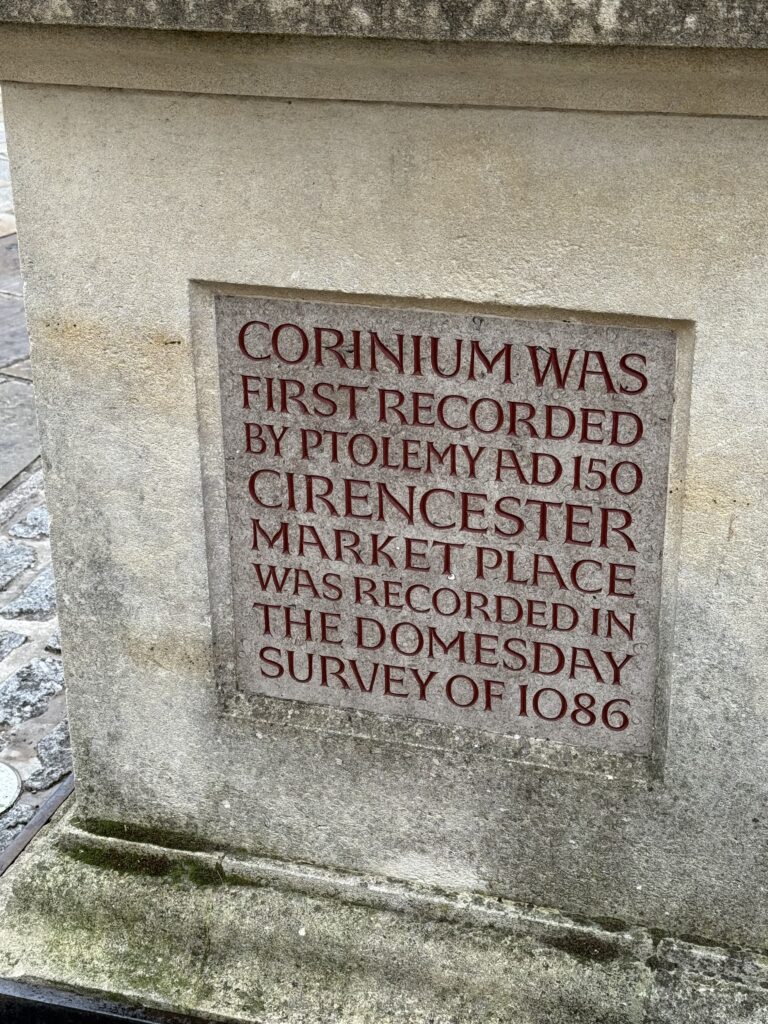
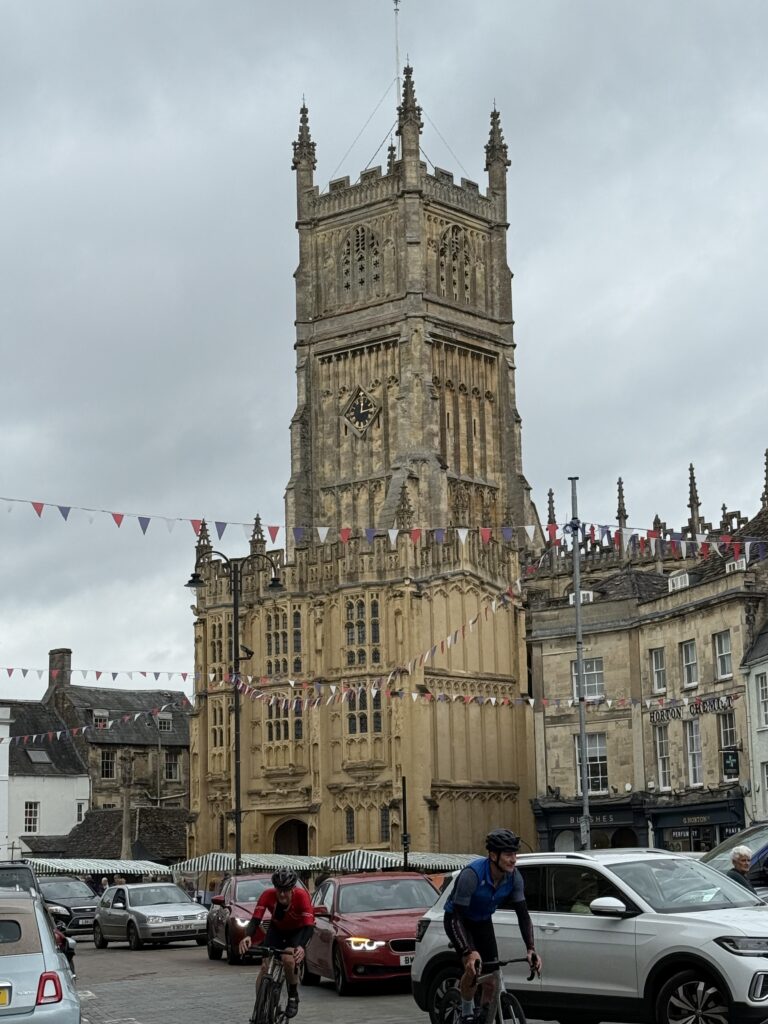
We decided to keep Saturday low key, as we are worn out, and Elaine and I both have annoying chest colds.We stopped in at Paul and Hilary’s for coffee at 10, and then drove to another Cotswold town, Cirencester, very close by. It turned out to be one of our favorites. It was Market Day, where people set up booths to sell all sorts of things, from clothes and jewelry to artisanal breads and cheeses. We walked through the market, held on a very old (as in VERY old) square.

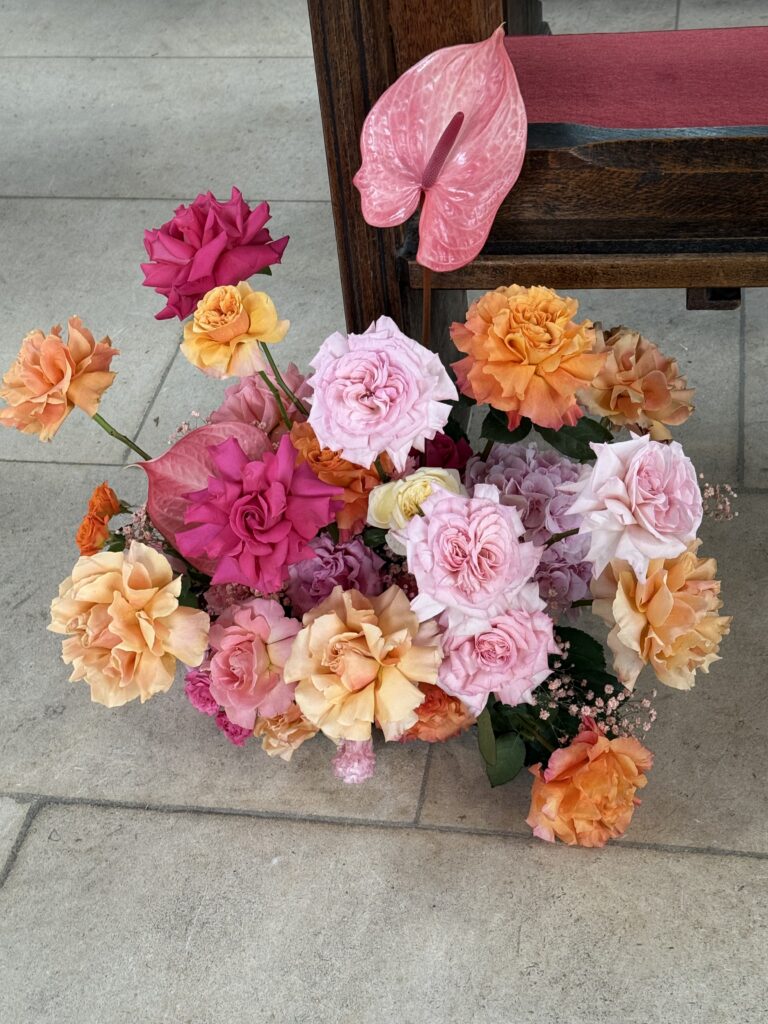
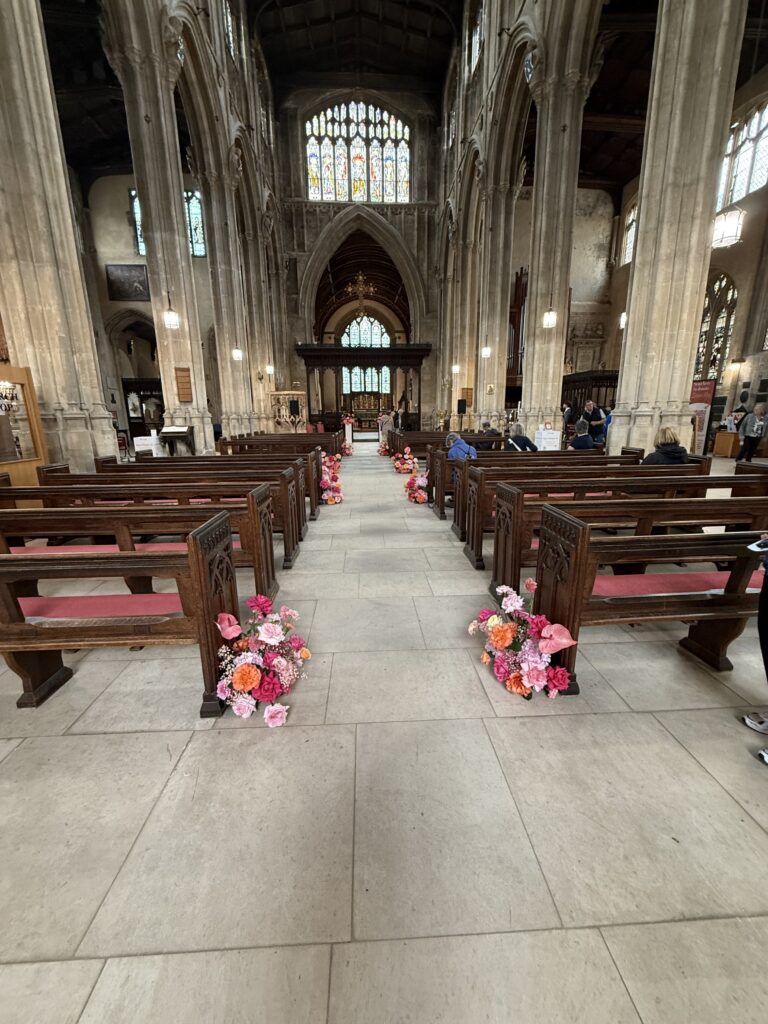
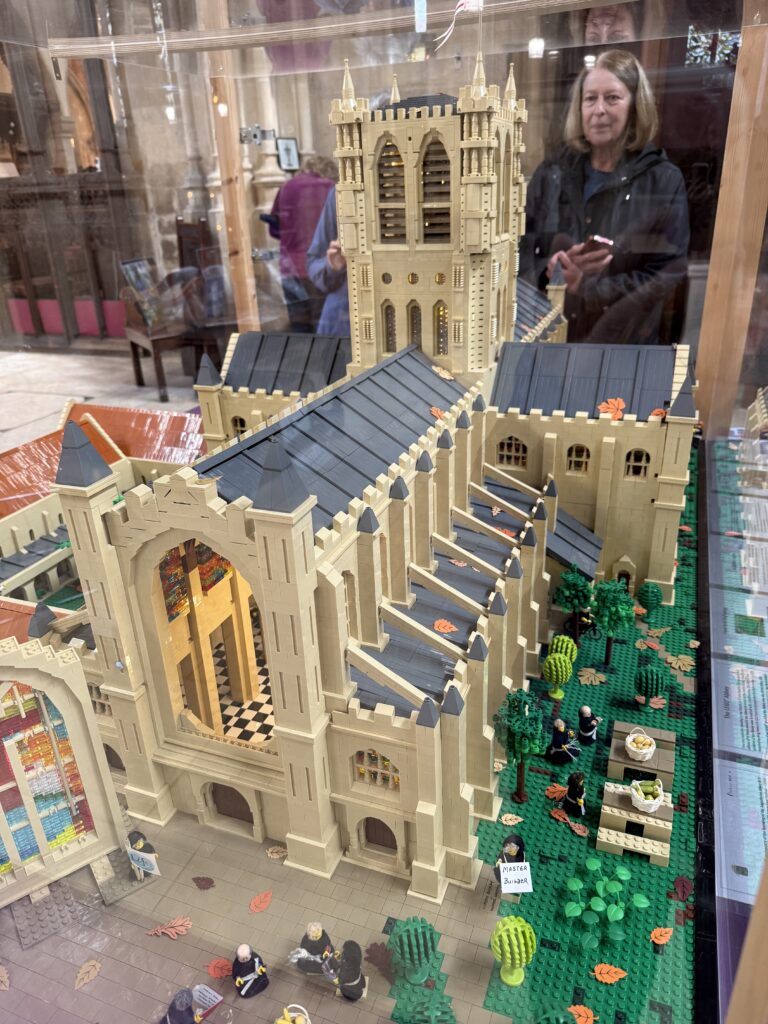
On one side of the square is the Cirencester Abbey, site of a religious order for over 900 years. The abbey was filled with flowers that I first thought were artificial, until we realized they were setting up for a wedding.

But the best part of the abbey was the model of it made entirely of Legos!

We wandered around town, peering into closes lined with shops, popping into a bookstore, and buying cheese to take to P and H before landing at The Fleece for lunch. It took 45 minutes for our food to arrive, but it was tasty and the atmosphere was cozy. One strange thing about English pubs and restaurants is that most welcome dogs. There were 3 dogs in our vicinity. Most are well behaved, but every once in a while, one will let out a loud bark that makes us jump!

We left by 3:30 to give ourselves time to rest before going back over to Paul and Hilary’s. I took a delightful nap, then we worked on plans for London. At 7 we walked to Paul and Hilary’s for the last time, meeting two more of their beautiful grandchildren, Archie and Oscar. Hilary multitasked her way through overseeing bath time and bedtime while making a lovely dinner of Boursin-stuffed chicken breasts, peas and zucchini, and new potatoes.

We spent 6 days with Paul and Hilary, and never ran out of conversation. They were so hospitable and so interesting. But most of all, they are kind and caring humans. I am grateful to have had this time with them.

And now…3 days in one!

Our days have been full, long and exhausting. I will try to catch up.

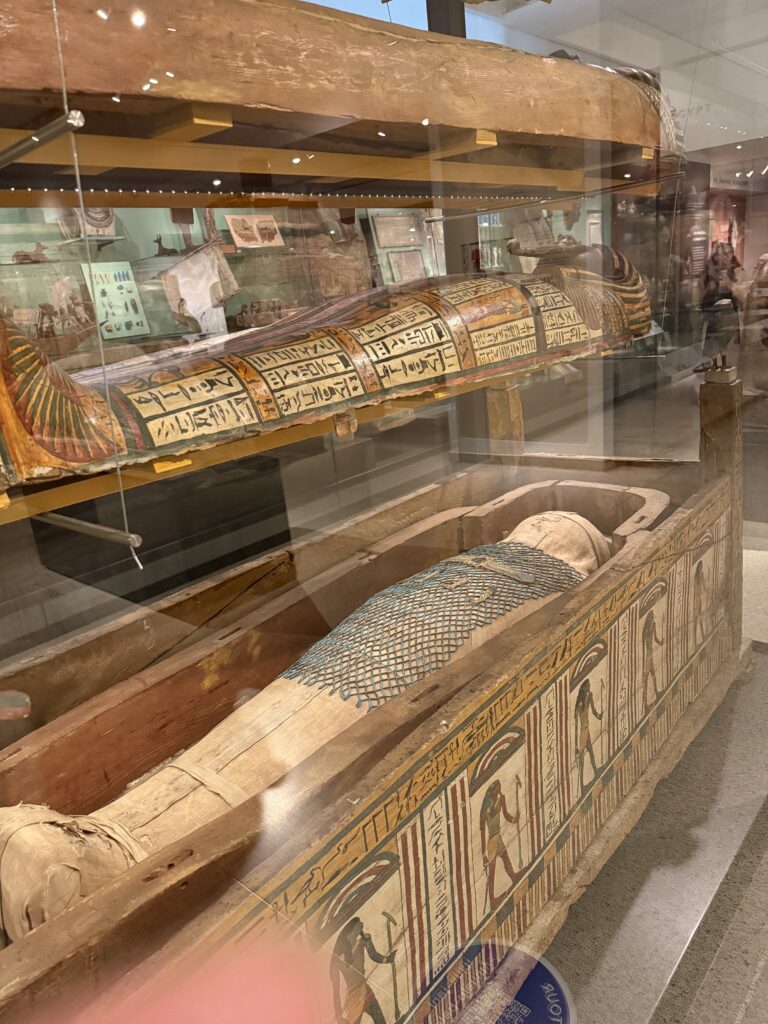
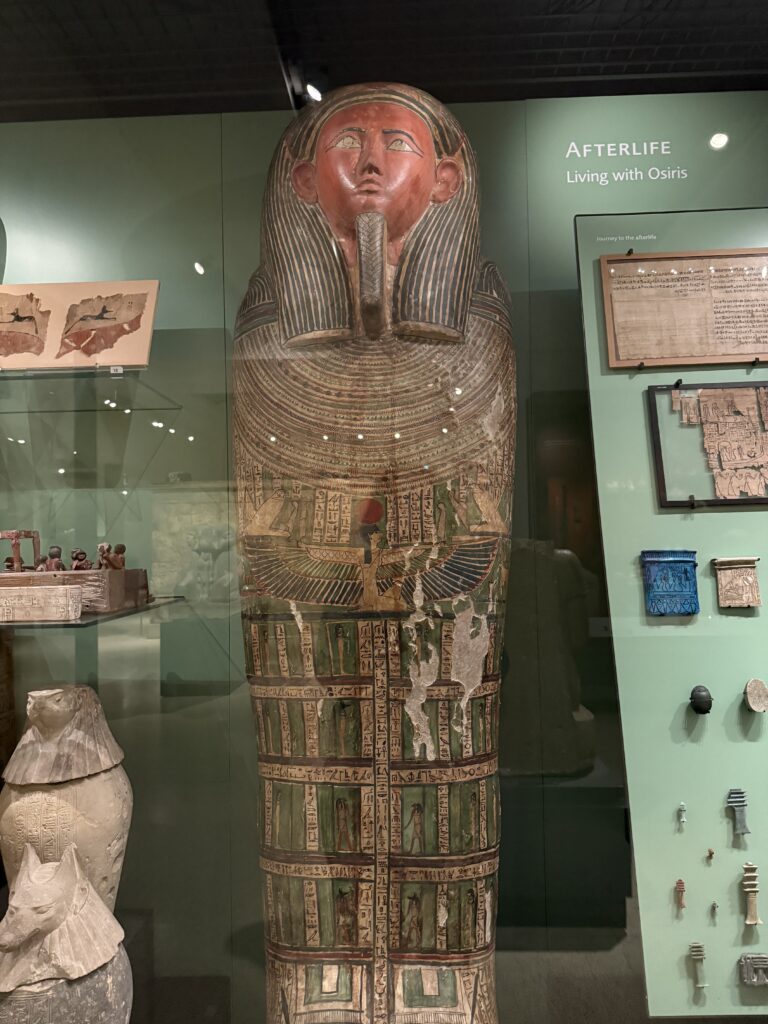
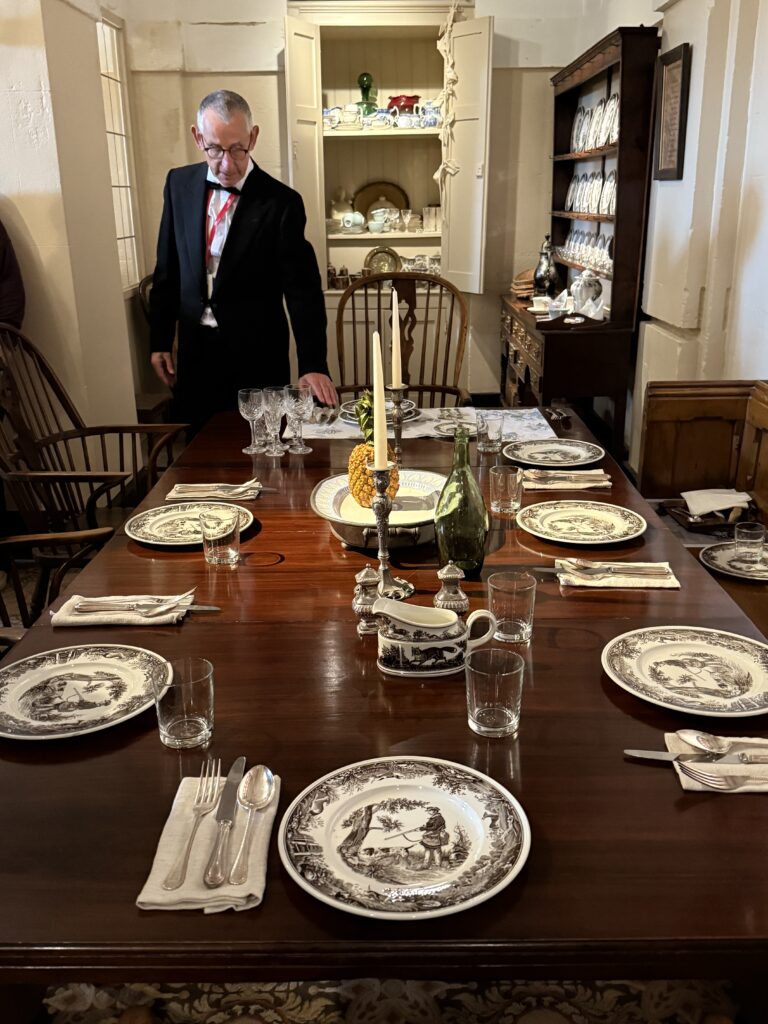
On Wednesday we drove to Oxford, where I spent a month at Jesus College during the summer of 1967. We started at the Ashmolean Museum, with its wonderful collection of Egyptian mummies and funereal accessories and an interesting collection of art. The Pisarro family donated many really good pieces or his work.

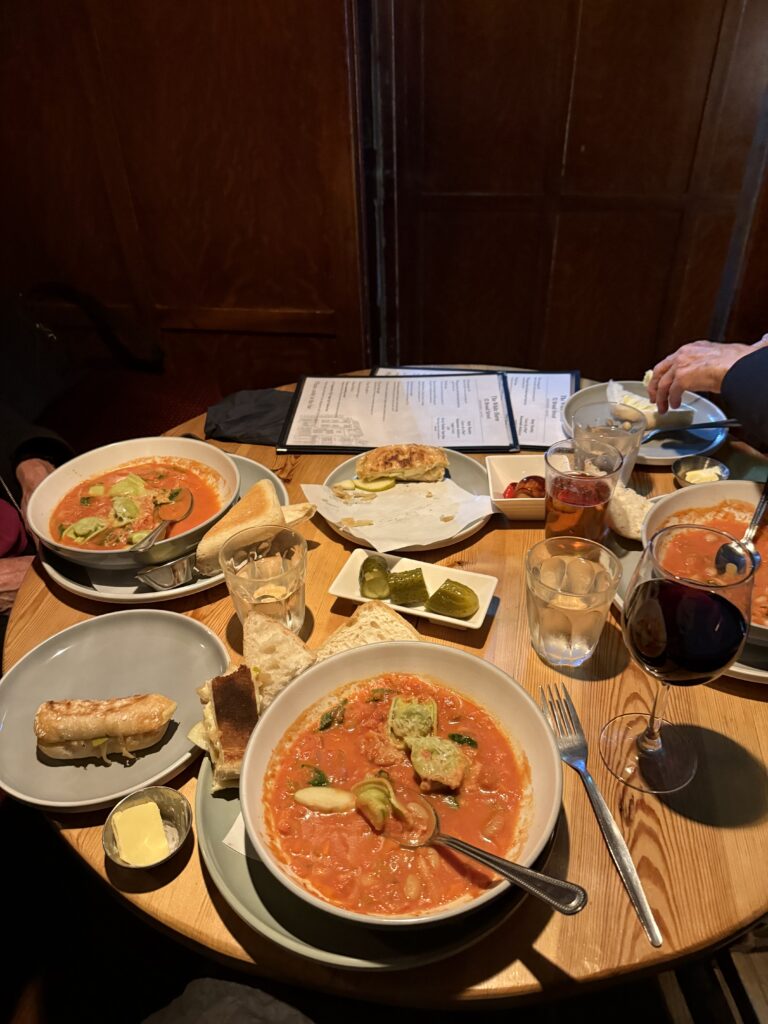
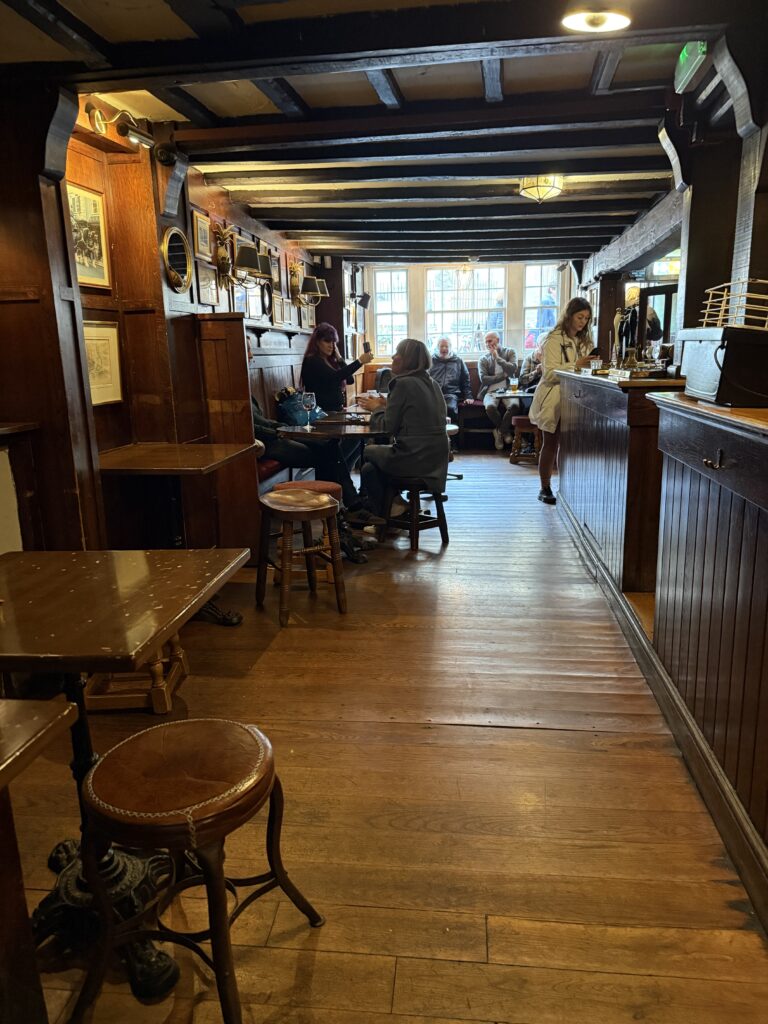
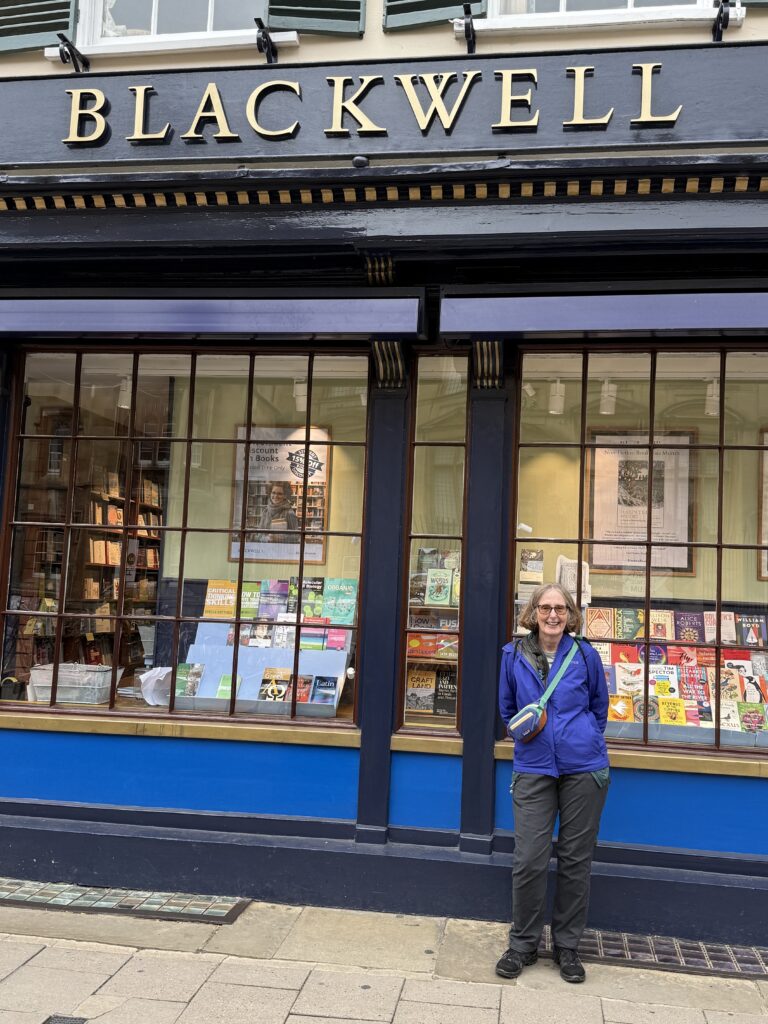
We had a nice lunch in an old pub, next to Blackwell’s bookstore, a favorite haunt of mine 57 years ago. We shared Welsh rarebit!

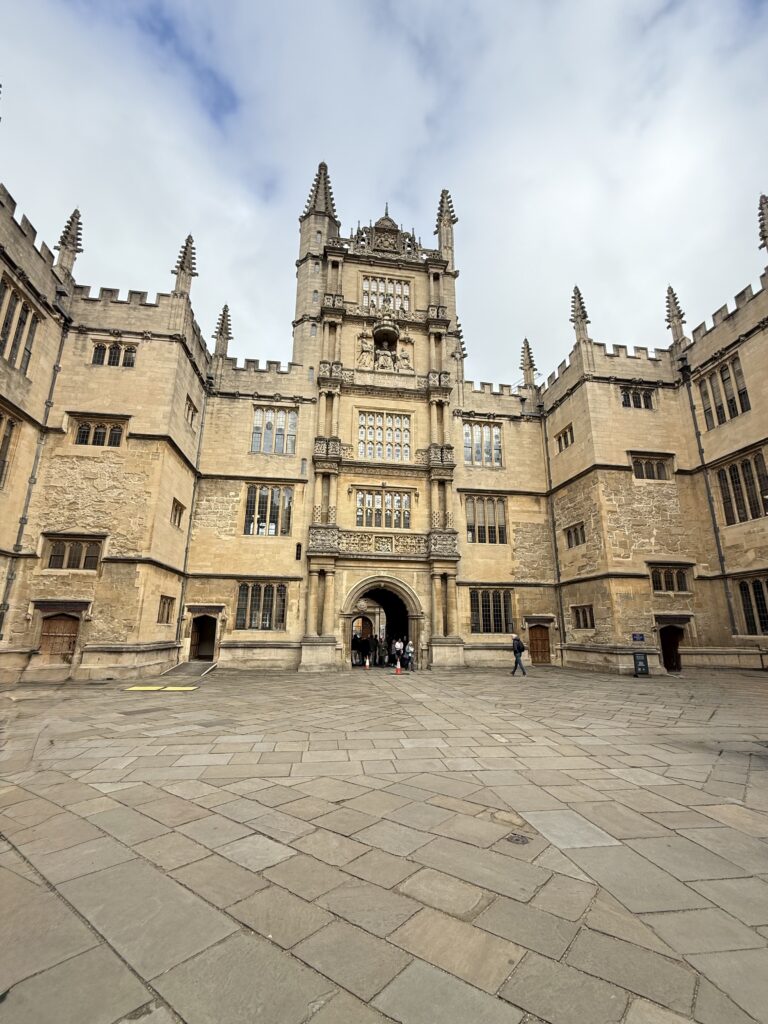
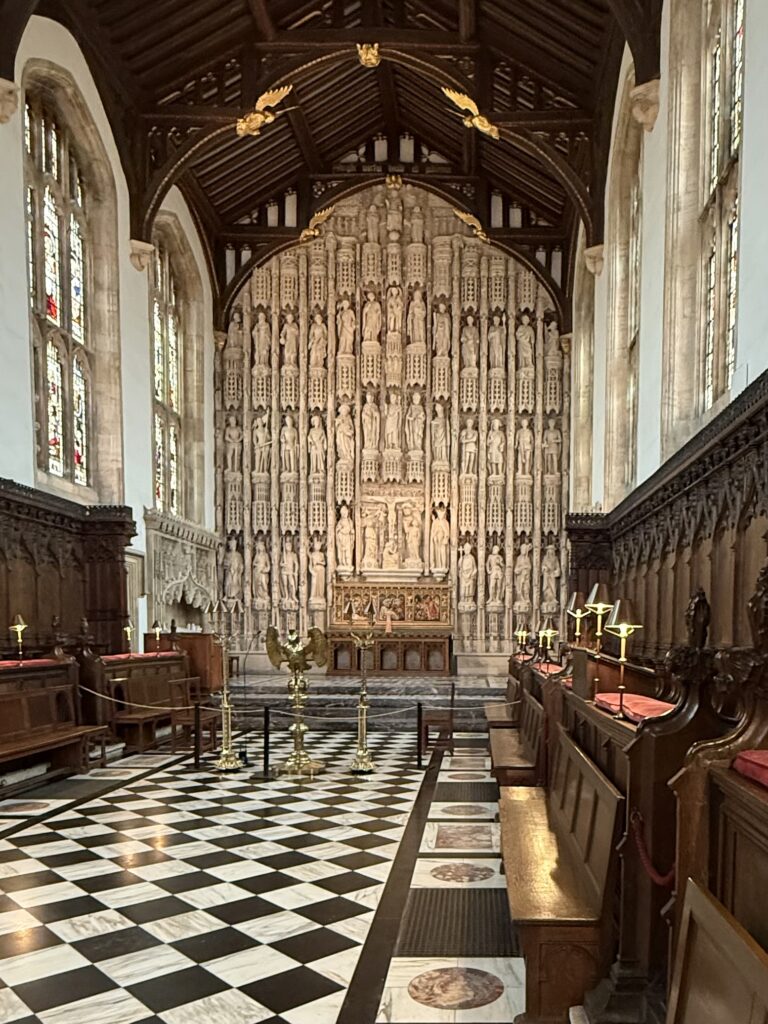
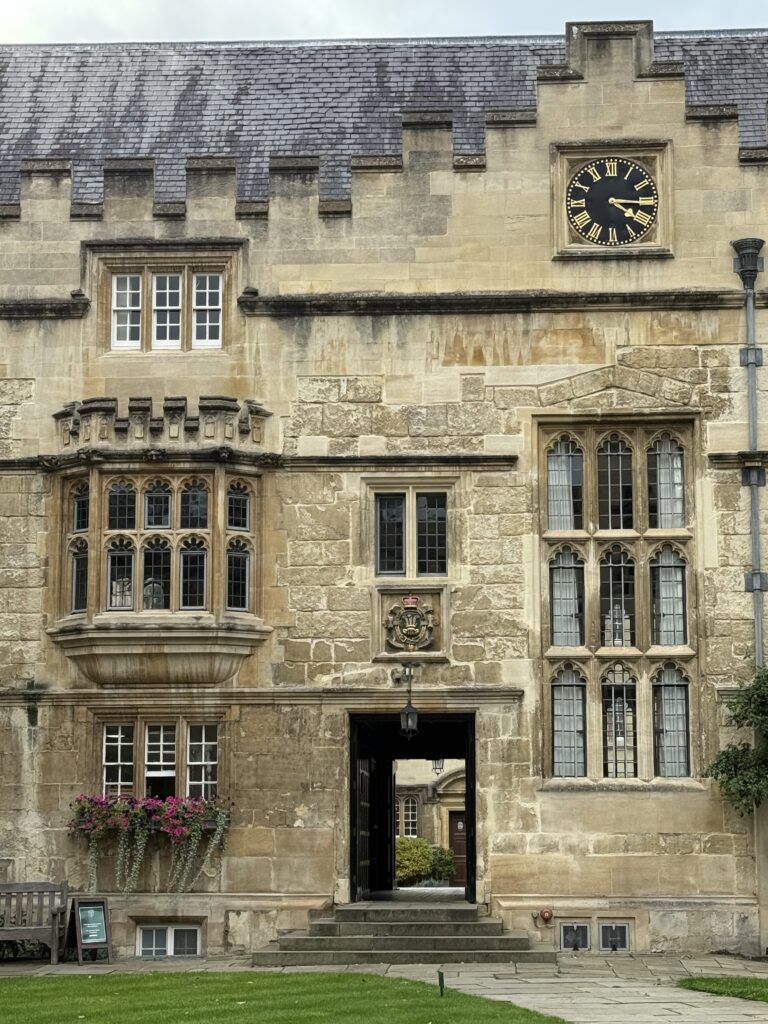
Next, we saw the courtyard of the Bodlean Library, the quad and chapel of All Souls’s College (1438) and the quads and dining hall of Jesus College. It brought back so many memories!

Everything we do takes longer than we anticipate, so we finally learned to make smaller goals for the days. Instead of trying to see Oxford and Blenheim Palace on the same day, (they are 30 minutes from each other), we decided to see the palace on Thursday. Wise choice!

We didn’t get back until almost 6. We had already packed up to go to the carriage house of a friend of Hilary’s, as Paul and Hilary’s youngest son, Simon, daughter-in-law, Emma, and 3-year old granddaughter, Daphne, were there for the night, then Simon and Emma were leaving the next morning for a wedding. We dropped our things off and returned to Paul and Hilary’s for a dinner that didn’t begin until at least 8:30, after they got Daphne to sleep, and didn’t end until long after my bedtime. The simple, elegant meal was out shadowed by the laughter and conversation. Simon and Emma were so personable. They currently live in LA, where Simon essentially manages the lives of billionaires, while Emma works in marketing for Snapchat.

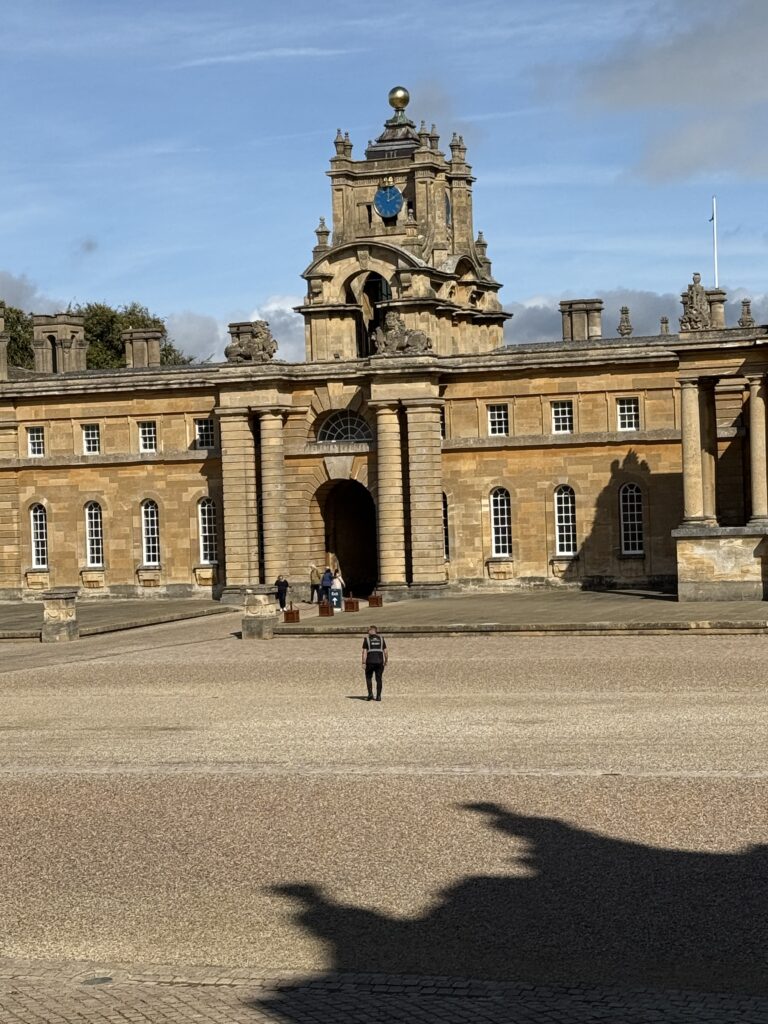
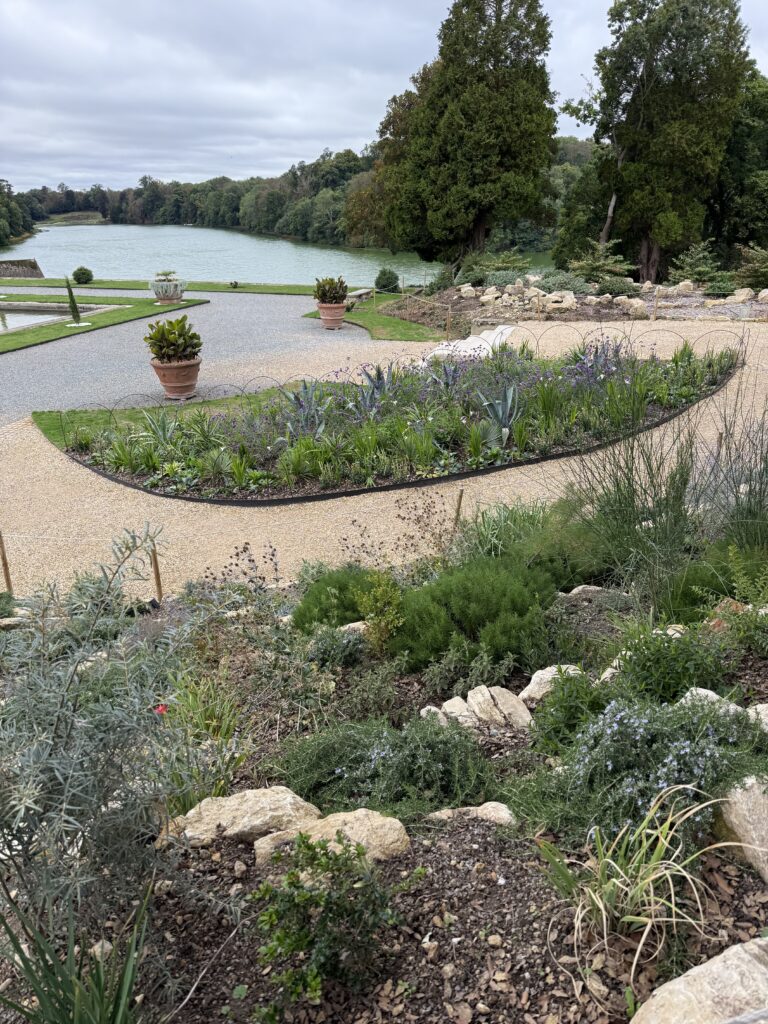
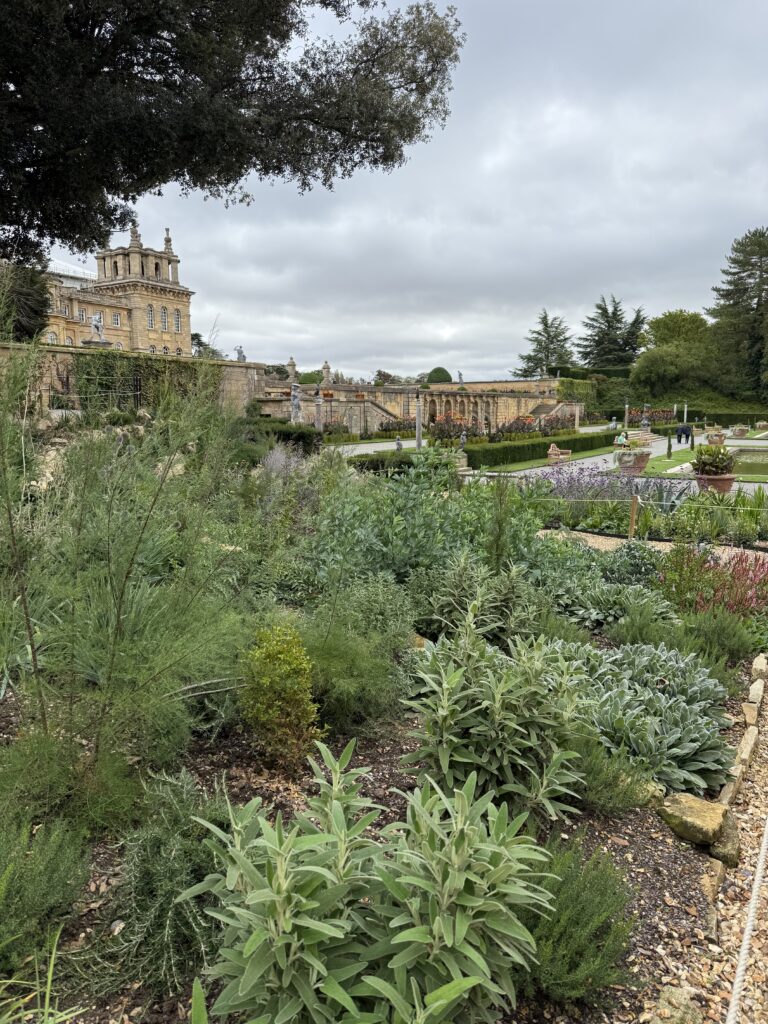
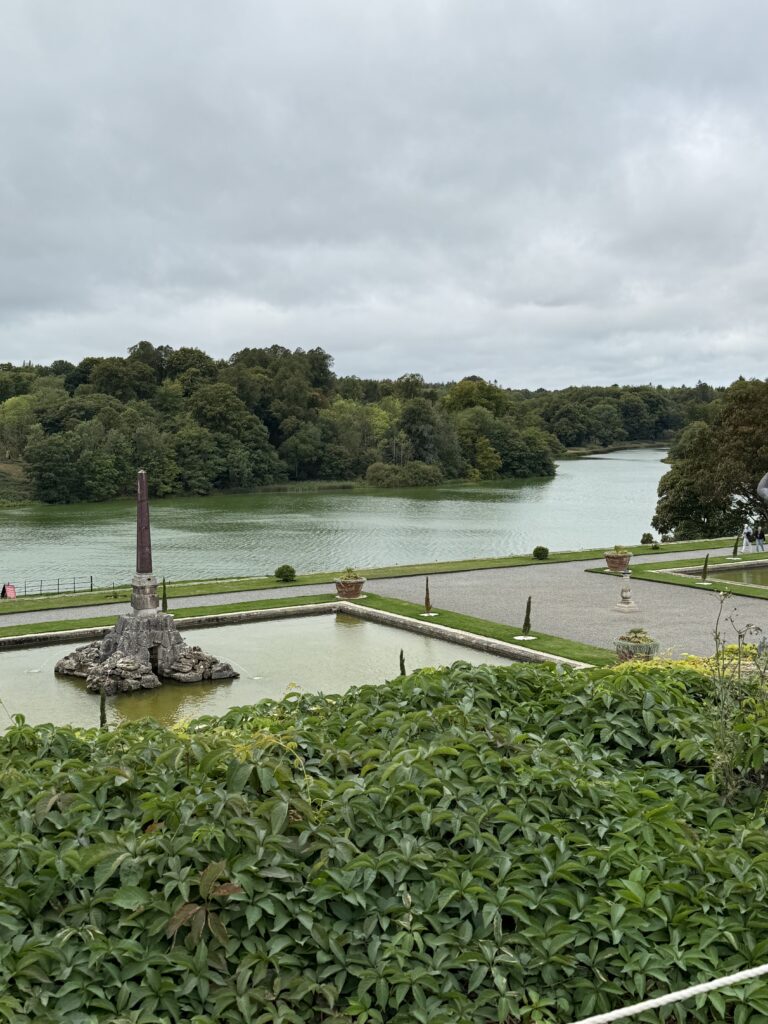
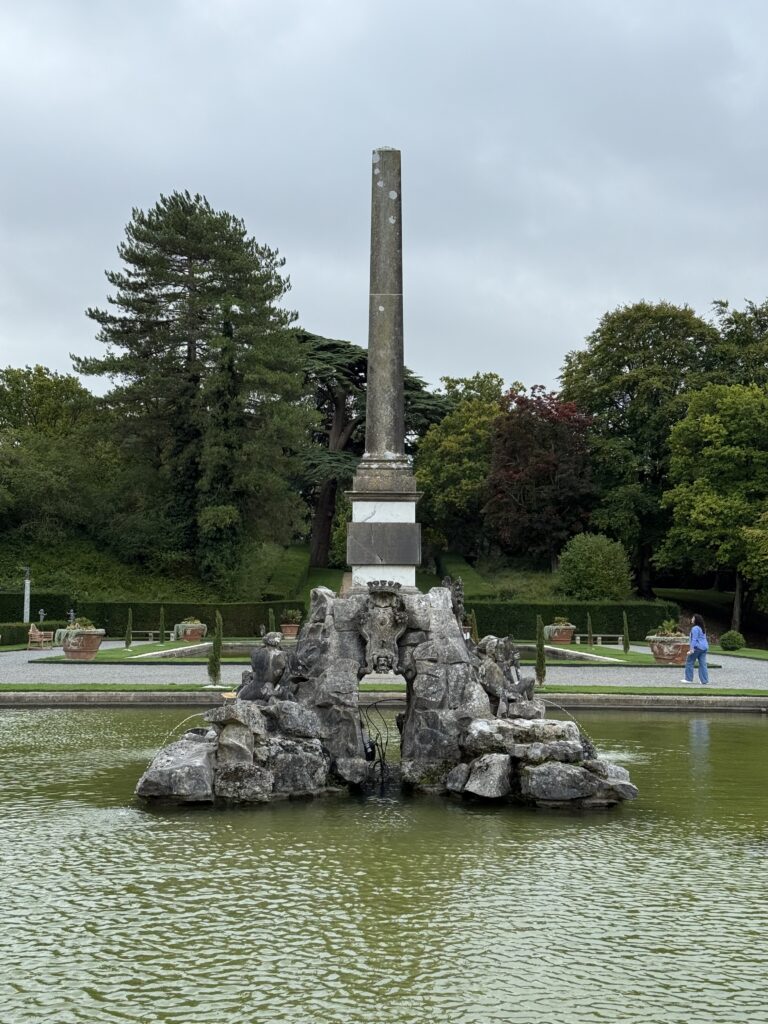
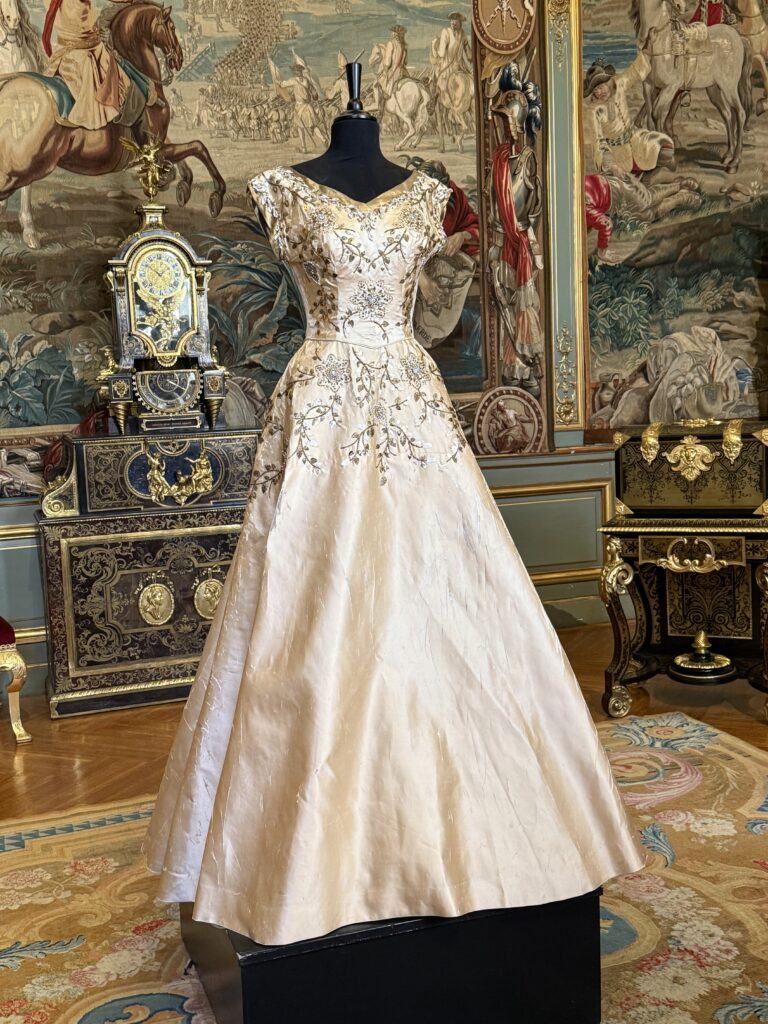
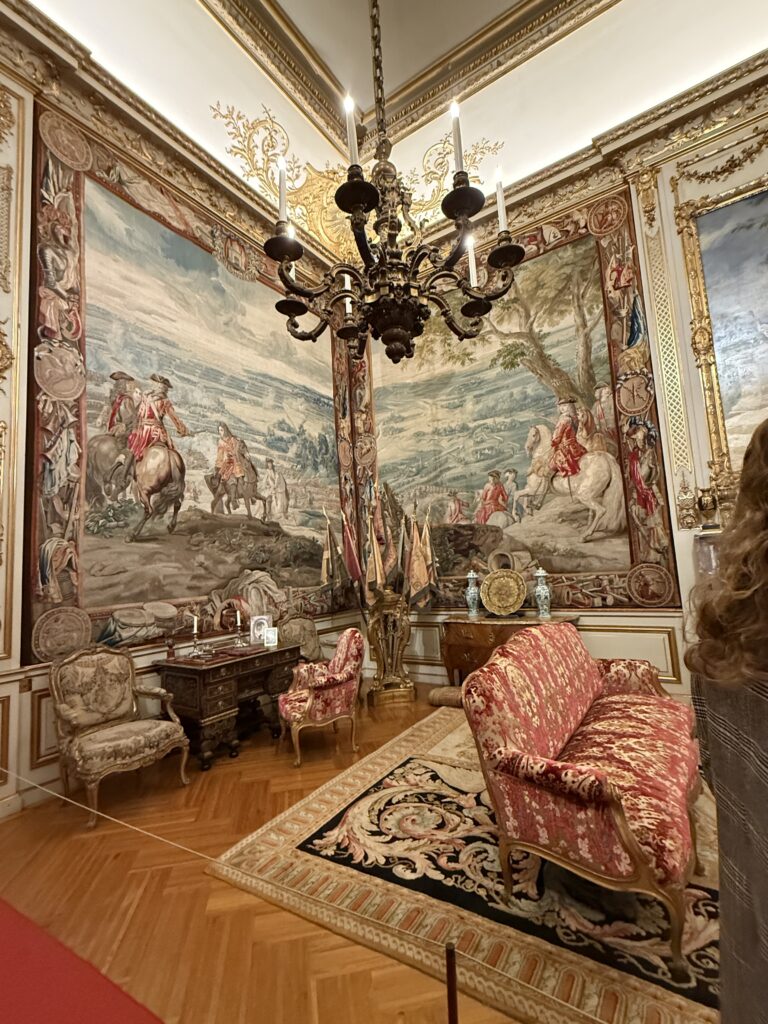
On Thursday we set off for Blenheim Palace, getting there in time for 3 tours, back-to-back—the gardens, the “downstairs” and the palace tour itself.

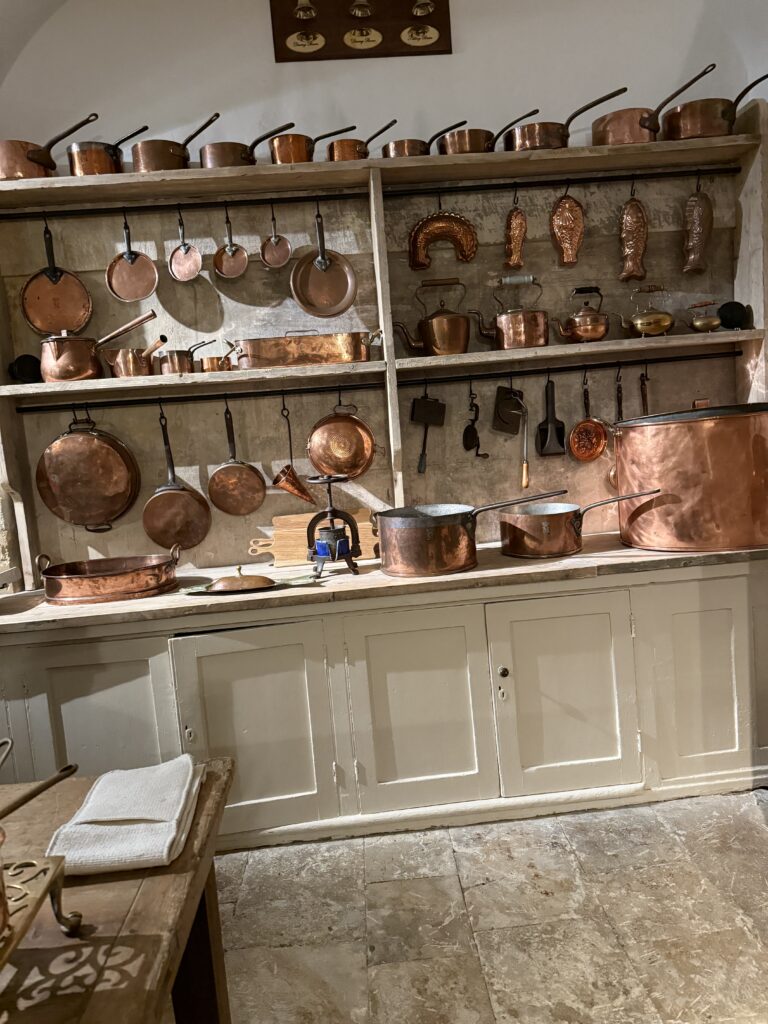
The volunteer who described the downstairs explained that he was one of 12 children, who had started at the palace at age 10, stoking the main fire all night, then worked his way up to the position of footman, working for the palace till age 58. He told us of the workings of the intricate bell system, the toilet facilities, the complex hierarchy of the downstairs staff, etc.

The palace was built between 1702 and 1722 to commemorate the victory of John Churchill in a battle of Blenheim, Germany. The design and build was overseen by Sara Churchill. John and Sara were the 1st Duke and Duchess of Marlborough. There are many wacky stories, including about Consuela Vanderbilt, wife of the 9th Duke (who was a cousin of Winston Churchill) and of Gladys, the Duke’s second wife, who was a great beauty until she decided she needed a wax implant in her nose and it melted down into her chin. Fun with royalty.

Winston Churchill was born at Blenheim, stayed there often, painting and writing his many books. A copy of one of his school report card suggests he was a less than stellar student, but he did okay for himself in the long run.

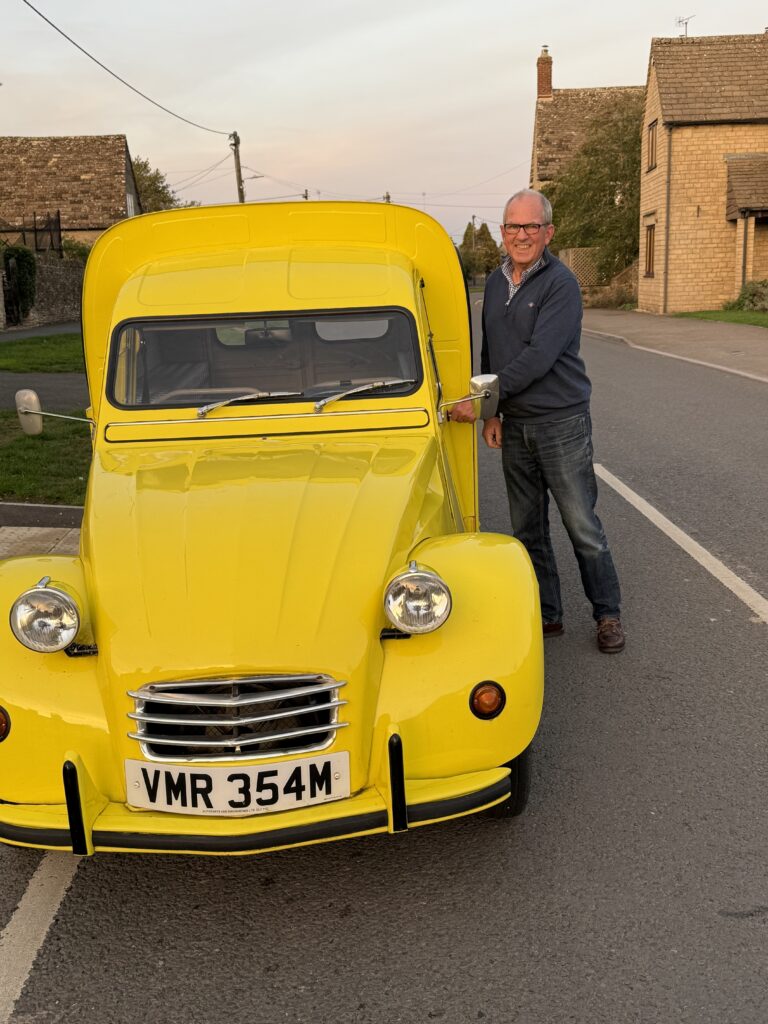
We got home in time to have a drink with Paul and Hilary, then Paul and I drove to a nearby store in his 50-year old 2-seater delivery vehicle—an amazing experience!

Paul and Hilary have a business, Blackford Limoncello. They used to make it all themselves, but now have a distillery making and distributing it. This was their “retirement” job that got away from them.

We also got to watch Daphne play in puddles. Such a quintessential childhood activity!

We stayed for dinner, but tried to leave earlier so we could get some rest. We have been running ourselves ragged every day for more than 2 weeks.

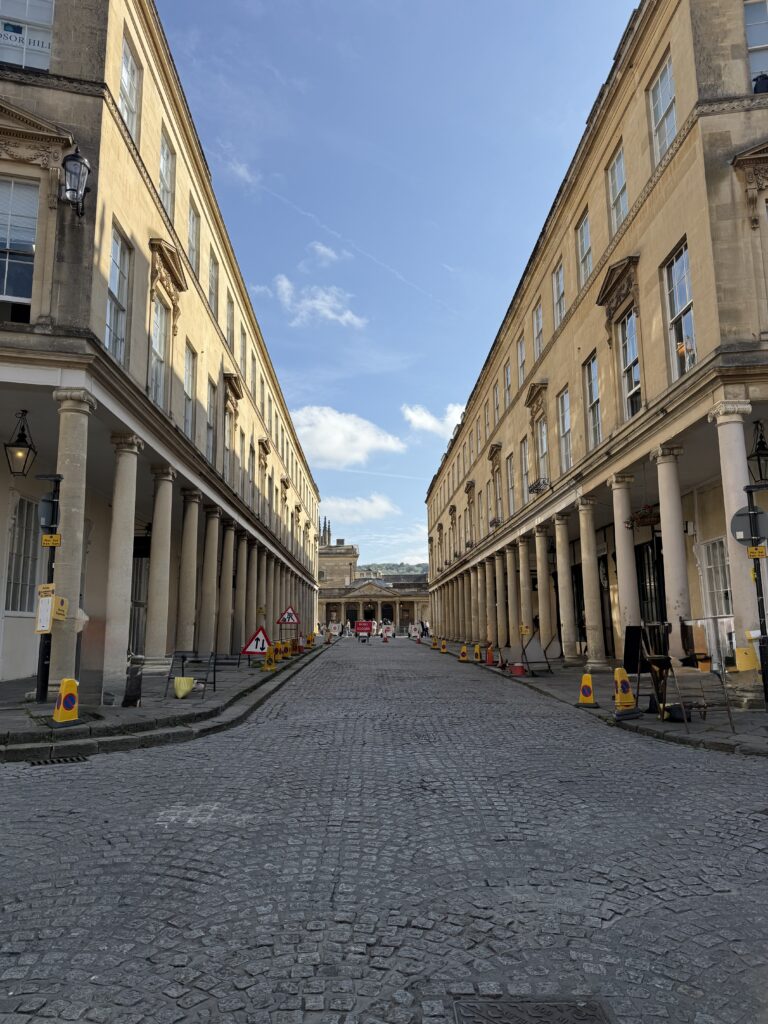
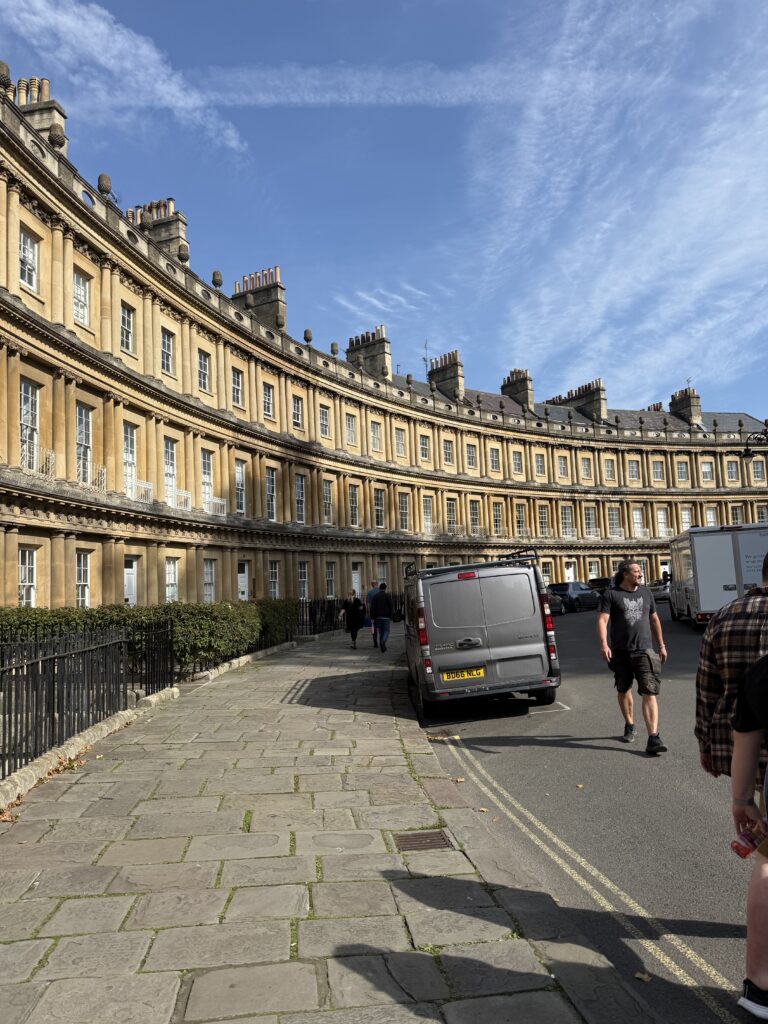
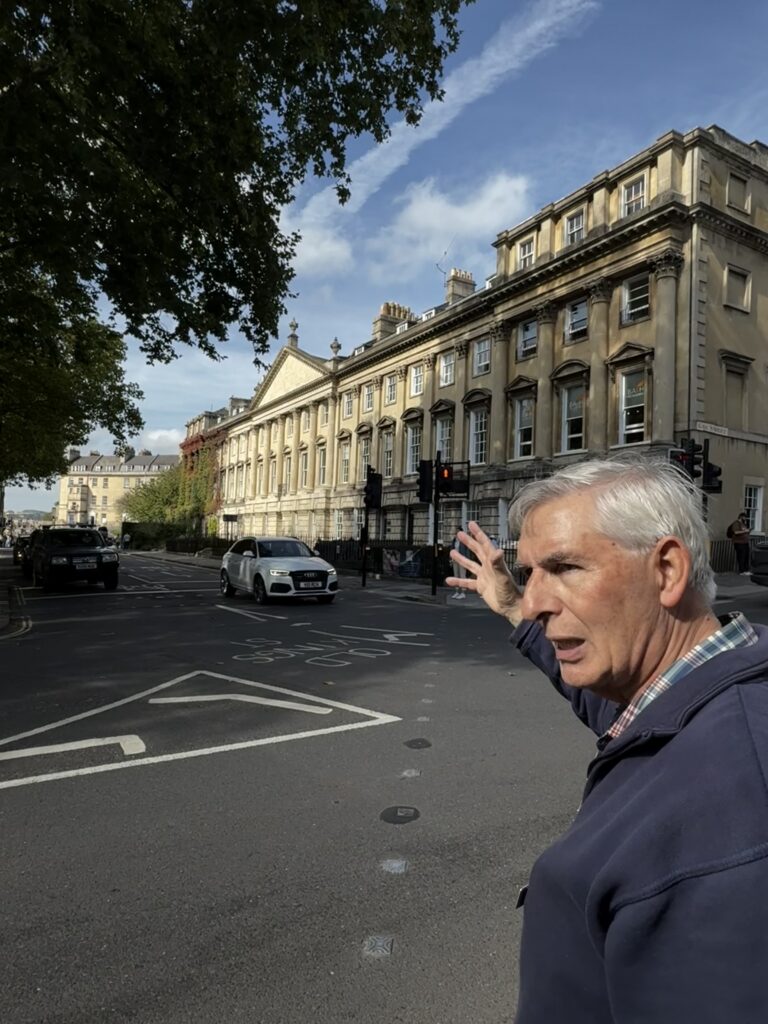
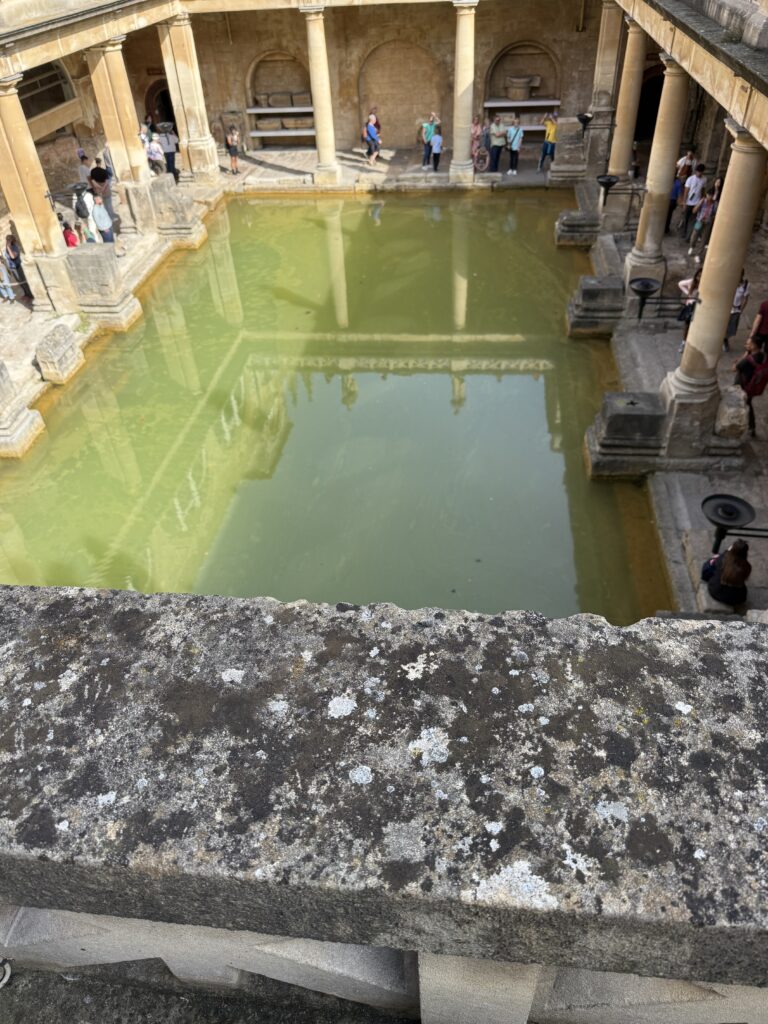
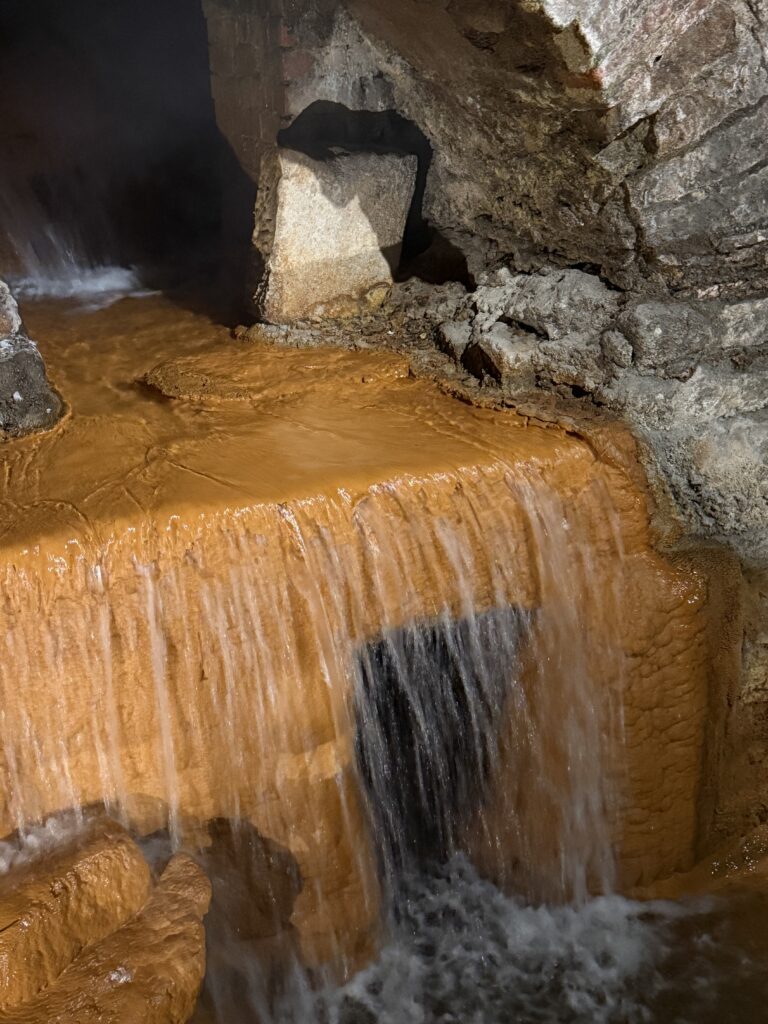
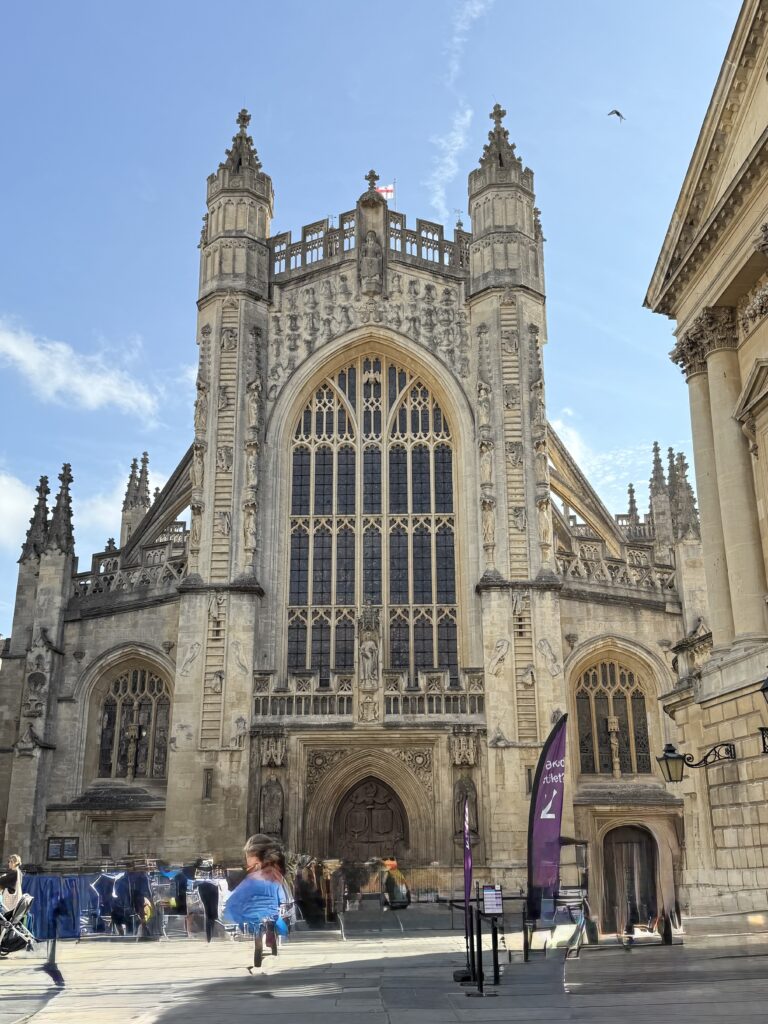
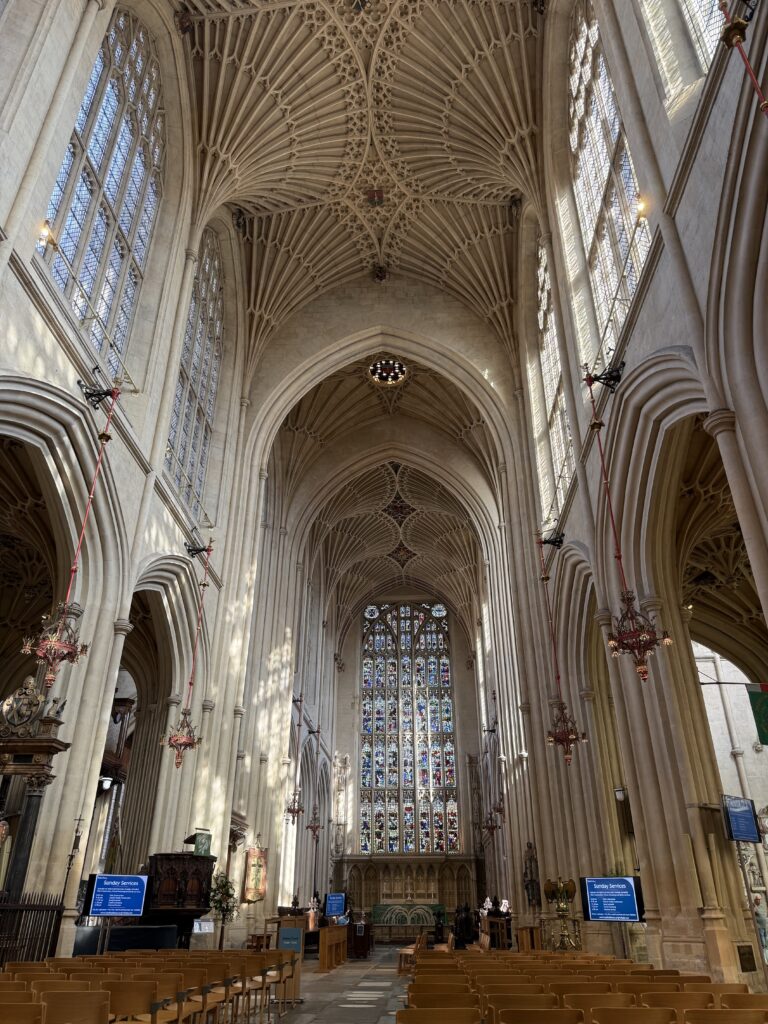
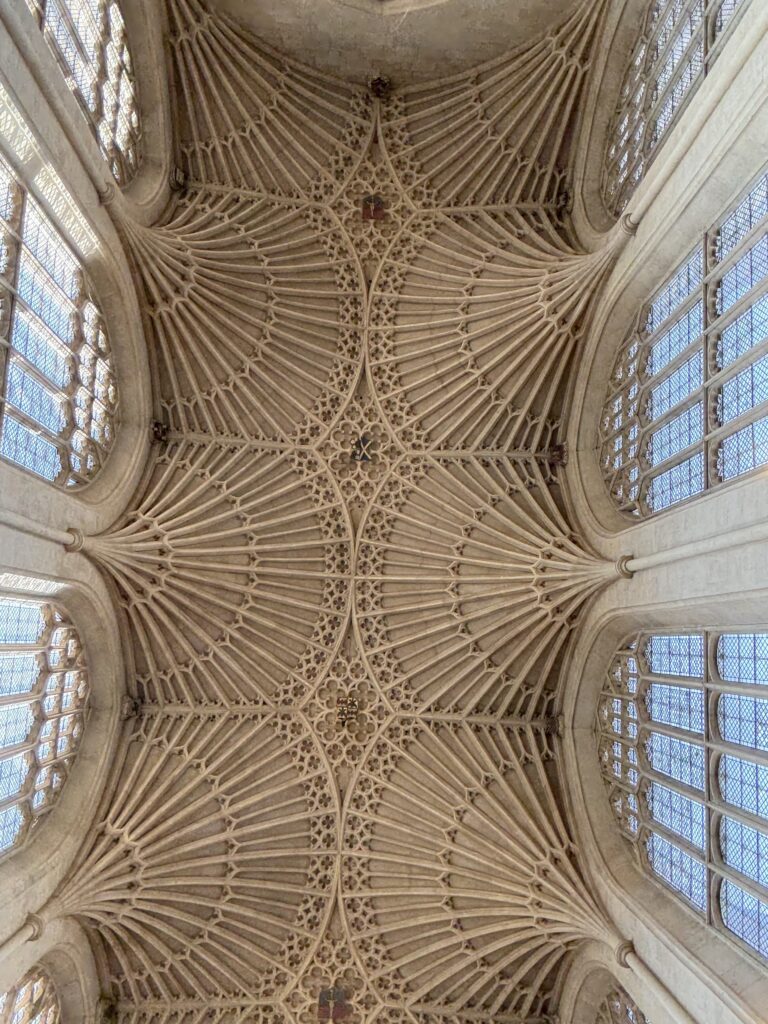
Today we continued our marathon sightseeing, driving to Bath to see the Roman baths, the abbey and the largely Georgian town. First we took a 2-1/2 hour tour of the city. Our guide, Michael, was both animated and informative. He showed us the only 3 remaining medieval structures, and explained the Georgian architecture that dominates the city (not my favorite). We saw the Circus and the Royal Crescent, the River Avon, etc. Then we went to the Roman baths, dating from the 1st century AD, and the Bath Abbey. The Roman baths were so touristy and so very crowded that they weren’t very impressive (and the water seemed algae-filled). The Abbey was beautiful, but frankly, I think we are abbeyed out.

The Abbey was literally paved with gravestones, with hundreds of memorial plaques on the walls. One of them really touched me. It was memorializing a woman who died at 36, and it was presented by her friends. It read:

”Her understanding was excellent

Her genius innocently sprightly

Her heart sincere and generous

Her conversation agreeable

Her friendship constant

Her mind and person equally amiable.”

What a loving tribute.

Tonight we took Paul, Hilary and Daphne to the local pub for dinner. It is an unusual pub—very nicely appointed, with excellent Indian food. Good times, and some good pictures.
That’s a wrap.

Two Days in One

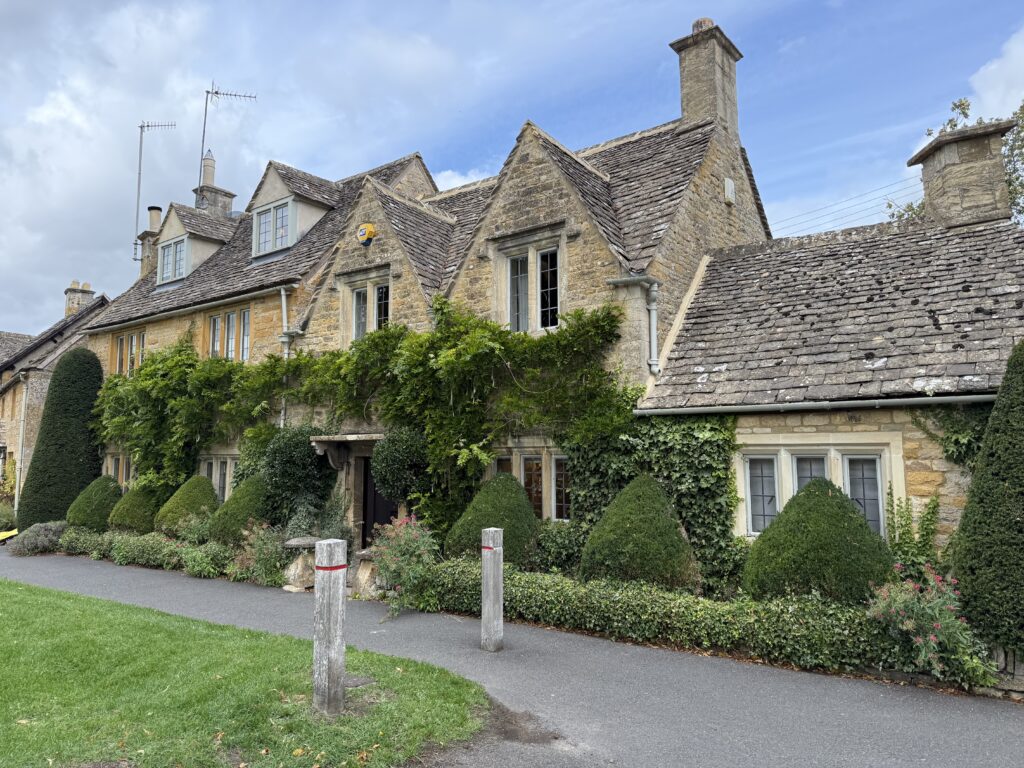
I have a lot of catching up to up to do. Yesterday (Monday) we drove to Cerney Wick, a tiny village on the edge of the Cotswolds—50 houses and a pub. Paul and Hilary Blackford live in Mill Cottage. The original part of the house is 200 years old, while they have added on to make it a large and inviting space. They welcomed us warmly, as if we were old friends, though we really only spent one week with them last year.

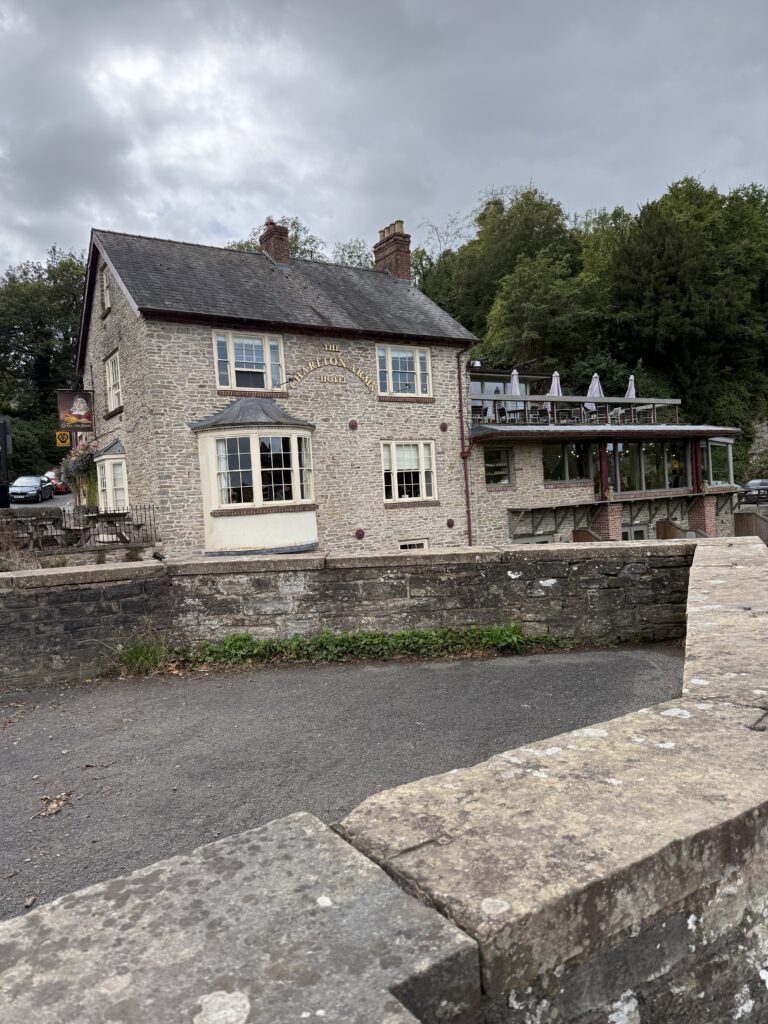
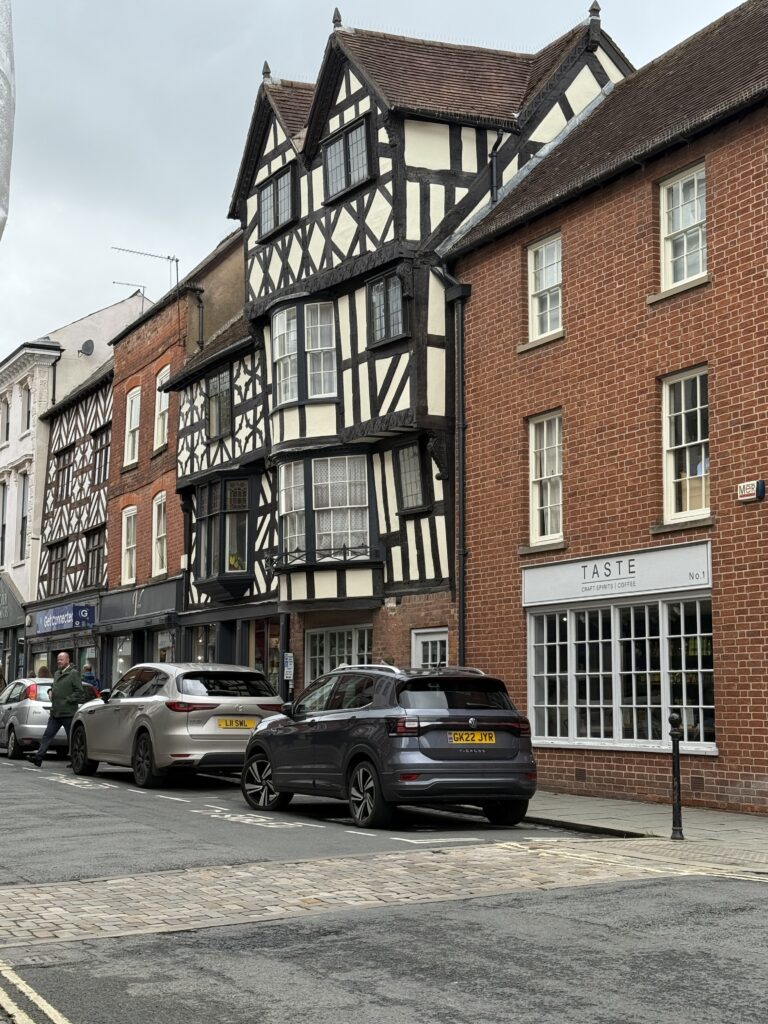
The ride there was lovely. At Paul’s suggestion, we stopped at Ludlow and had a great lunch at the Charlton Arms by the river, sharing three starters and a sticky toffee pudding with sea salt ice cream. Amazing. Then we walked through the town, gawking and taking pictures.

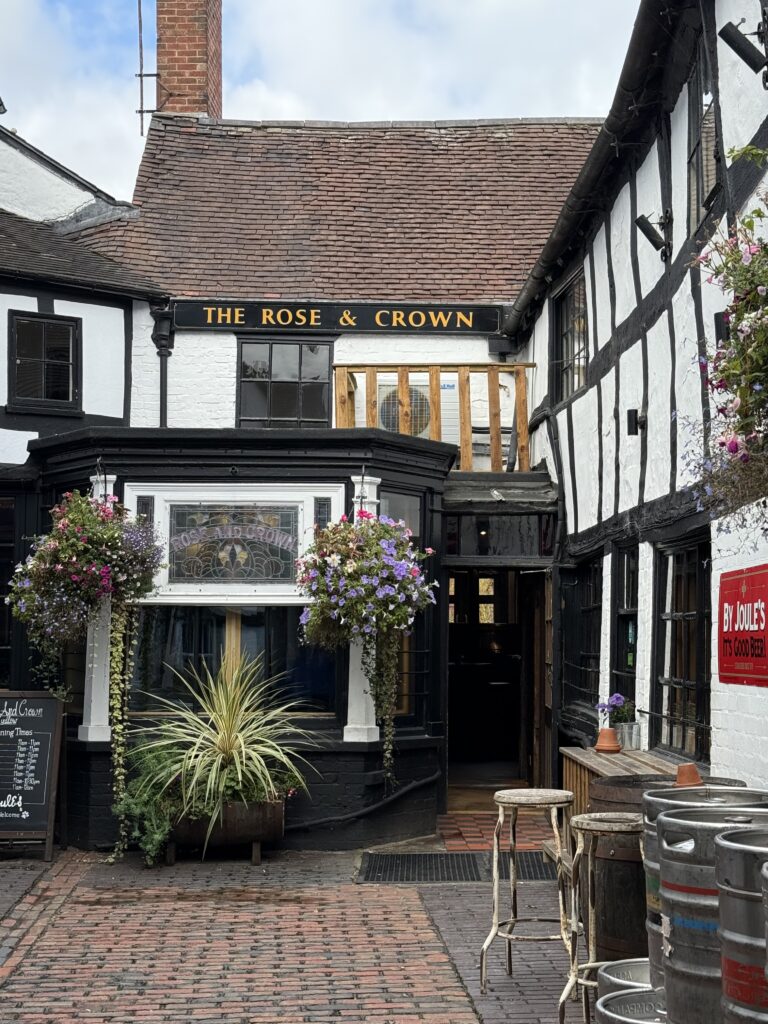
We walked past an old inn and pub, in continuous operation for 600 years!

When we arrived at Mill Cottage, Paul opened champagne, and we dined on lasagna and salad, with ice cream and strawberries for dessert, mixed with lively conversation and plenty of laughter.

We each have our own bedroom! I slept so well!

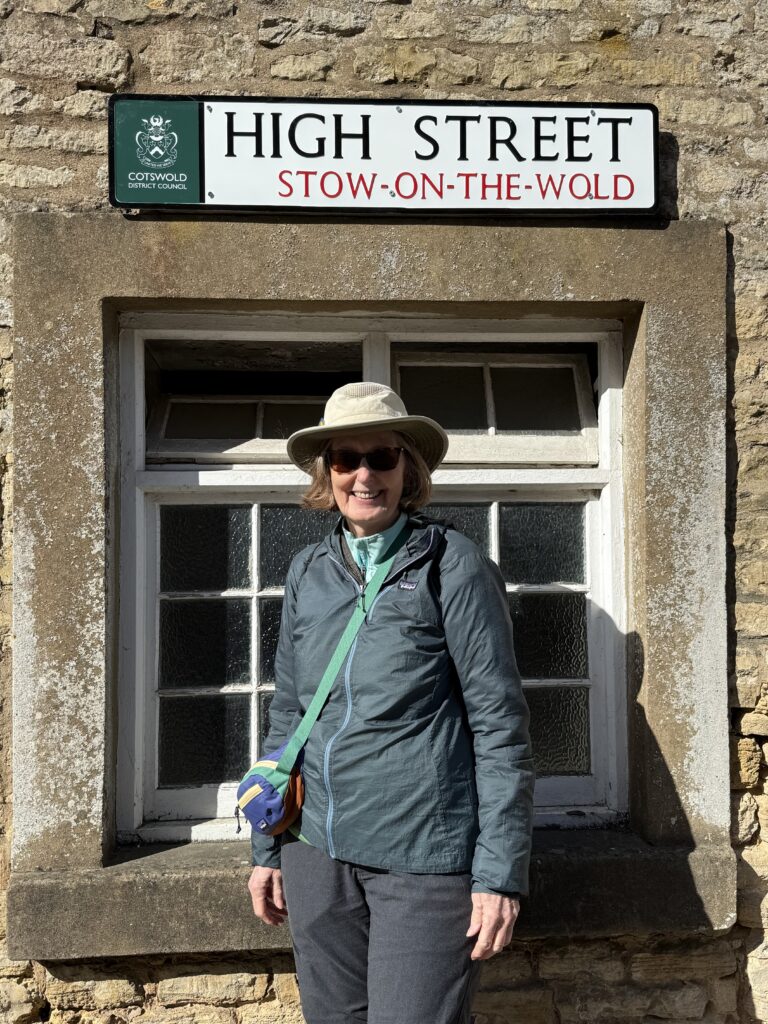
This morning it was hard to get out of the house, as we lingered over the breakfast table, with good coffee and more conversation. But finally we made our way to Stow-on-the-Wold to start our village-to-village walk.

First, we walked around Stow:

And then we set off on the footpath that winds through fields and forests, first through Lower Slaughter and then to the most touristy Bourton-on-the-Water.

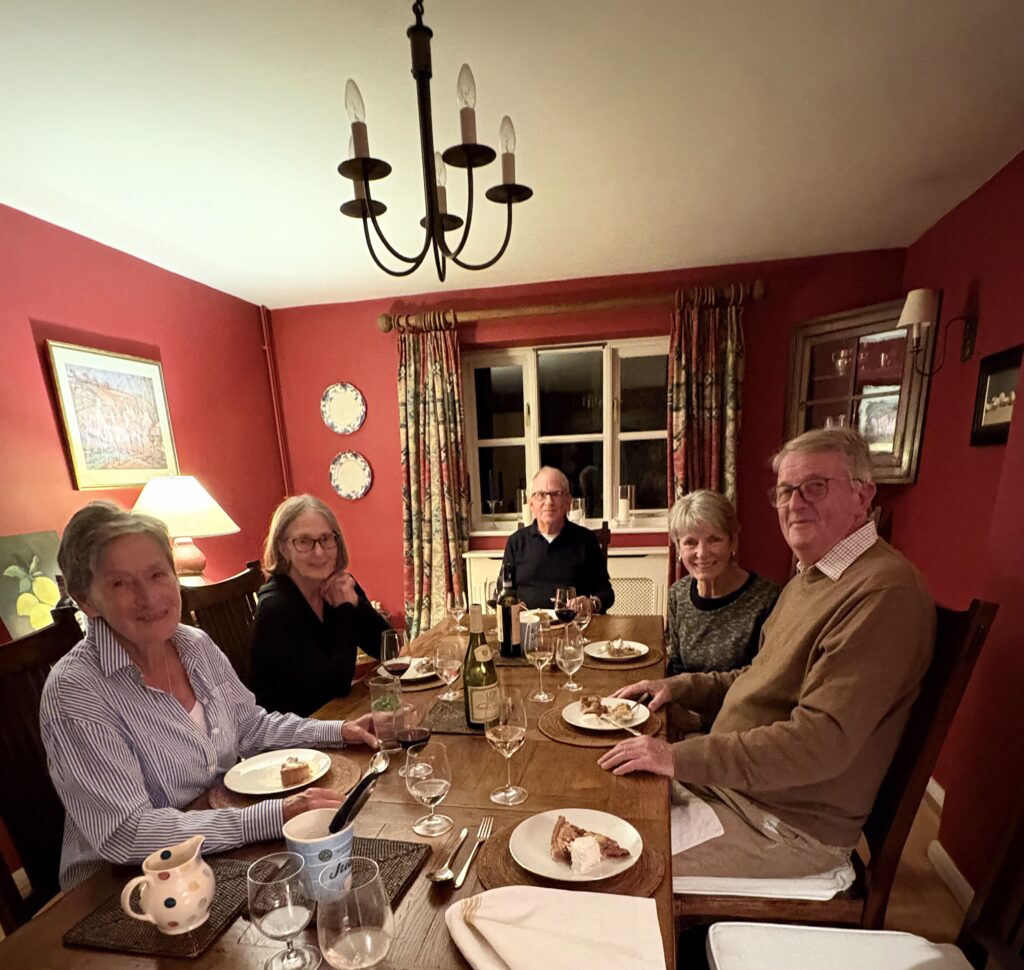
When we got home, we cleaned up enough to be presentable for dinner, as one of the other couples who were in Croatia with us, Jane and John, came as well. Hilary put on an amazing meal, Paul opened good wine and we all enjoyed being together until late in the night.

Rainy Day Change of Plans

Rain, cold and wind didn’t stop us from having a wonderful day, but they did stop us from going to Llanberis to ride the train to the top of Snowdon Mountain, the highest peak in the UK below Scotland, in the Snowdonia National Park. High winds and fog prevented the trains from running. So most of our time in Wales was spent near the coast, and we missed the rugged mountain interior.

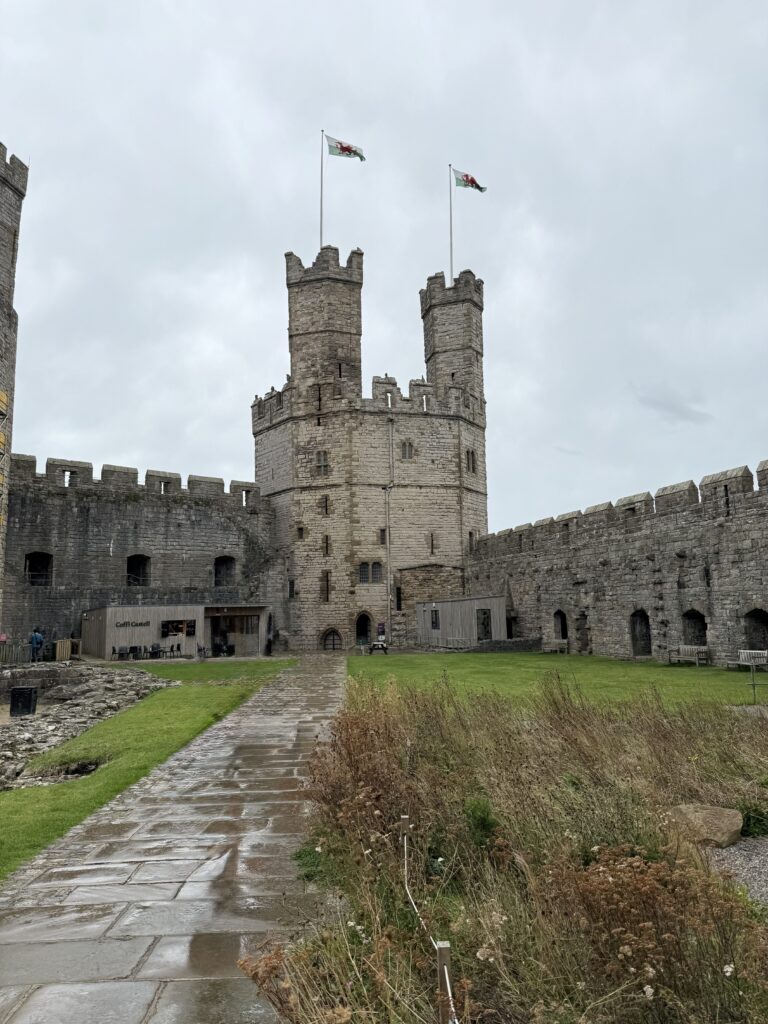
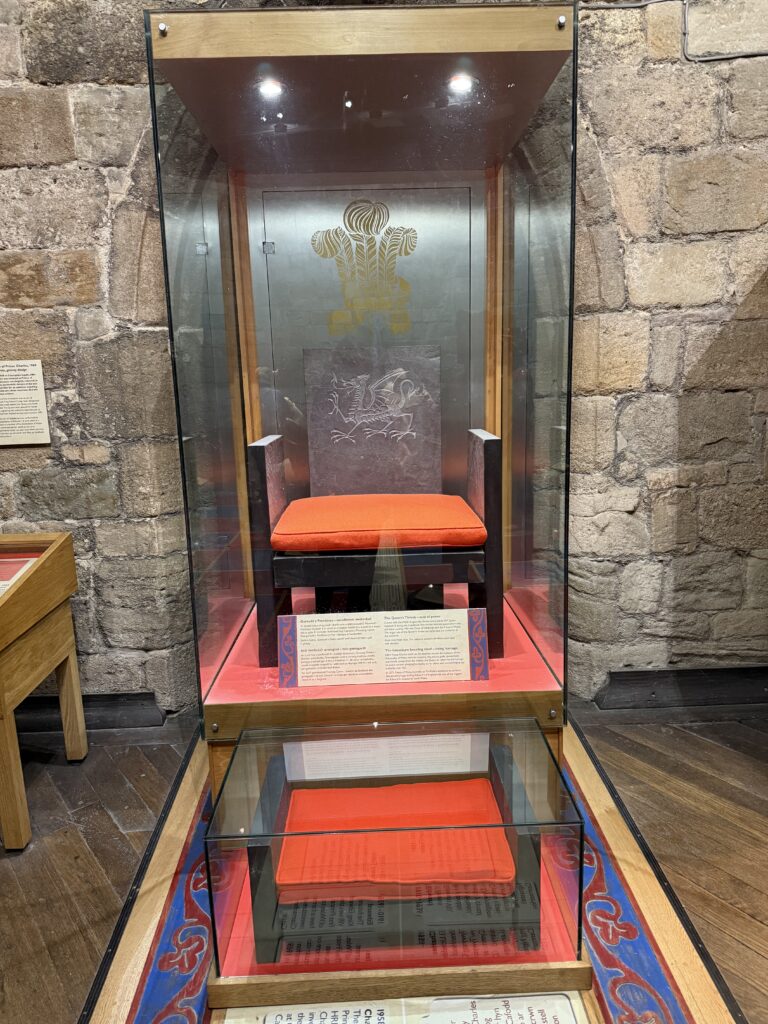
In the morning, we drove to Caernarfon Castle, built under the reign of Edward I in 1283. His son, Edward, was born there, the first British monarch to be crowned Prince of Wales. In 1969, Prince Charles (now King Charles III) was invested Prince of Wales by his mother, Queen Elizabeth. But in fact, the castle was never completed and was never really inhabited—it was a show of power.

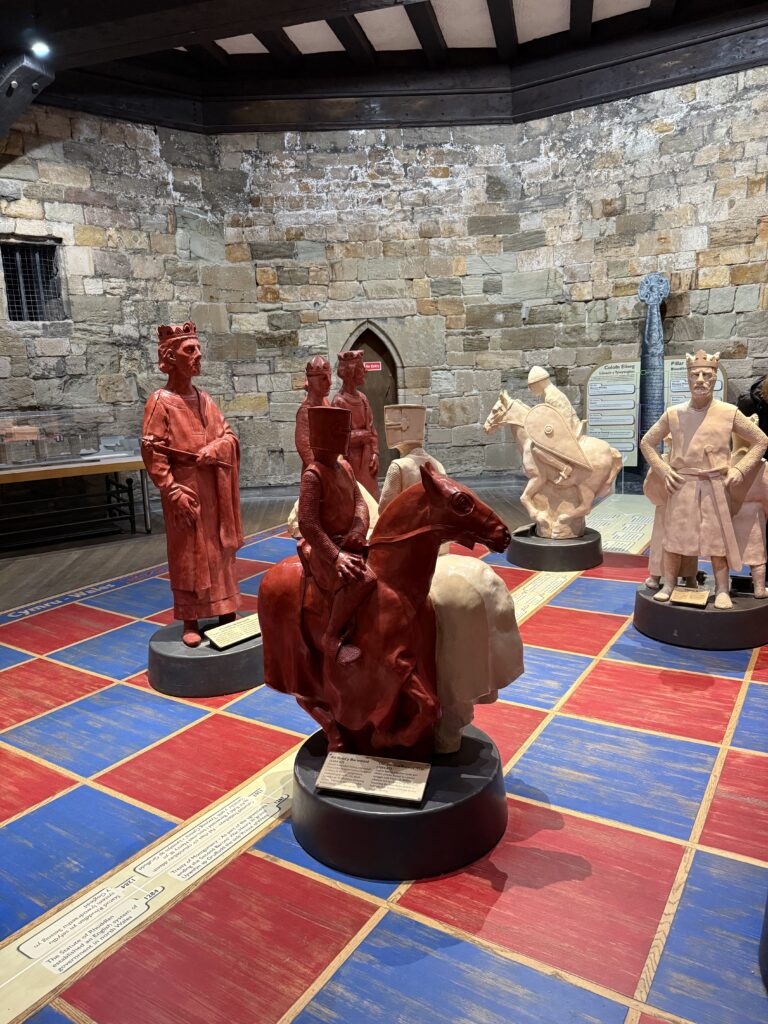
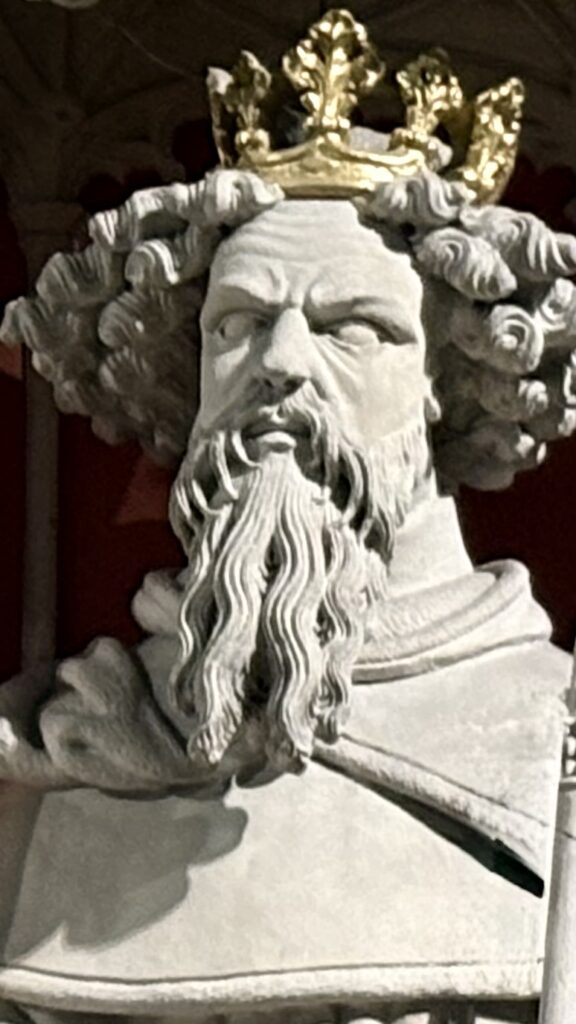
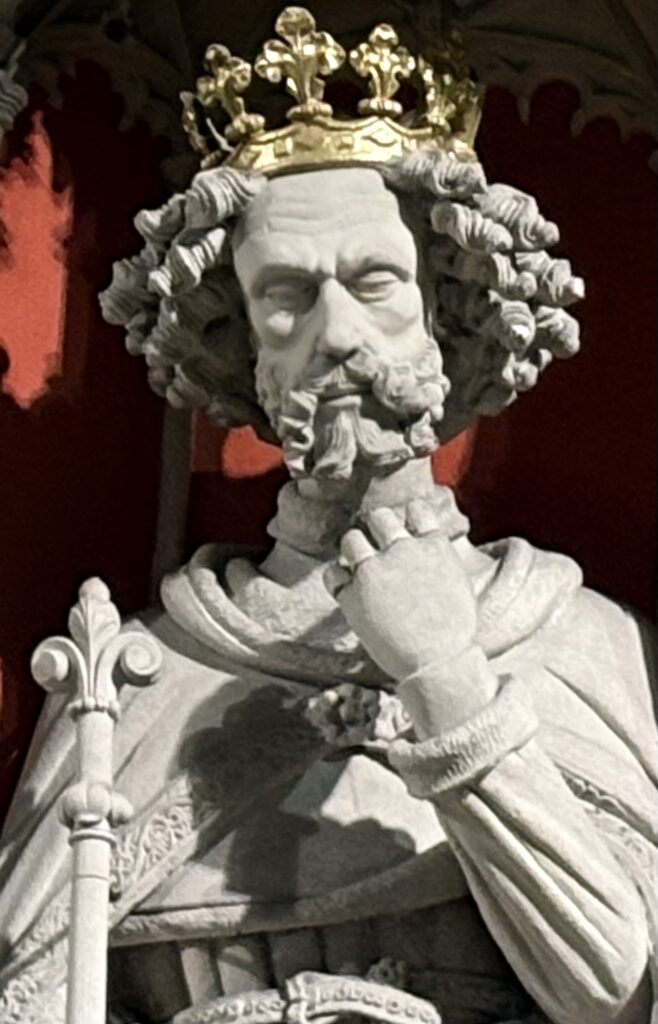
The castle contained a museum, but it was exclusively about the Welsh part of wars—so many wars. I wanted to know how the castle was furnished and where people lived and where they kept their livestock, but that didn’t happen. Finally, there was one room with statues of monarchs posed as chess pieces and housing the throne Queen Elizabeth sat in during Prince Charles’s investiture.

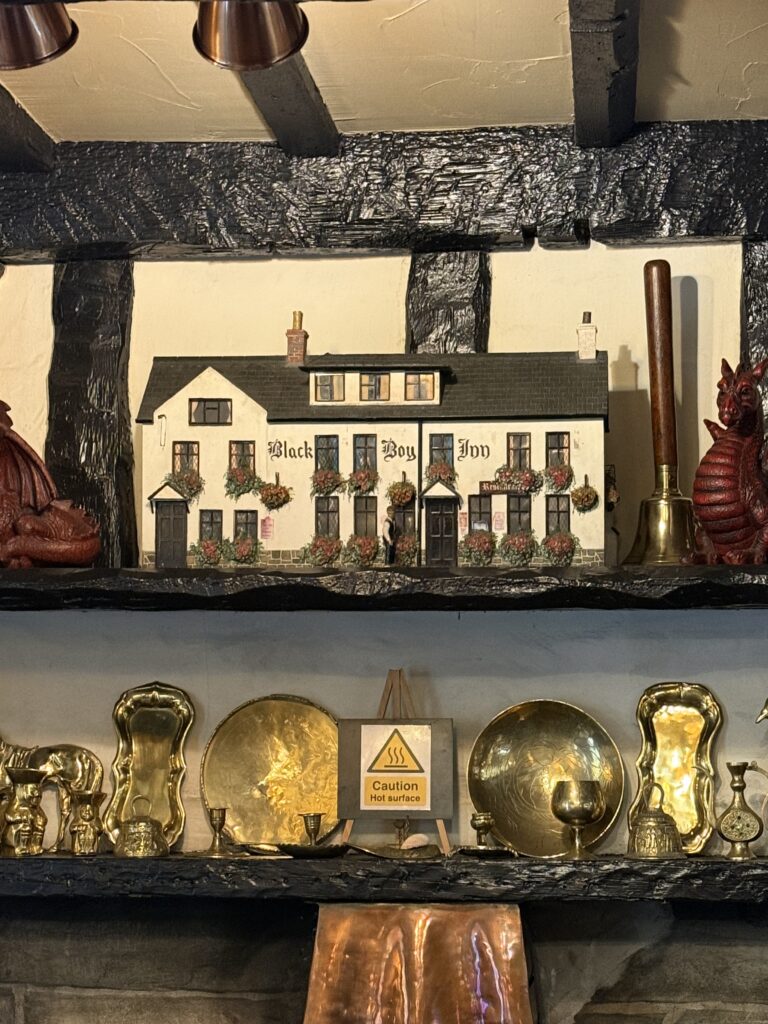
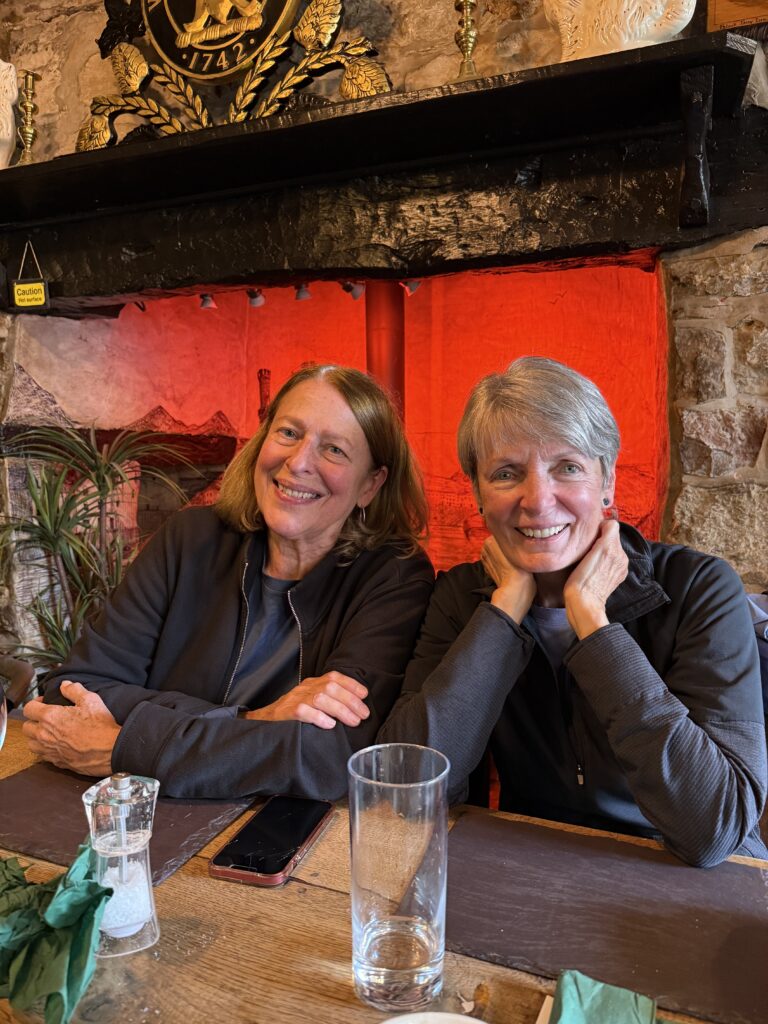
Once it started raining again we ducked into the oldest pub in town (1522!), unfortunately called The Black Boy Inn. It is named after Black Jack, the first black person in this area, who married a Welsh woman. We were in luck—they were serving a “Sunday Carvery,” a grand buffet. I chose roast beef, turkey, Yorkshire pudding, roast carrots and turnips, and creamed broccoli and cauliflower. Way too much, and way worth it.

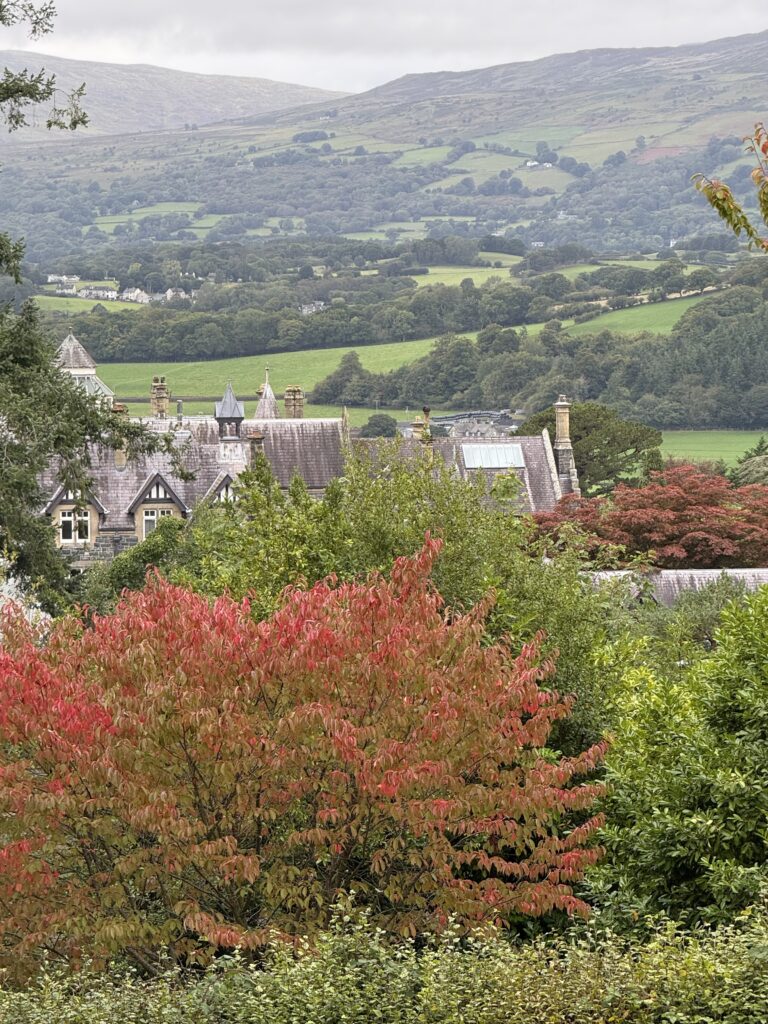
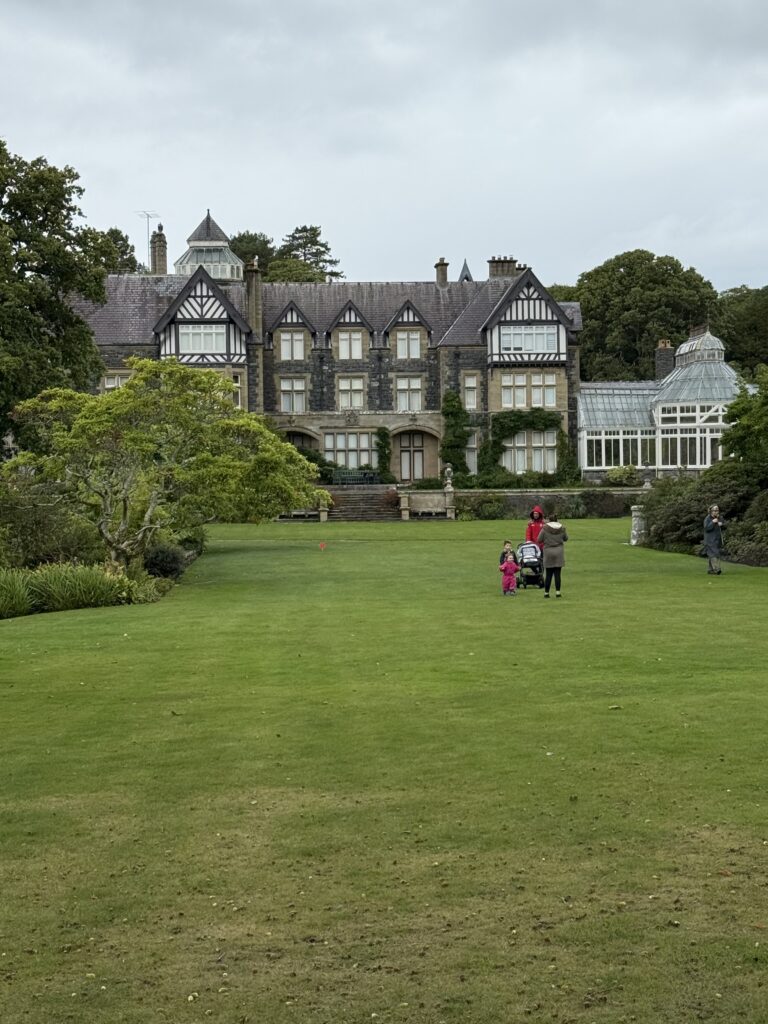
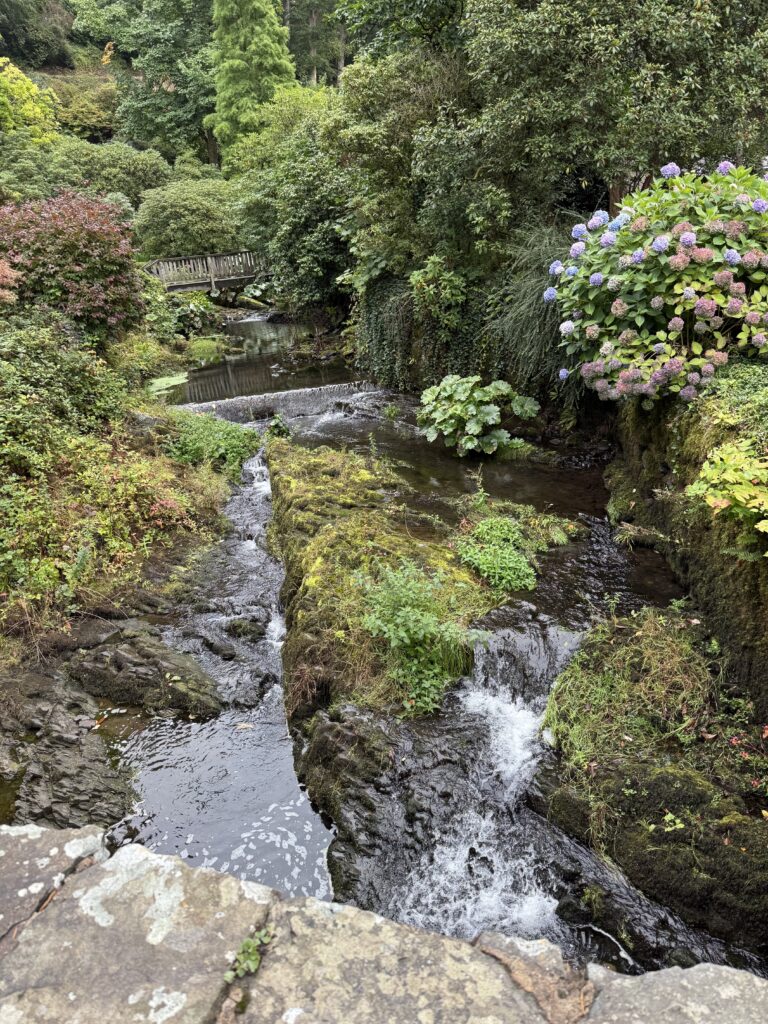
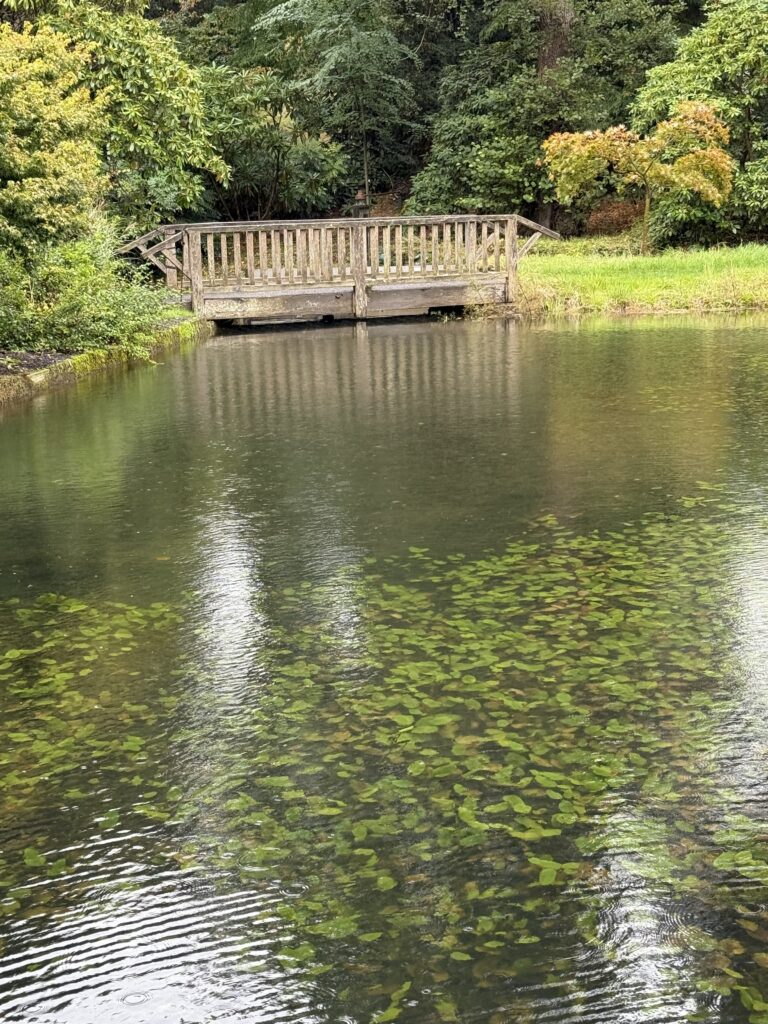
After lunch we drove to Bodnant Gardens, a huge estate with over 8 miles of pathways through gorgeous gardens and woods. The main mansion, built in the 1790’s, is still lived in by the McLauren family (the Lord and Lady Aberconway). We spent a lovely 2 hours oohing and aahing our way through intermittent showers. But it was one of the most pleasant 2 hours we’ve spent so far.

Knowing we’d be too tired to take the 10-minute walk in the rain into Conwy for dinner, we bought provisions at ate at home. I’m sorry we didn’t get to sample more Welsh cuisine (I didn’t even get to try Welsh Rarebit!), but that will have to wait for another trip…or another life.

Today (Monday), we are off to Cerney Wick, home of our friends, Hilary and Paul Blackford. We will stay 6 nights. When we first said we would visit, we said we would stay 3 days and would get a B&B, but they would have none of it, insisting we stay with them, and stay longer. We are looking forward to it!

Castle!

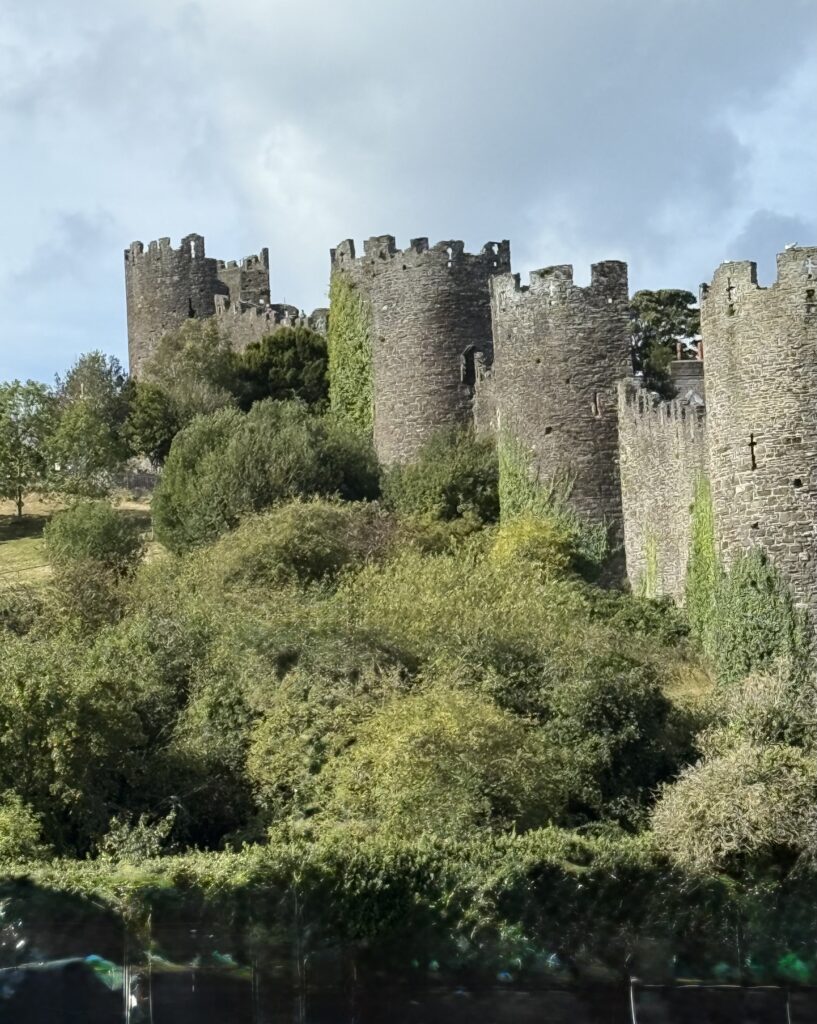
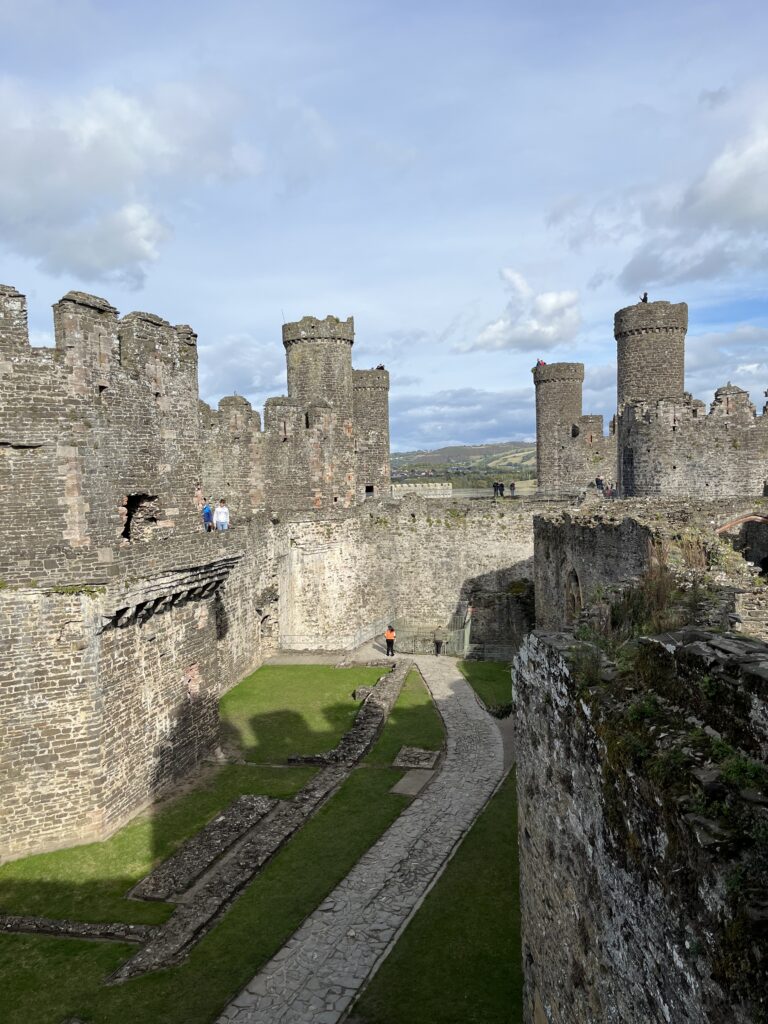
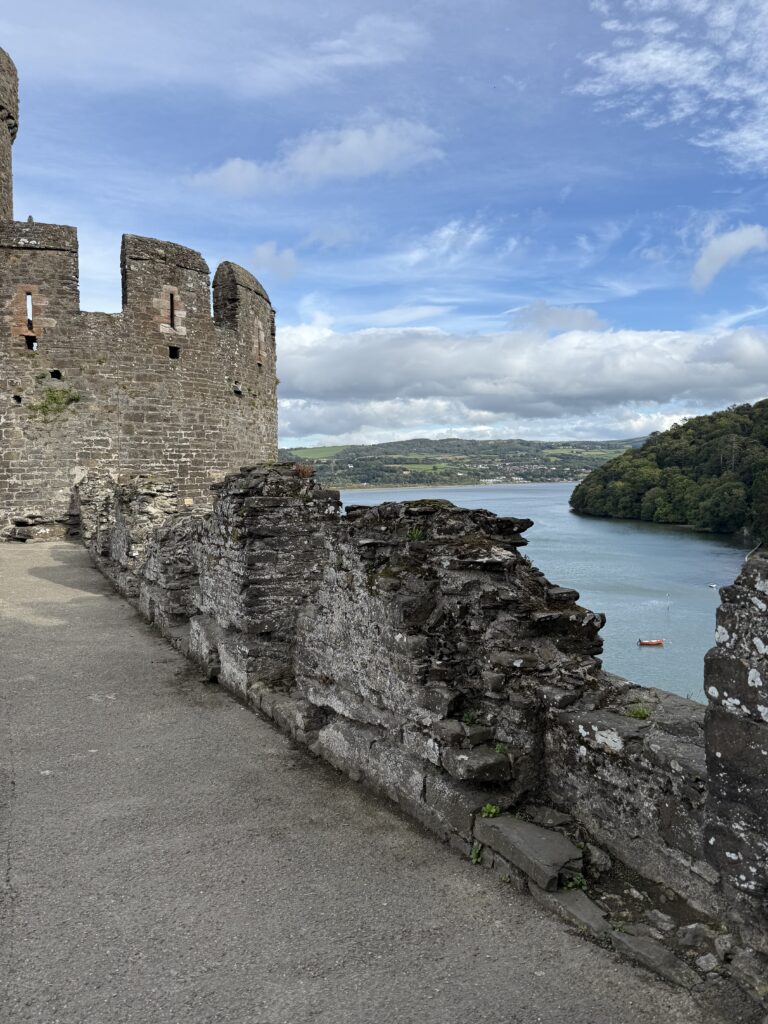
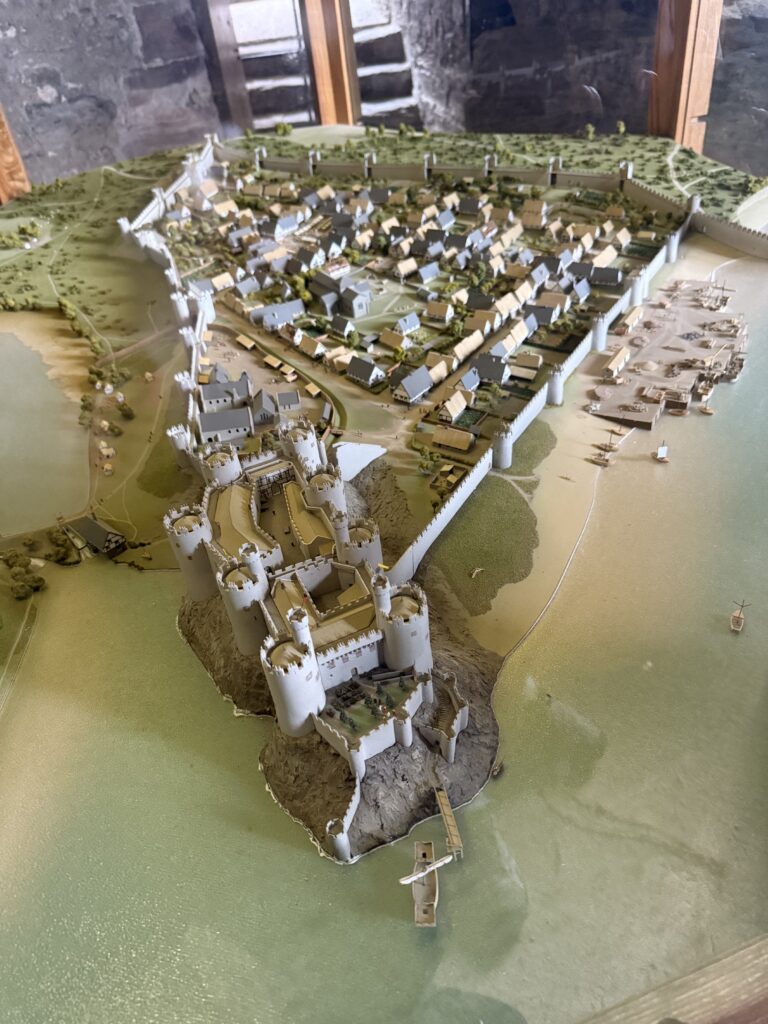
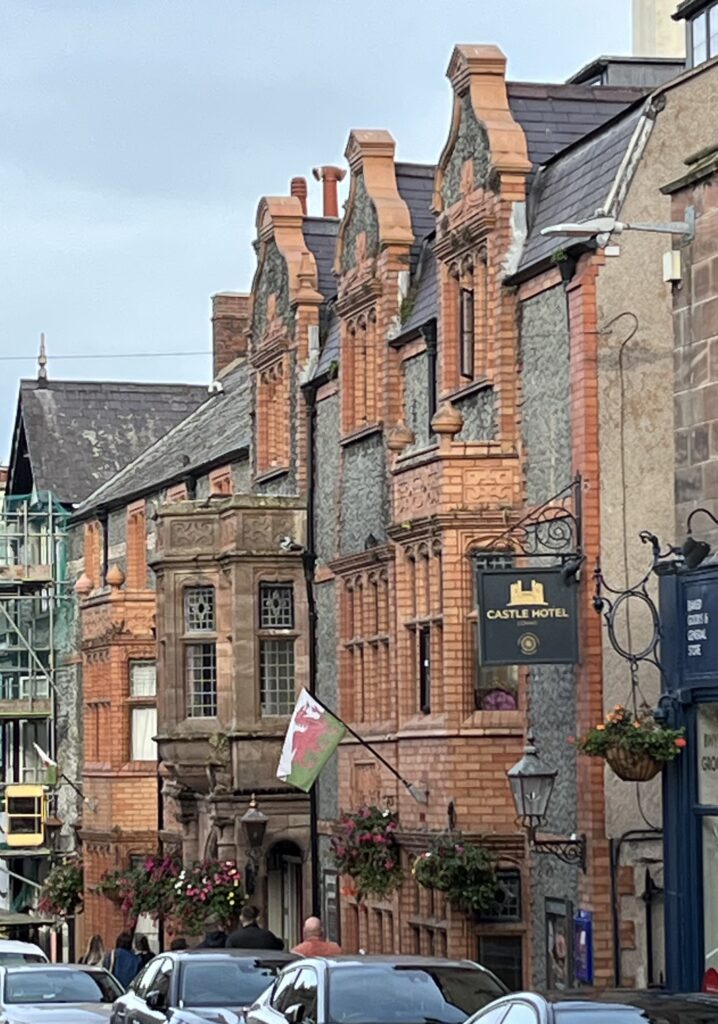
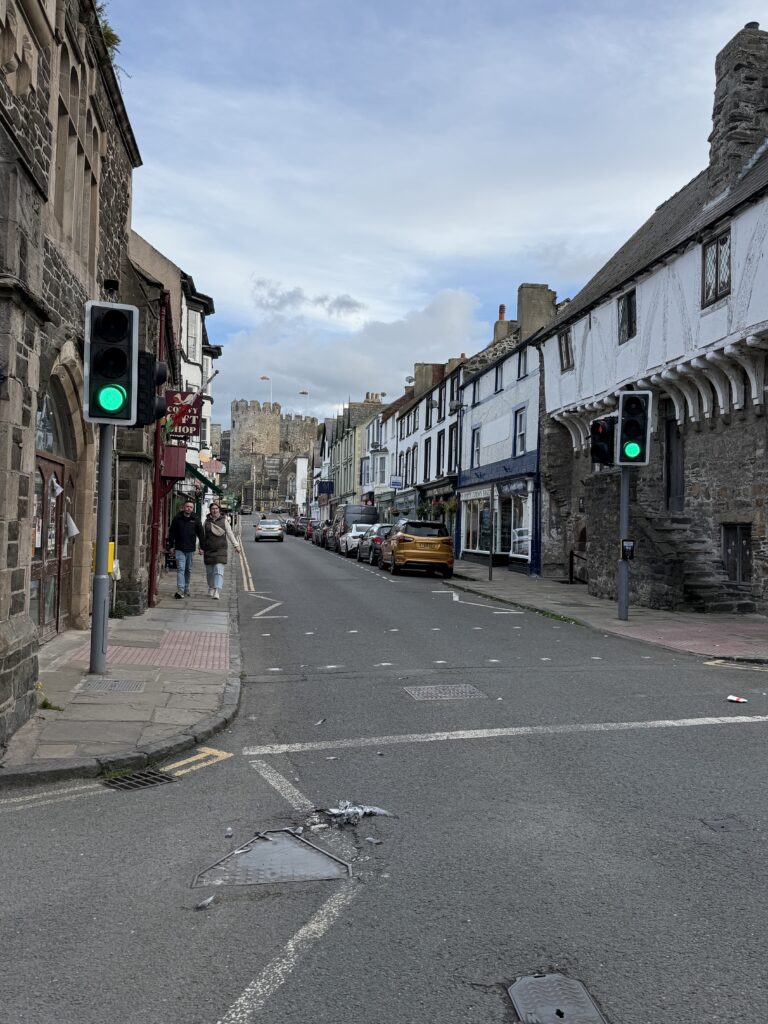
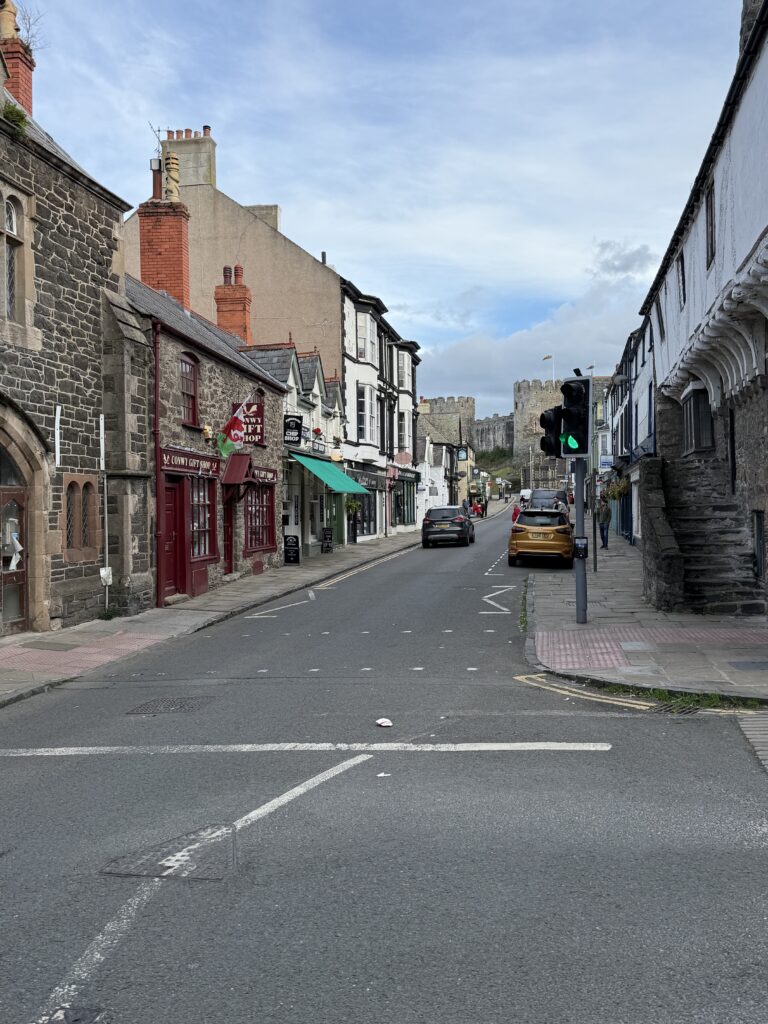
Yesterday we drove to Conwy, in Northern Wales.It is a fishing village on the side of a river that feeds into Liverpool Bay, where King Edward I built a grand castle (1283-1287) during his conquest of Wales. It is a grand structure, built on solid rock so enemies could not undermine it, and heavily fortified against foes from both land and water.

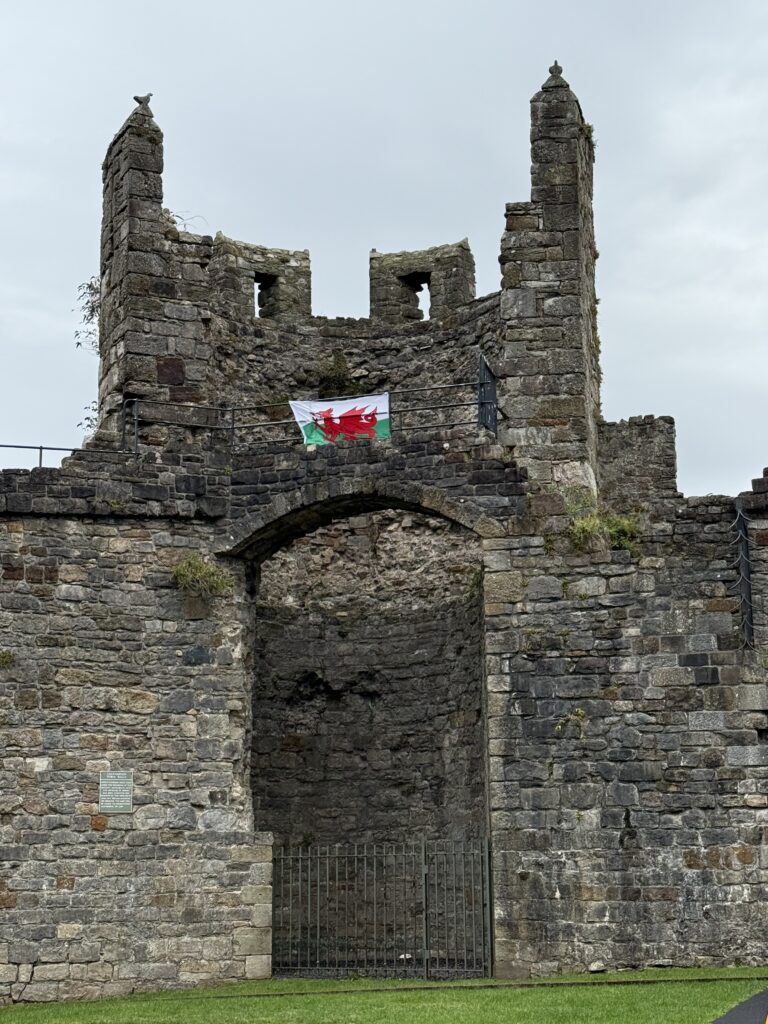
The great stone walls surrounded the entire city outside of the castle, and they are intact today.

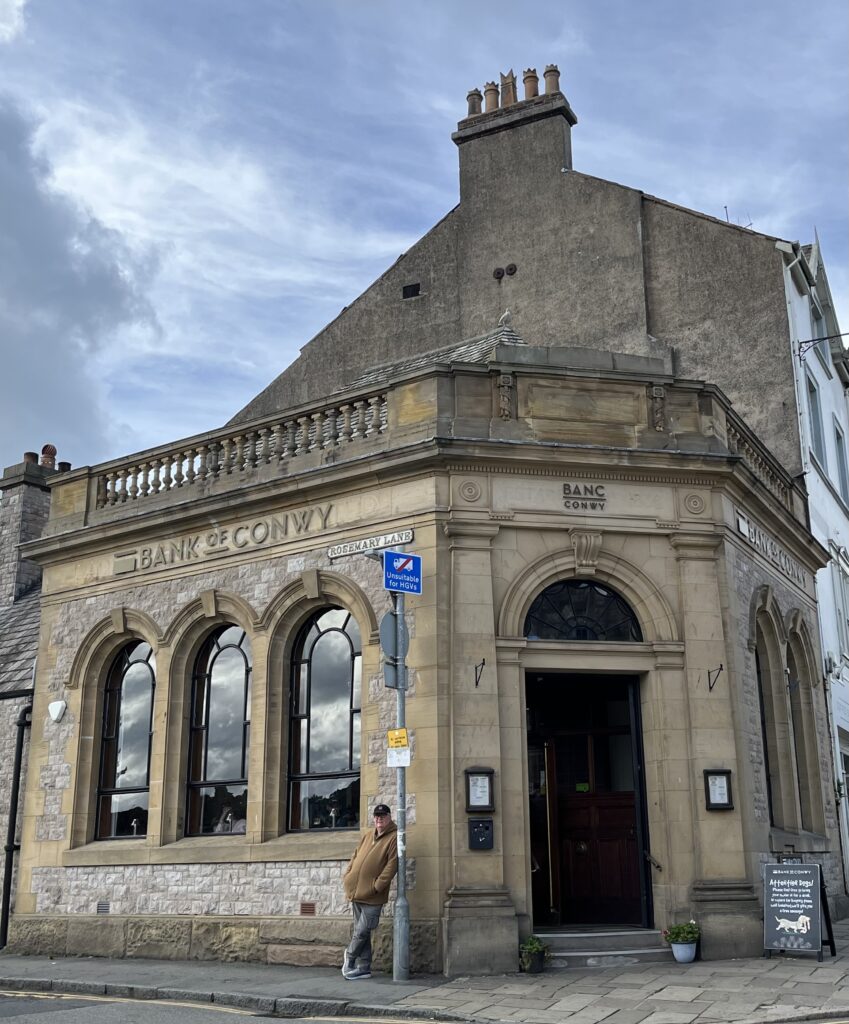
Before exploring the castle, we ate at the Bank of Conwy, now a pub, where we had to sample the Wrexham lager, in honor of the oldest soccer team in Wales.

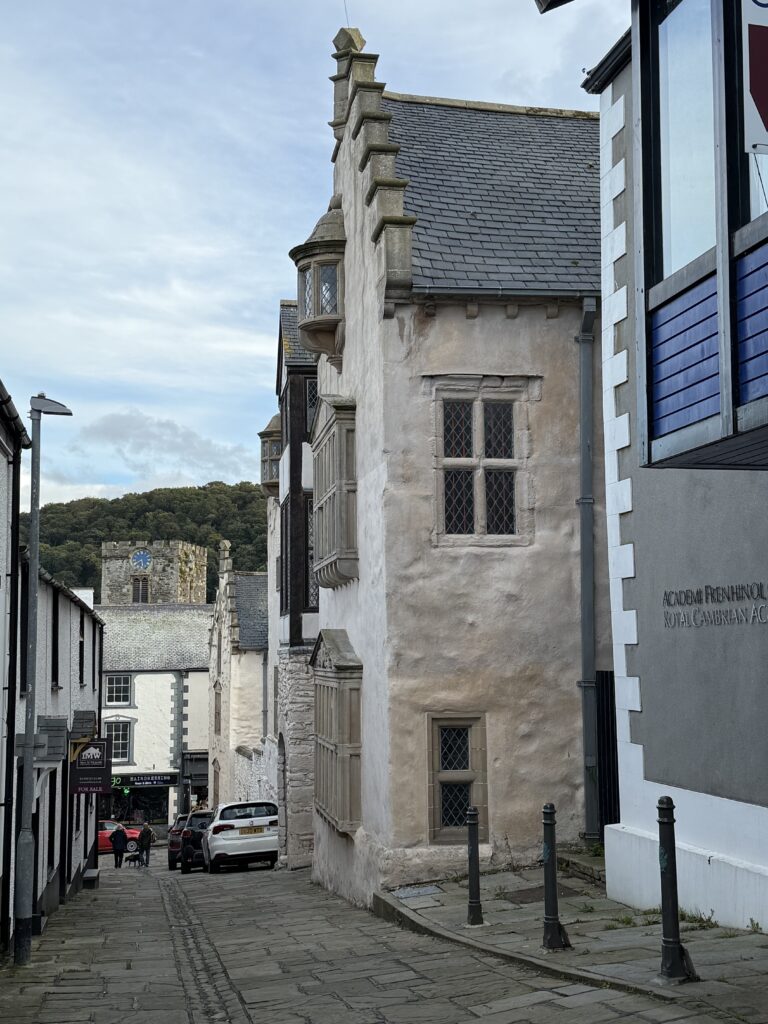
After the castle we took the self-guided walking tour, recommended by Rick Steves.

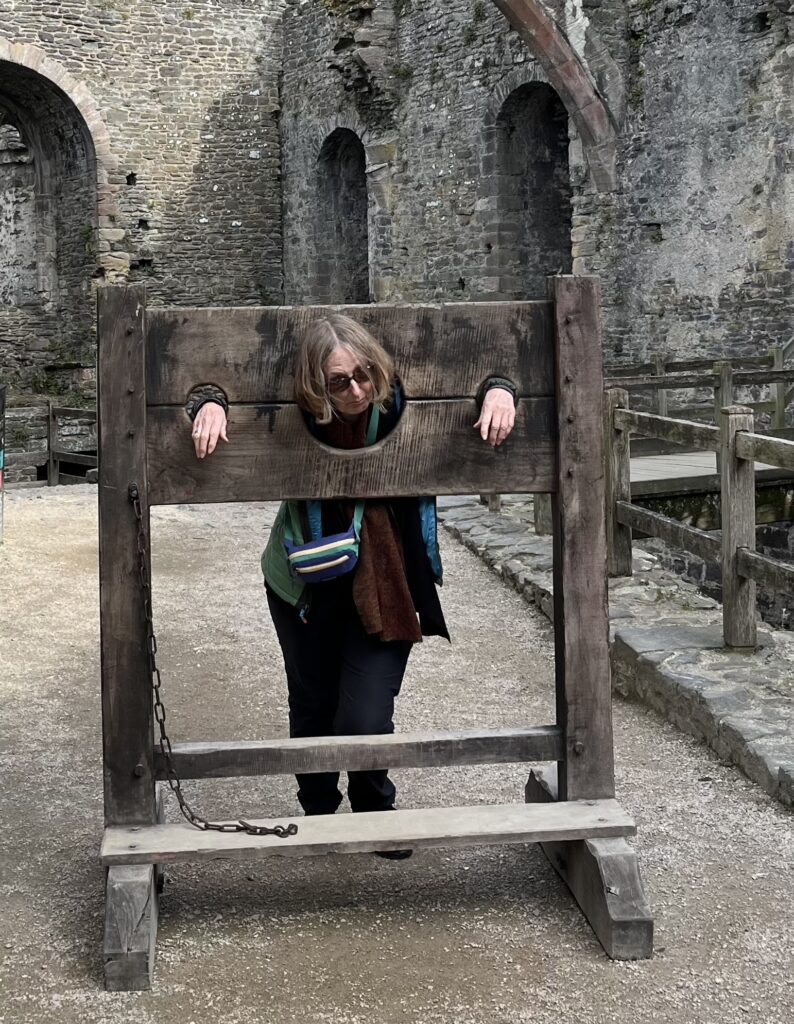
And we ran into a sign that seemed particularly apropos to us!

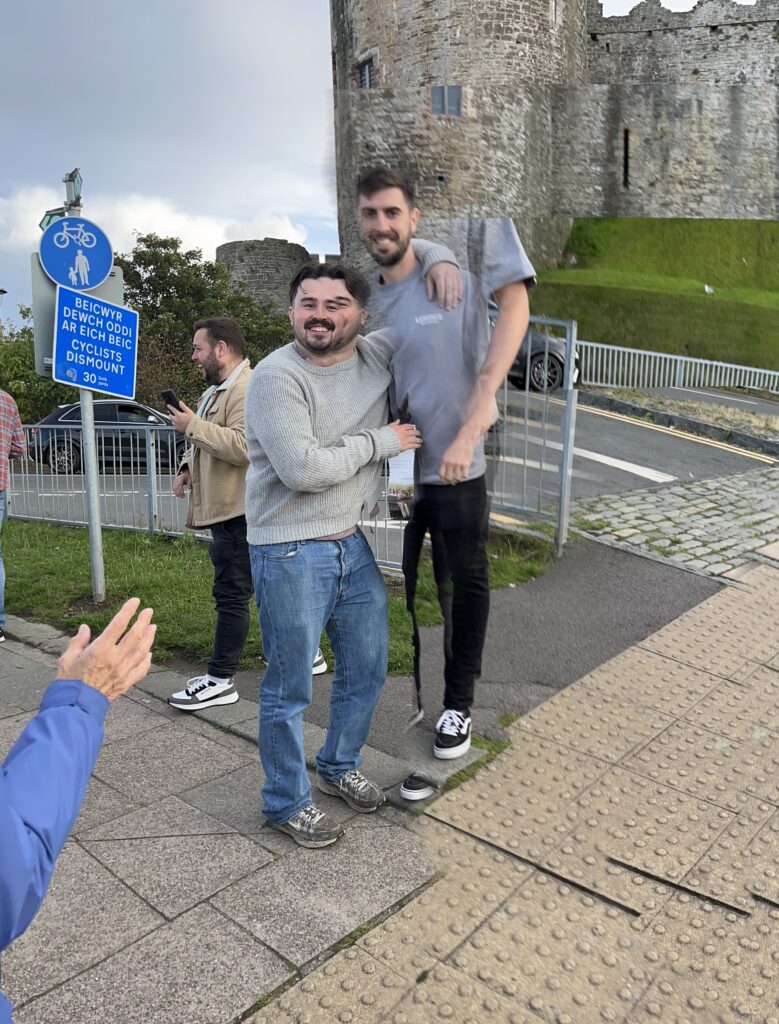
And finally, on our way home two very drunk young men wanted us to take their picture, and we found out what happens when you take a photo and your phone is on “pano” mode!

Walking on Sunshine…and rain.

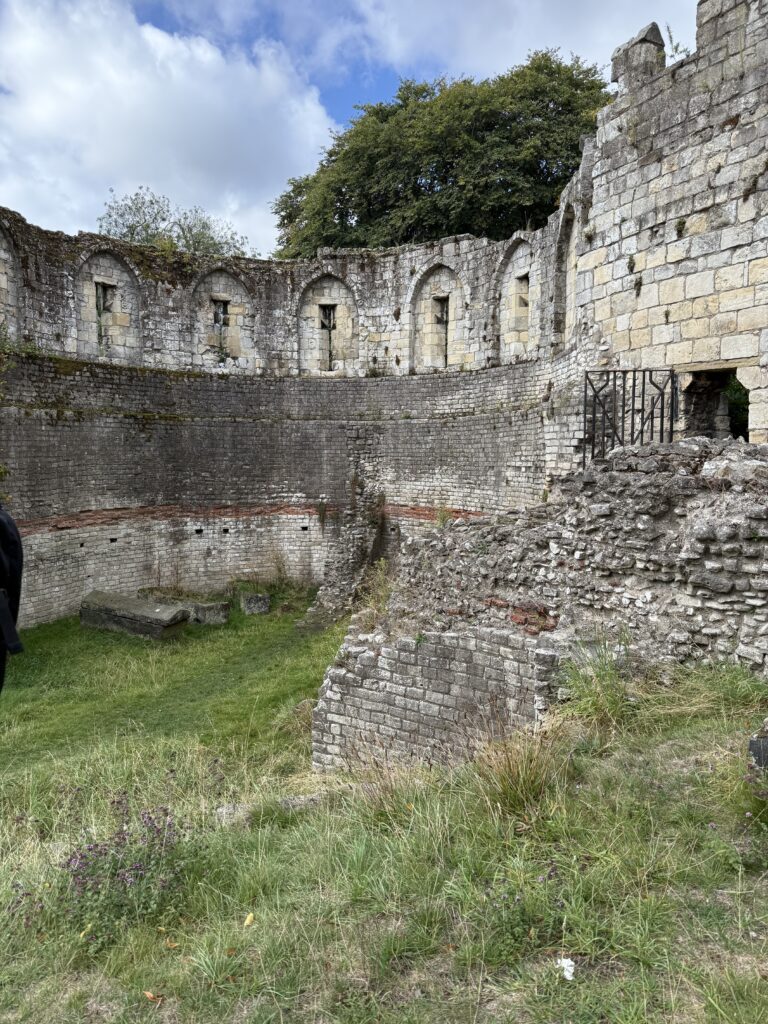
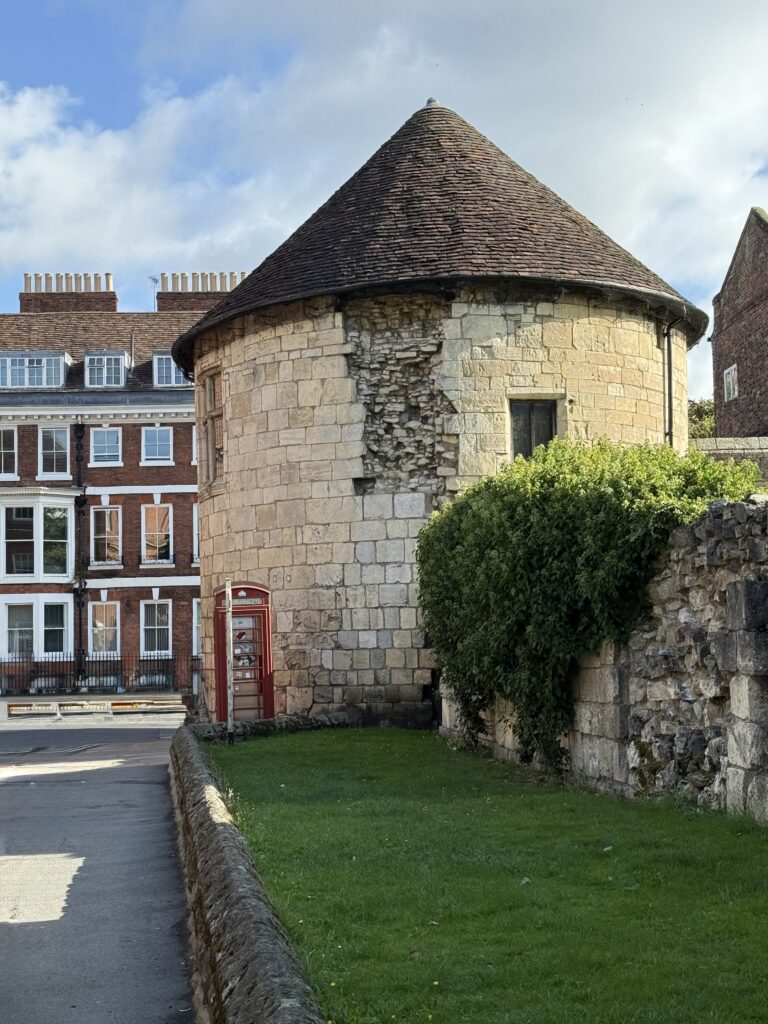
We didn’t waste a moment of our only full day in York, and it was a blast. After a full English breakfast at our B&B (bacon, sausage, egg, grilled tomato, baked beans and toast!), we walked around the Hamlet of St. Marysgate, where the wall and tower had Roman roots.

We got to Exhibition Square in time to meet our guide for a tour of the old city. We had signed up for the free tour, not knowing what a gift it would be. There is an association of volunteer guides that has been operating since the 1950s, and our guide, Nick, was animated, funny, dramatic and informative. We were entranced for the full 2-1/2 hours.

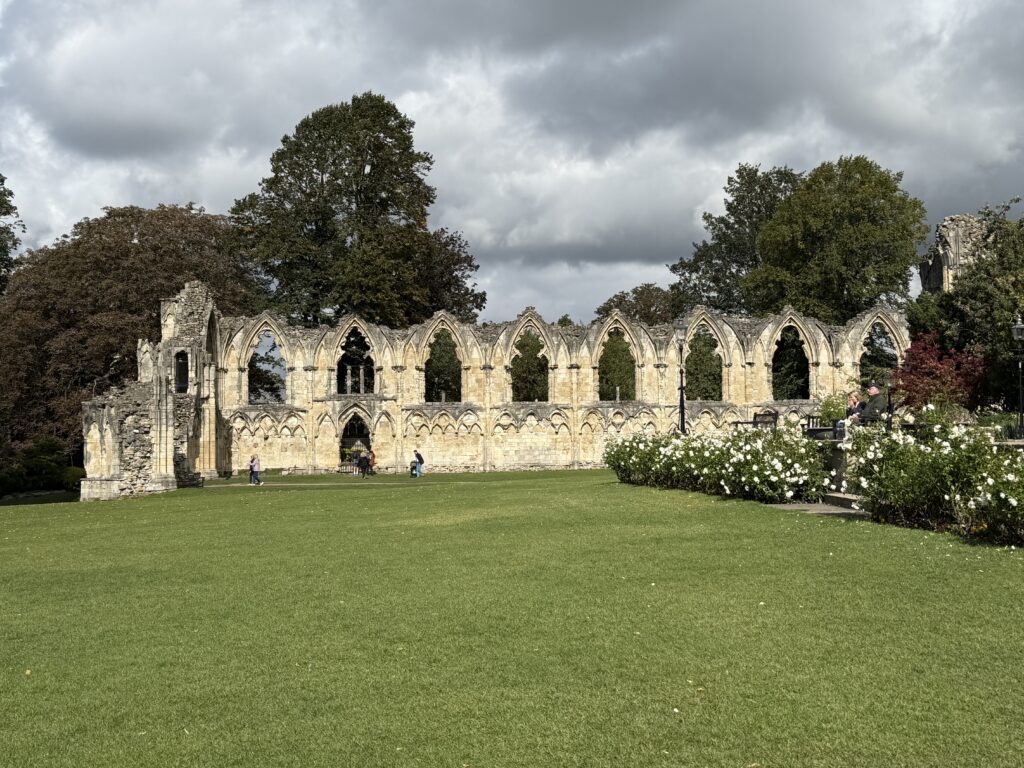
We spent a lot of time in the area of what was originally a Benedictine monastery, where 50 monks lived in luxury while people outside the gates lived in poverty (not very devout followers of St. Benedict, to be sure). The buildings were on the site of a Roman fort.

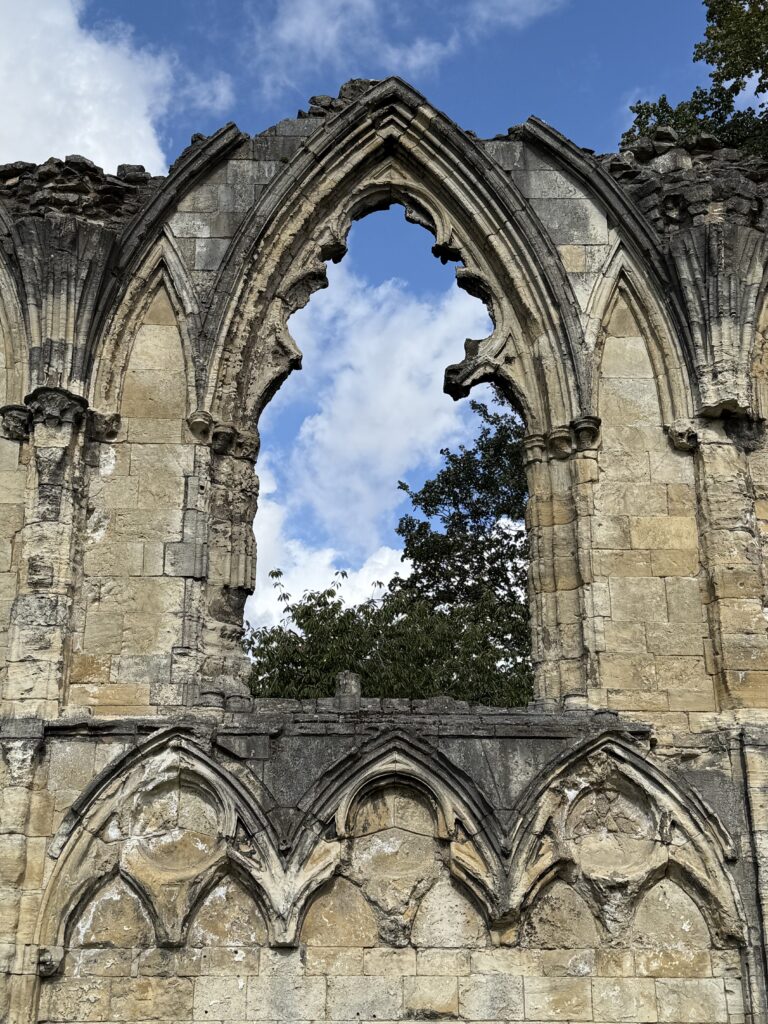
The abbey was destroyed when Henry VIII got rid of monasteries, taking the metal roof and all the gold and silver, and telling the townspeople they could take the stones to build their houses. I wish I could have seen it before its destruction.

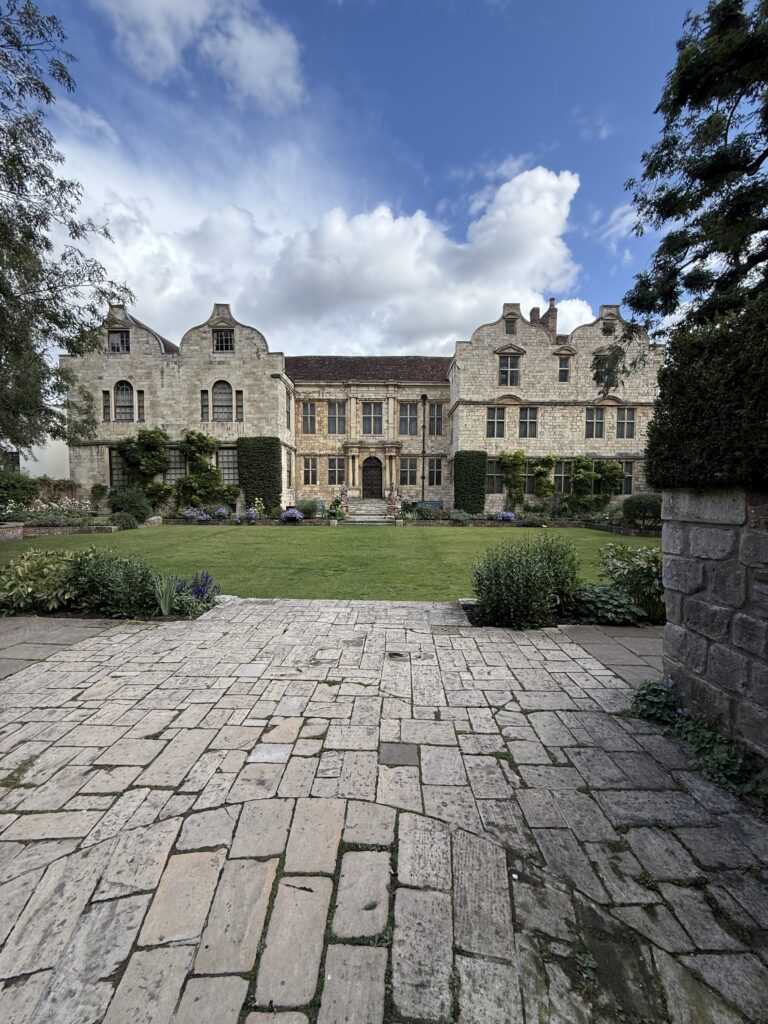
We saw the Treasurer’s House, which has changed hands many times, but at one time in the 1700s was the home of Elizabeth Montagu, a founder of the “Bluestocking Movement,” a precursor to modern feminism.

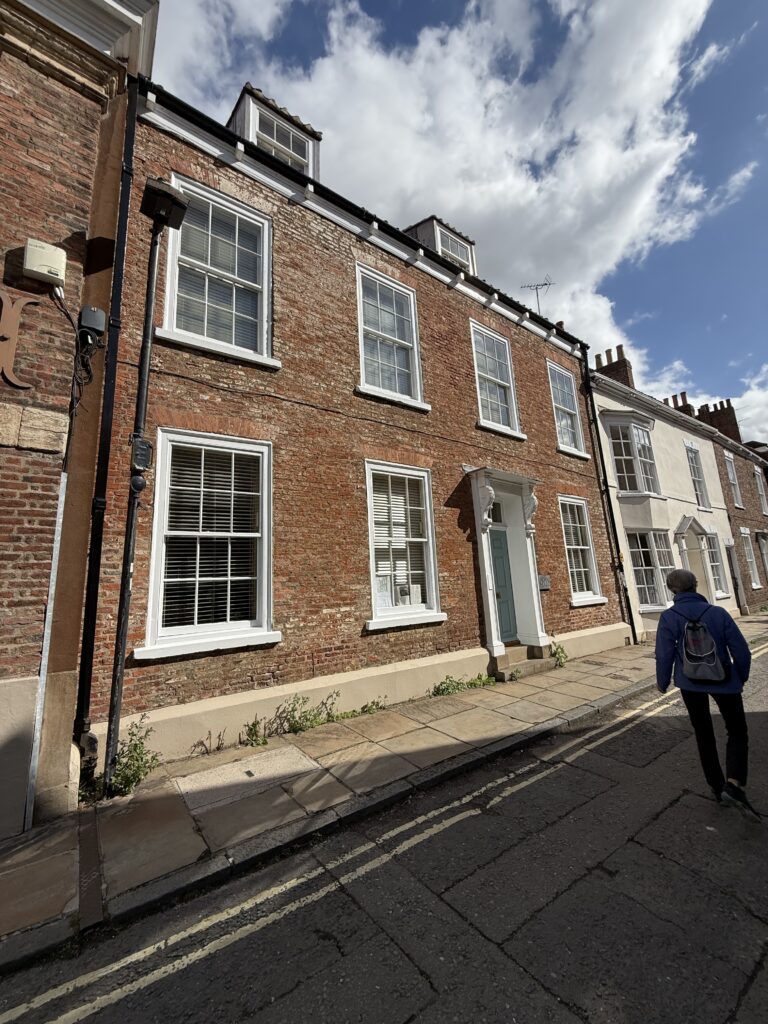
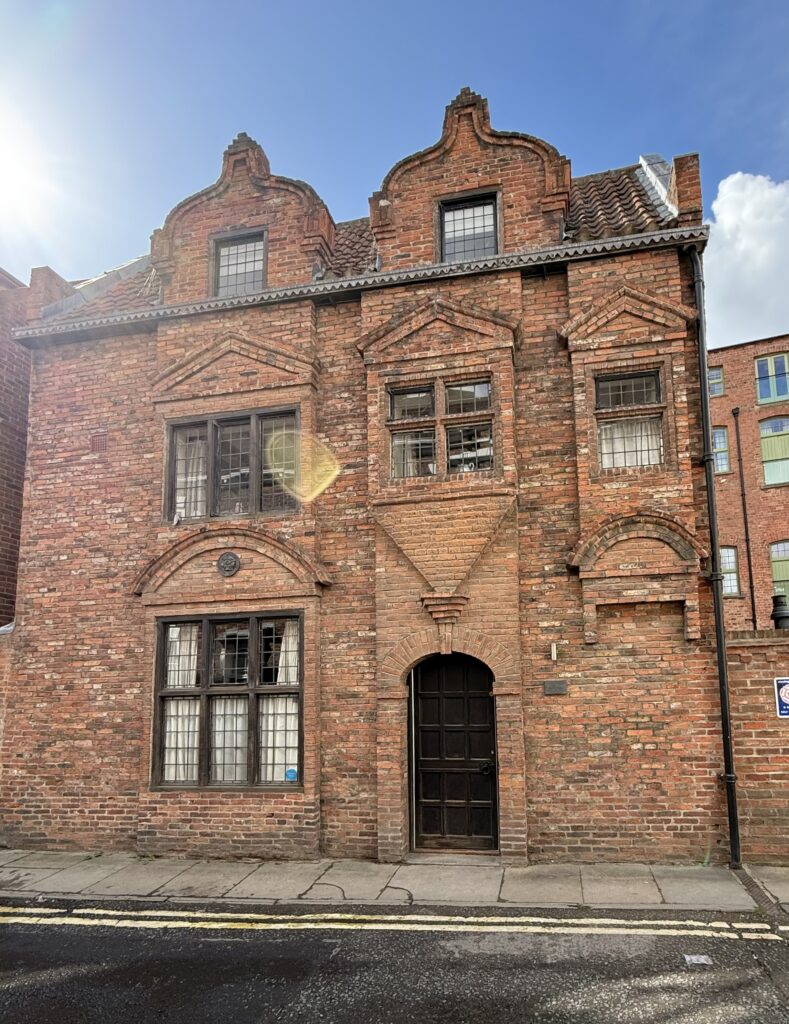
And examples of Georgian architecture and the Dutch House.

To finance the multiple wars, the monarchs assessed different taxes. One was a window tax, when you were taxed by the number of windows in your house, but then people bricked up some of their windows. Another was a brick tax (the bigger the house, the more bricks), but then they started building houses with bigger bricks. Then there was the chimney tax, and on and on.

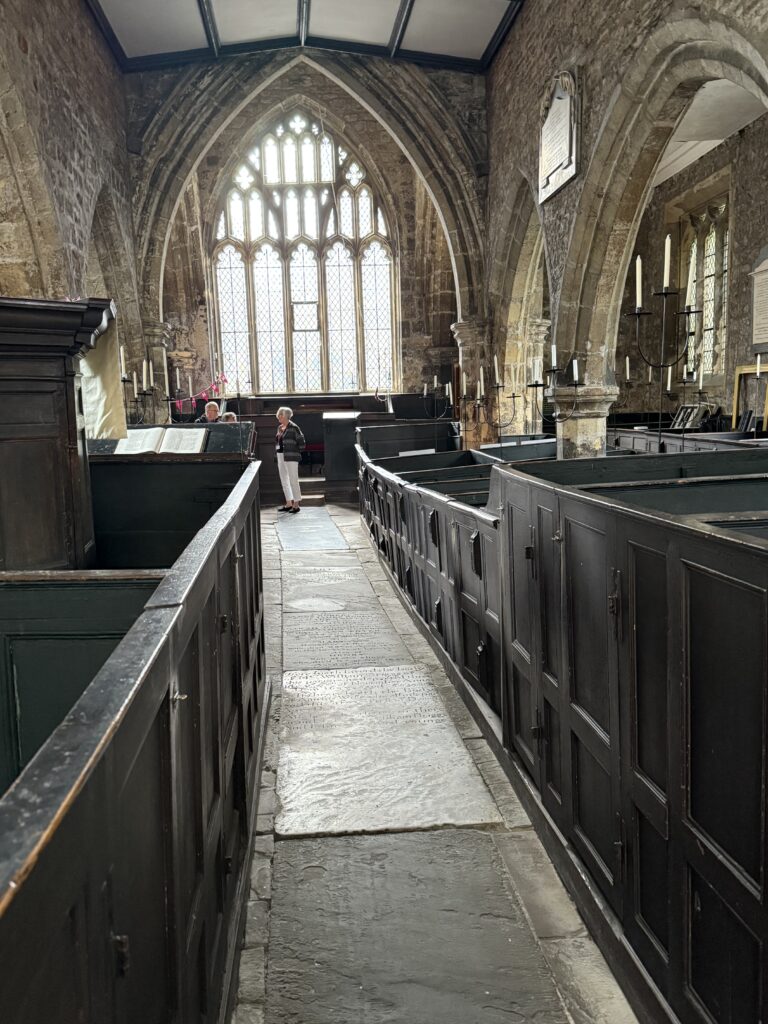
Nick showed us Trinity church, innovative at its time because they had family boxes so they didn’t have to stand during the service—sometimes 2-3 hours long. Of course, you had to pay for the boxes. At one point during the Reformation, if you didn’t go to church and sign your name on a Sunday, you could be hauled to jail!

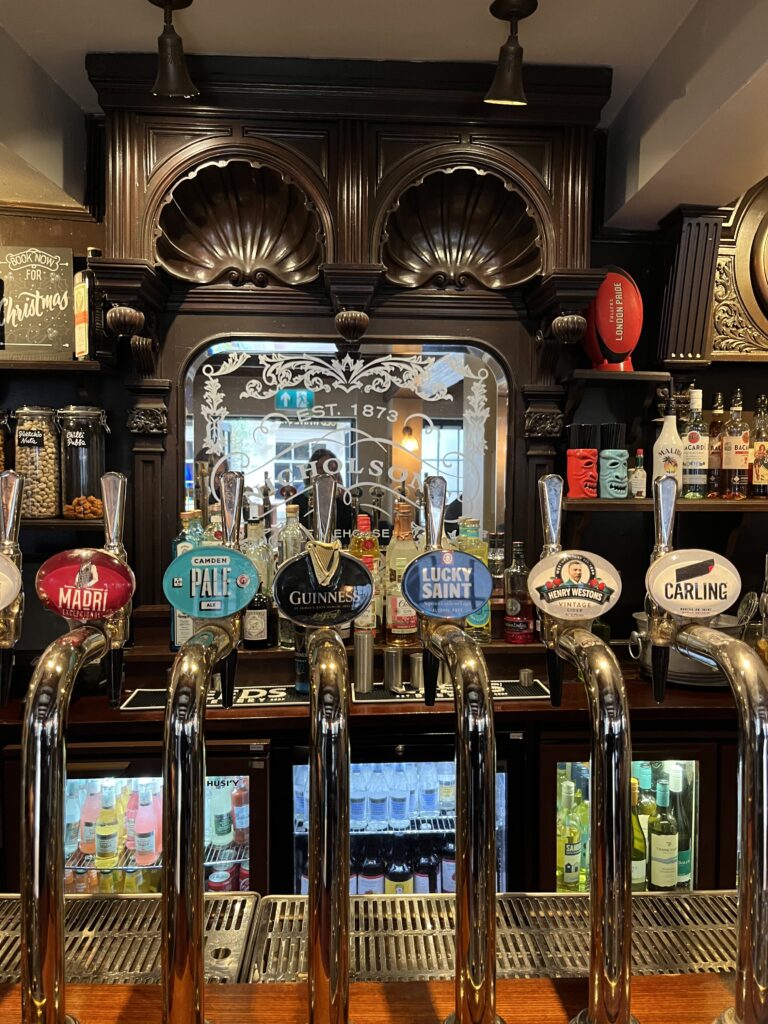
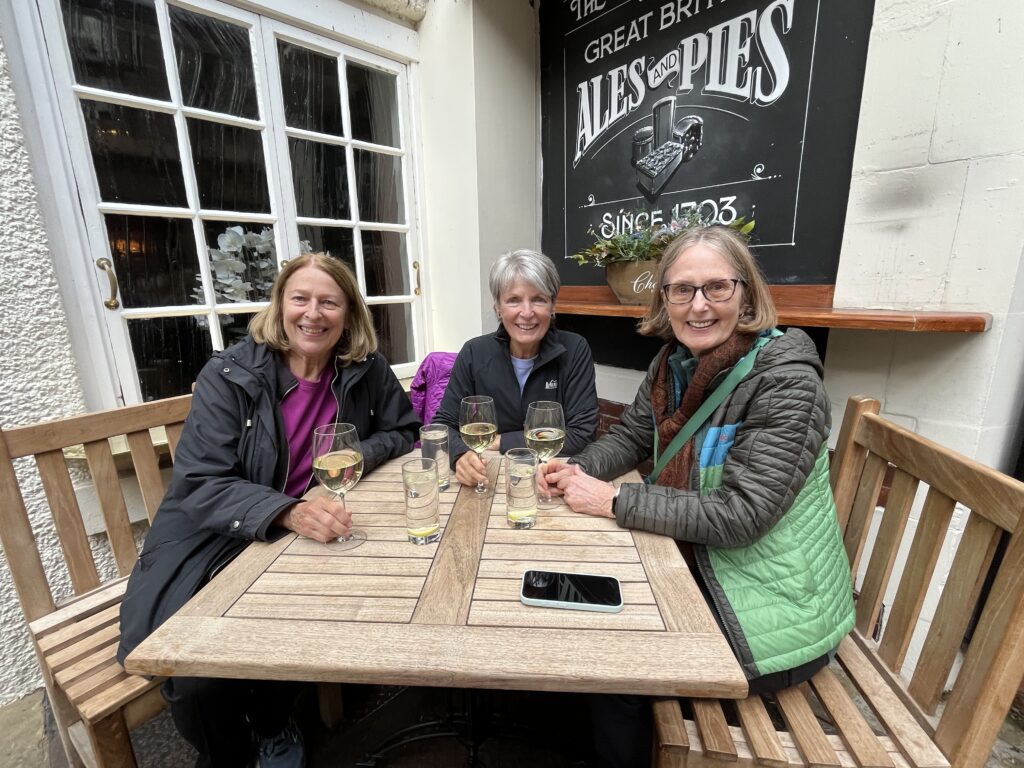
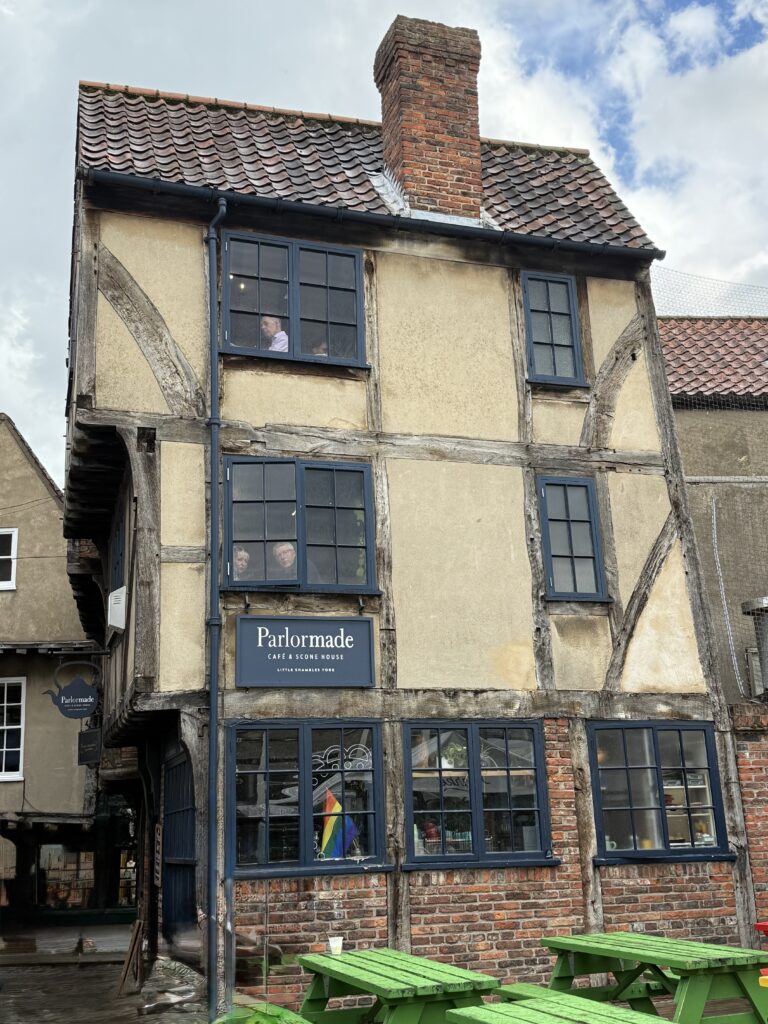
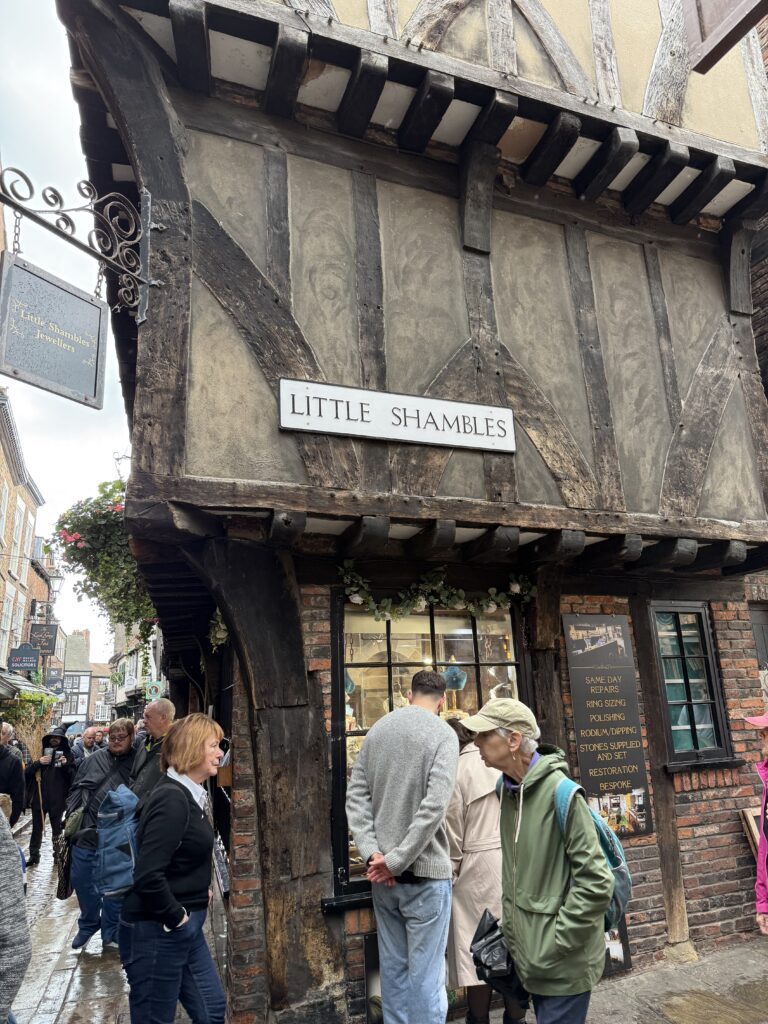
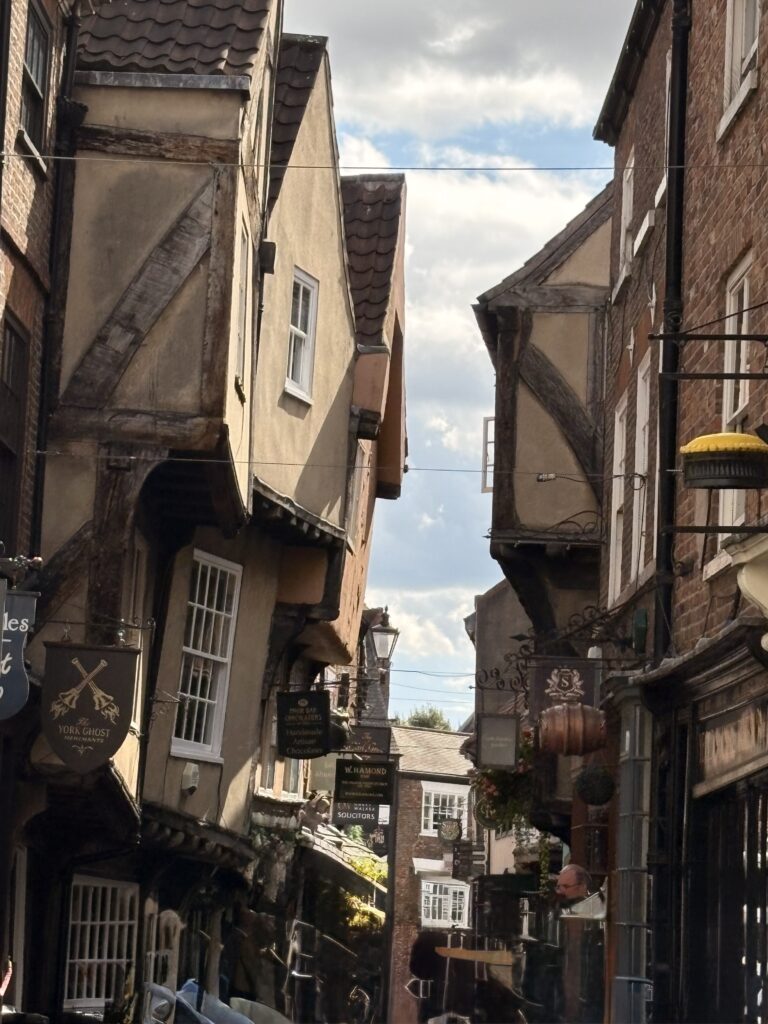
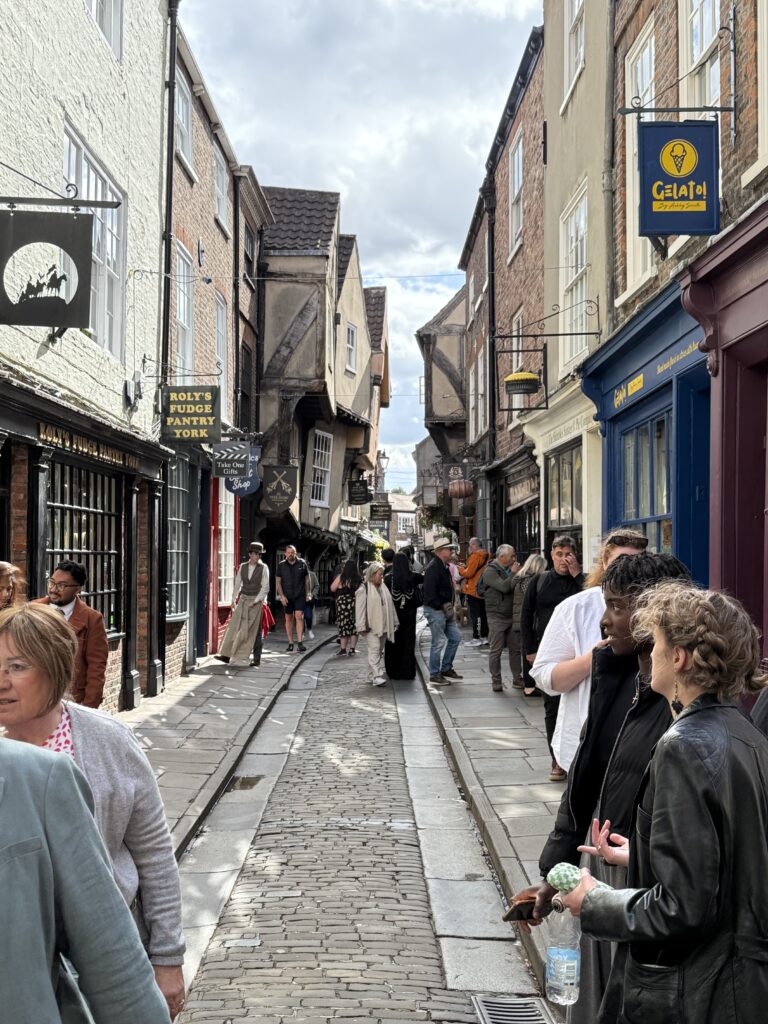
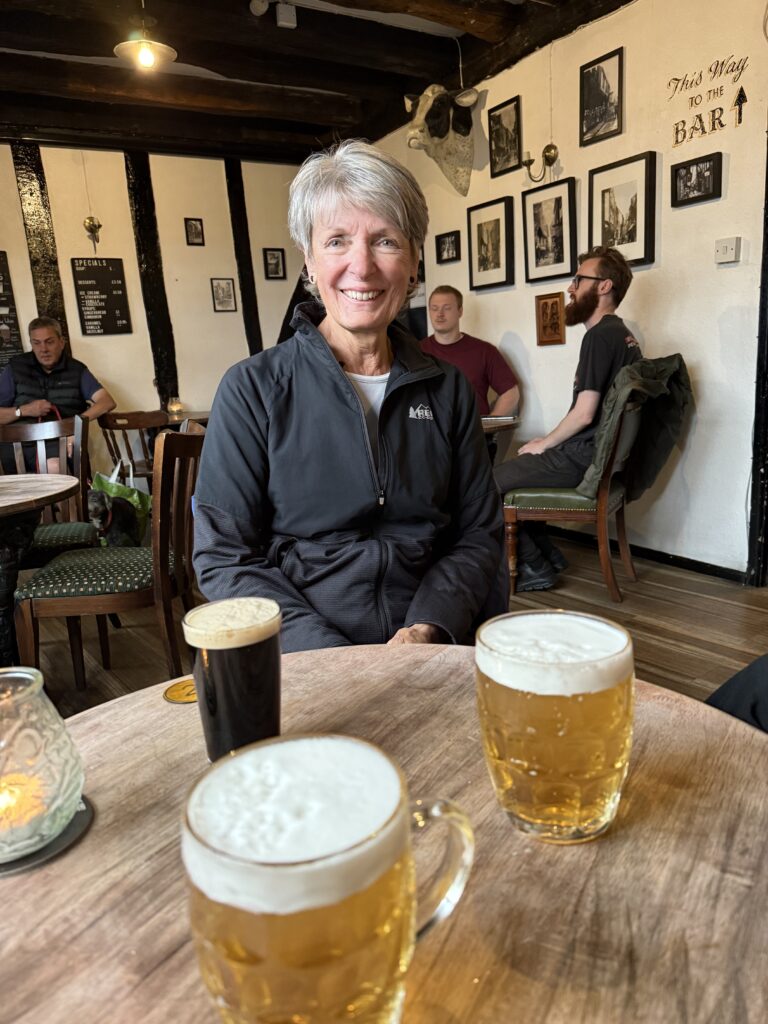
And we went to the Shambles, originally the street housing all the meat butchers, now a charming warren of tiny streets. After the tour, we ate at the Old White Swan, one of the oldest pubs in York, where we dined on fish pie and vegetables.

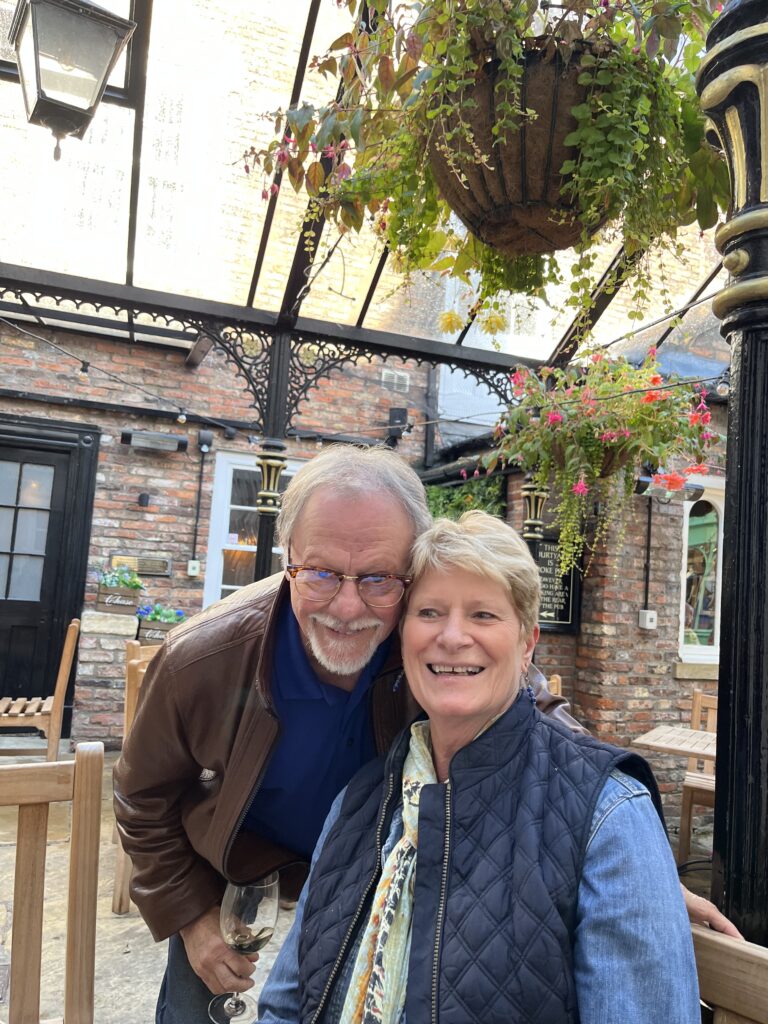
A woman at the next table offered to take our picture. Her accent sounded familiar, so I asked her where she was from—Wauwatosa, Wisconsin! She and her husband ended up joining us as we ate, and we thoroughly enjoyed them. Meet Sue and Steve.

We wandered around the old city, full of unique buildings.

Then, like a magnetic pull, the Minster drew us back in.

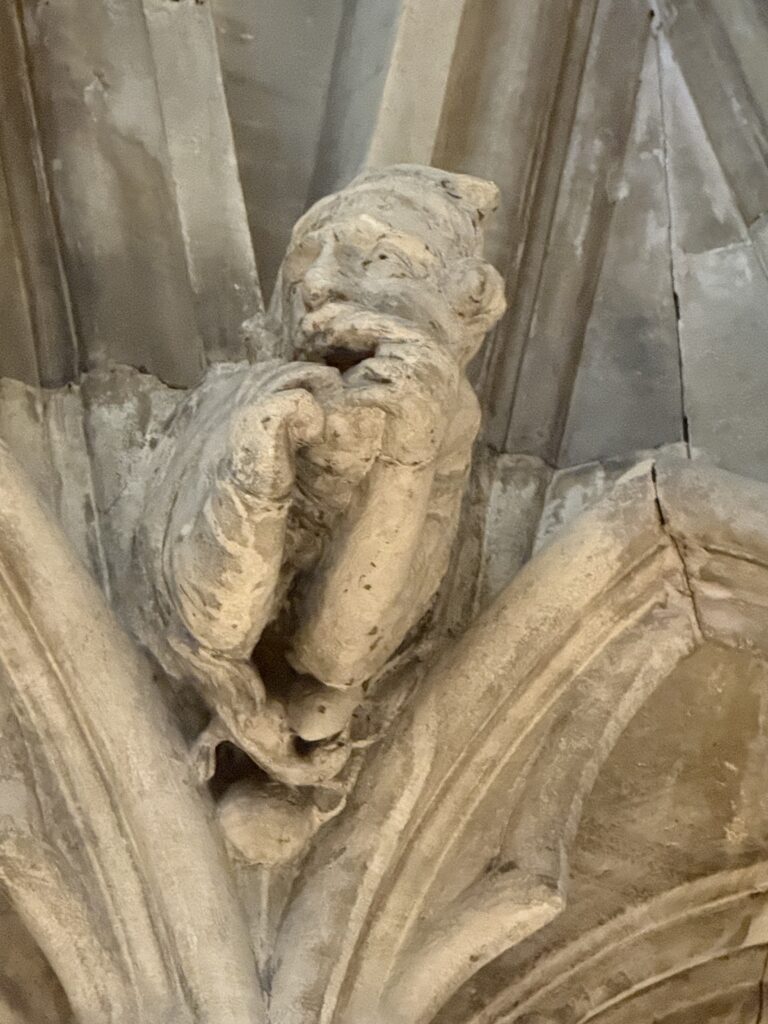
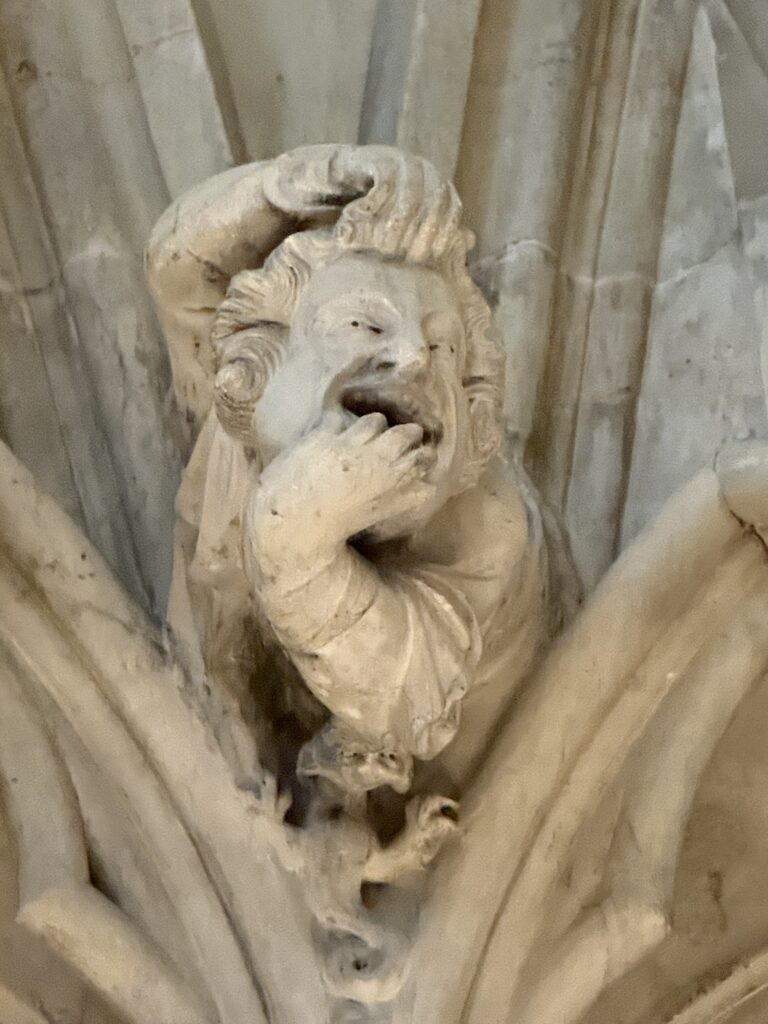
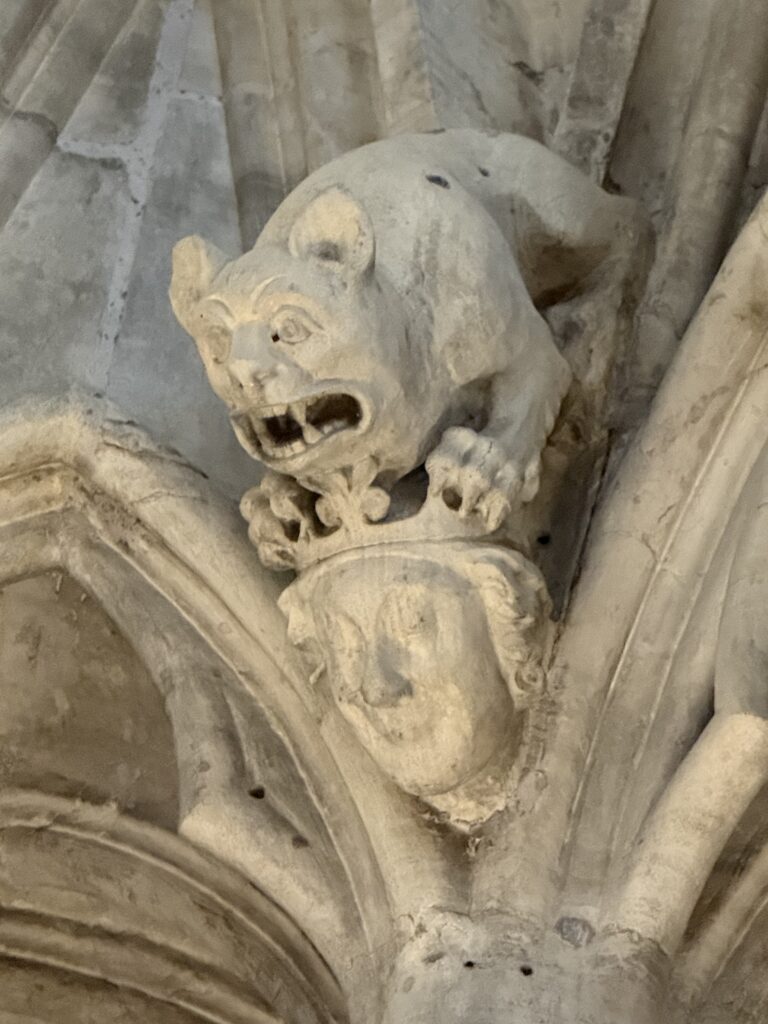
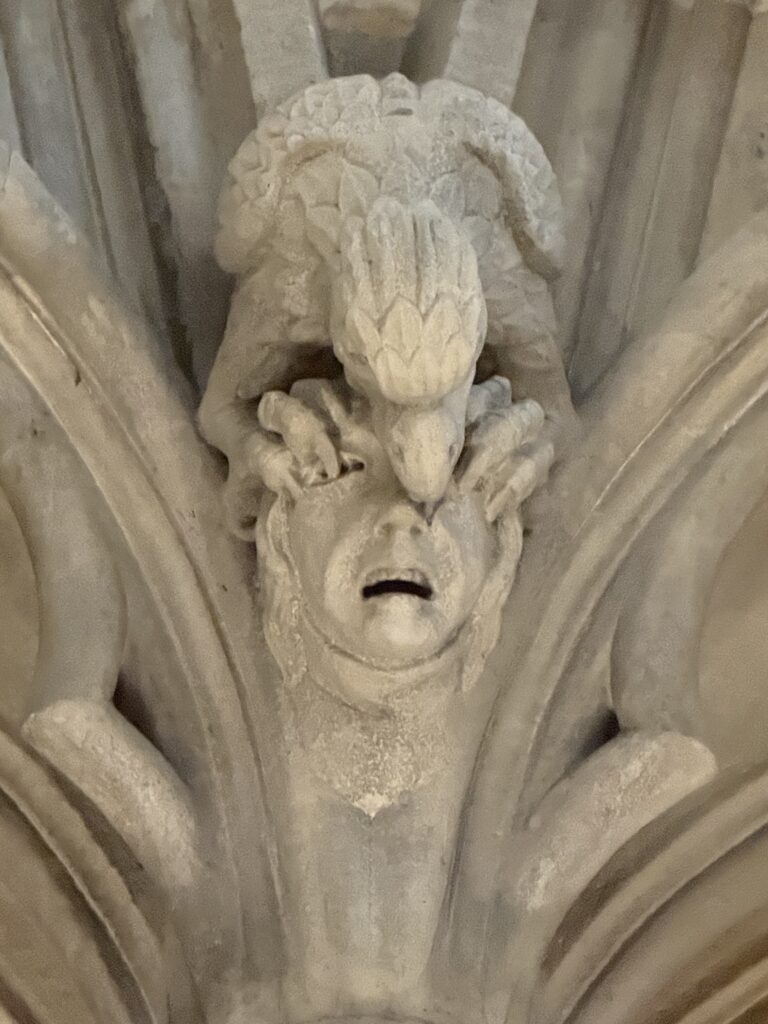
One aspect of old churches that has always intrigued me is the license that was given to the stone carvers to make fanciful figures to intersperse between the serious ones. These are just a few of my favorites!

We wanted to eat at the Fat Badger, to honor Wisconsin, the Badger State, but there were no tables available, so we found a quaint place with indifferent food, sharing an order of “chicken with dirty fries,” that turned out to be essentially chicken nachos with French fries instead of tortilla chips. Odd.

By that time, we were ready to go back to our room and put our feet up. Five miles on concrete and cobblestones are harder than 10 miles on the camino any day.

Now we are on our way to Conwy, in Northern Wales. We have heard that it is as beautiful as New Zealand, but the rain that is forecasted may dampen that impression. We’ll see.

Rain Catches Up With Us

We really have dodged a lot of the intermittent rain that is common for September in England, and yesterday we were doing pretty well, but…never leave home without your raincoat and umbrella!

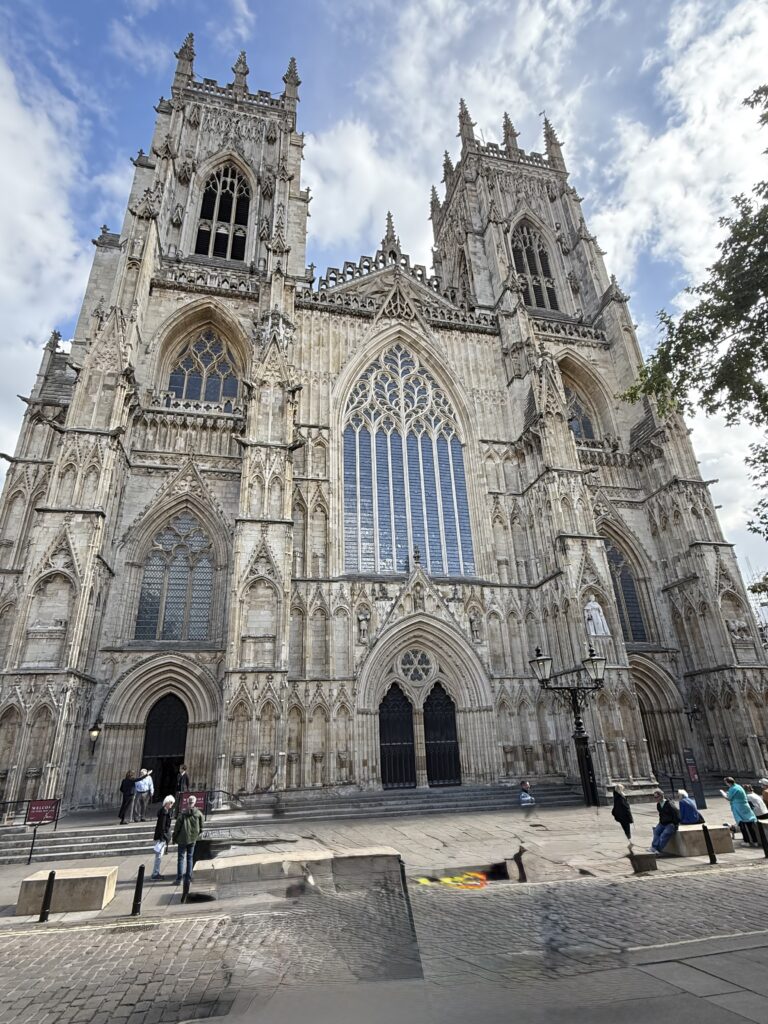
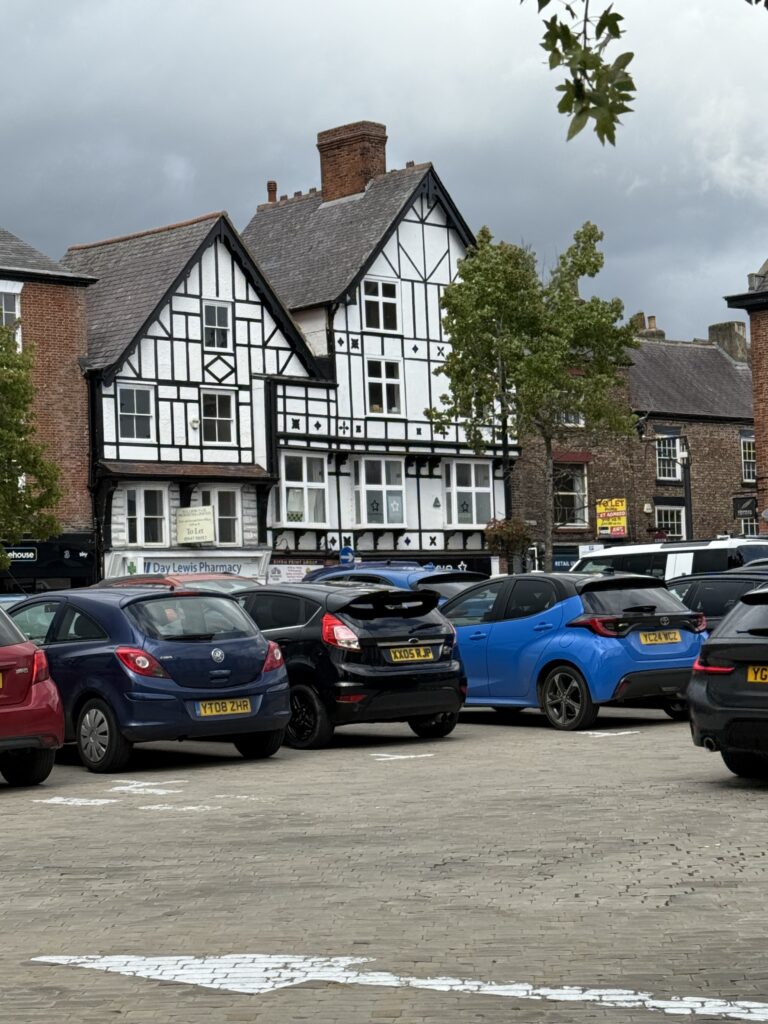
The 2-1/2 hour drive to York was uneventful, thanks to wider roads. And once we got here and could park our car, we felt unencumbered. We walked to view the exterior of York Minster, then explored the Shambles to find a cozy place for lunch.

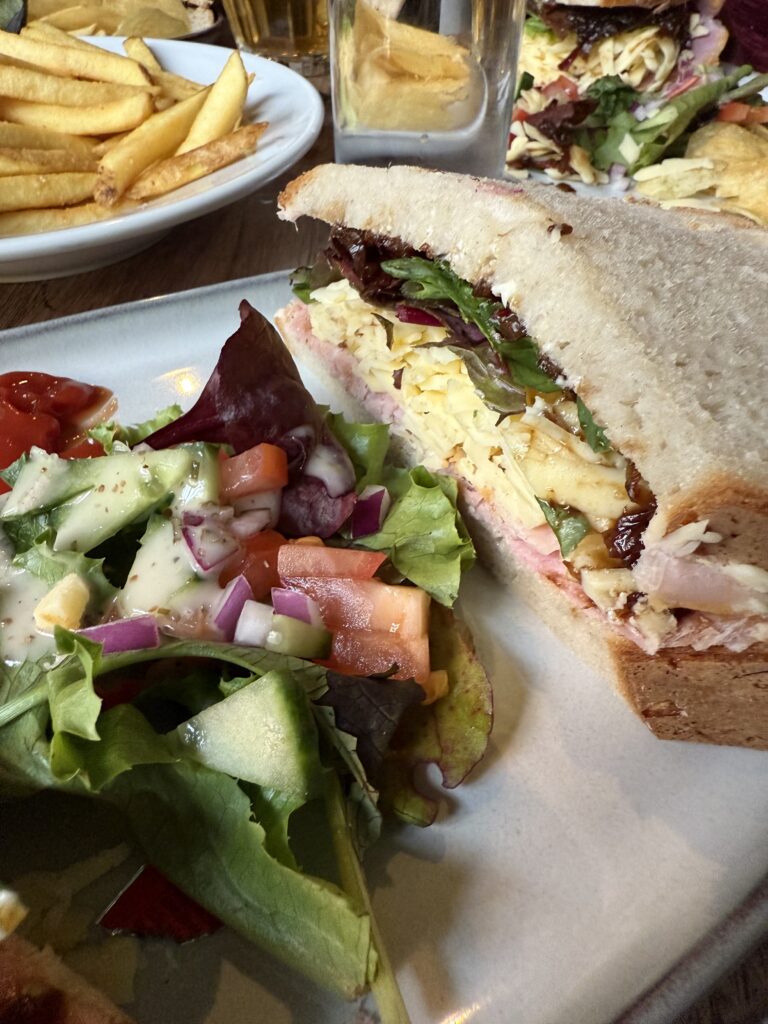
Too much lunch!

When we were finished, the rain was still coming down, so we went straight to York Minster, though we were early for our 3 pm tour. We ended up staying 4 hours!

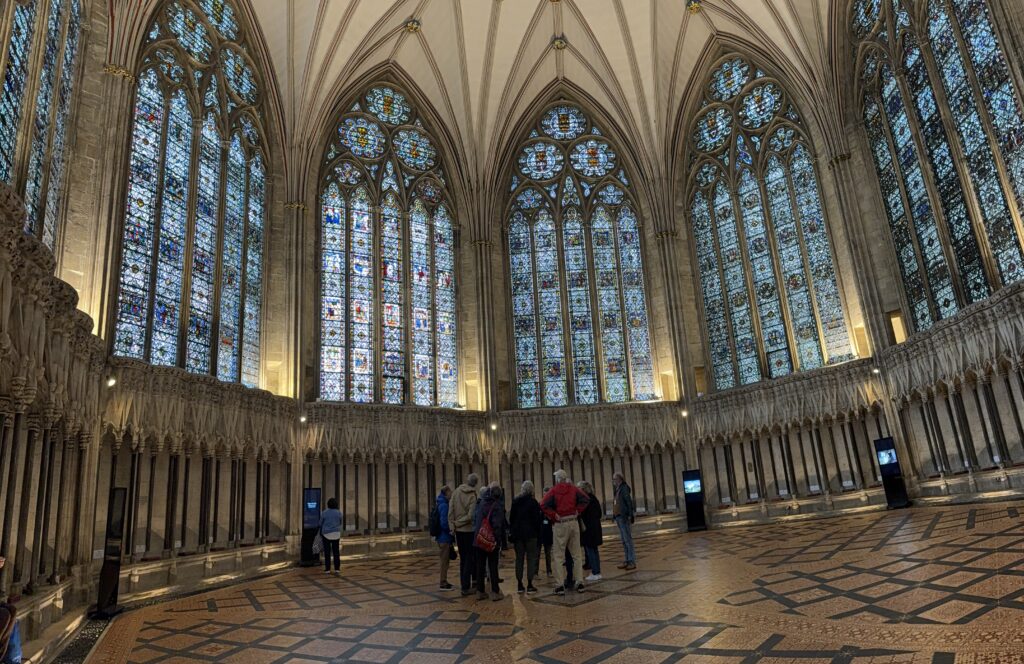
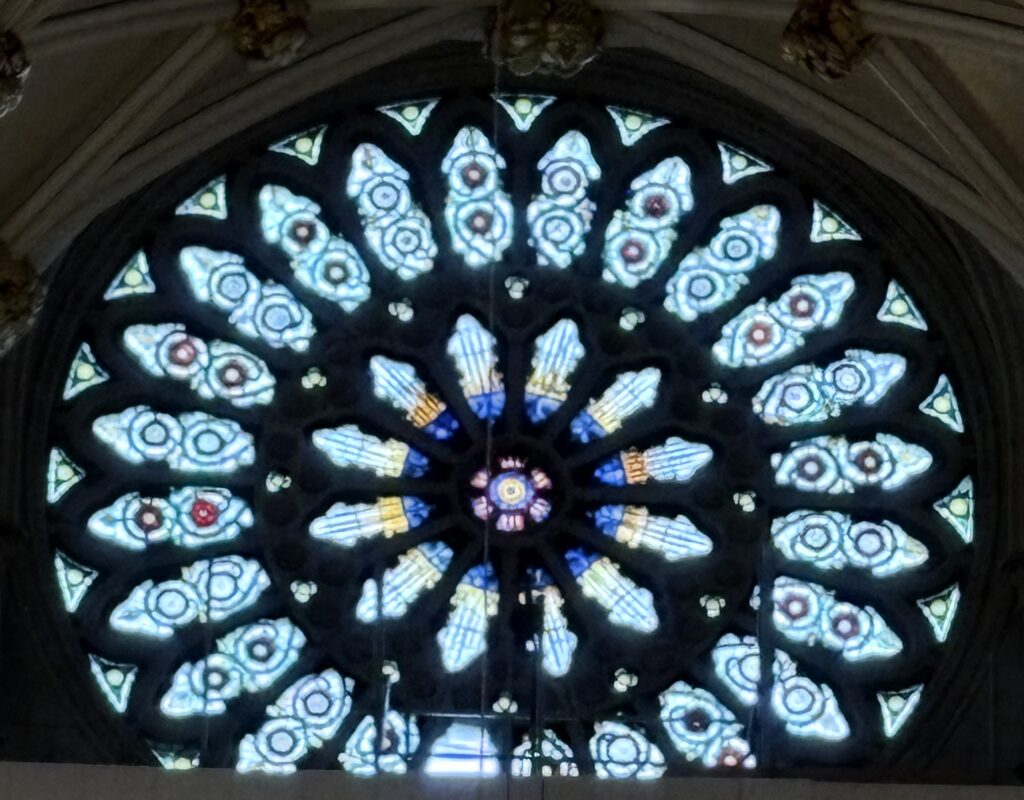
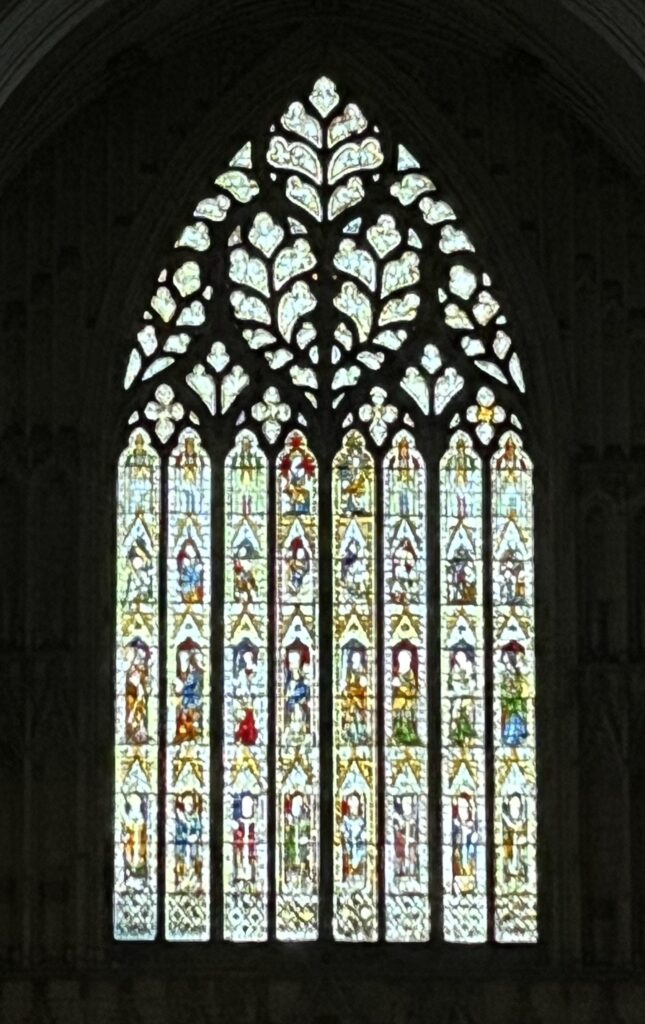
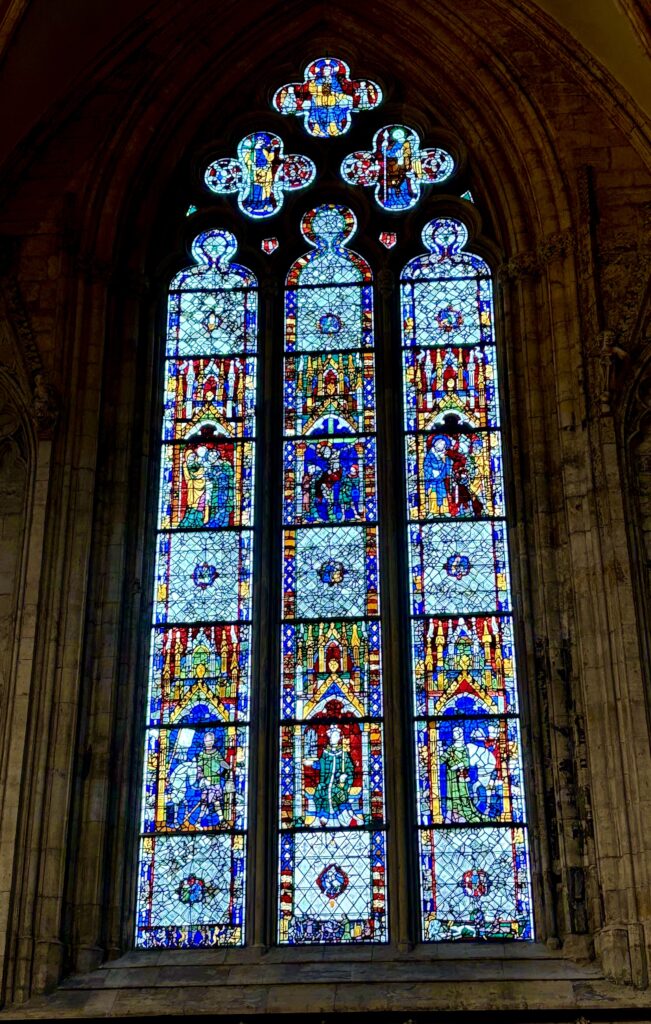
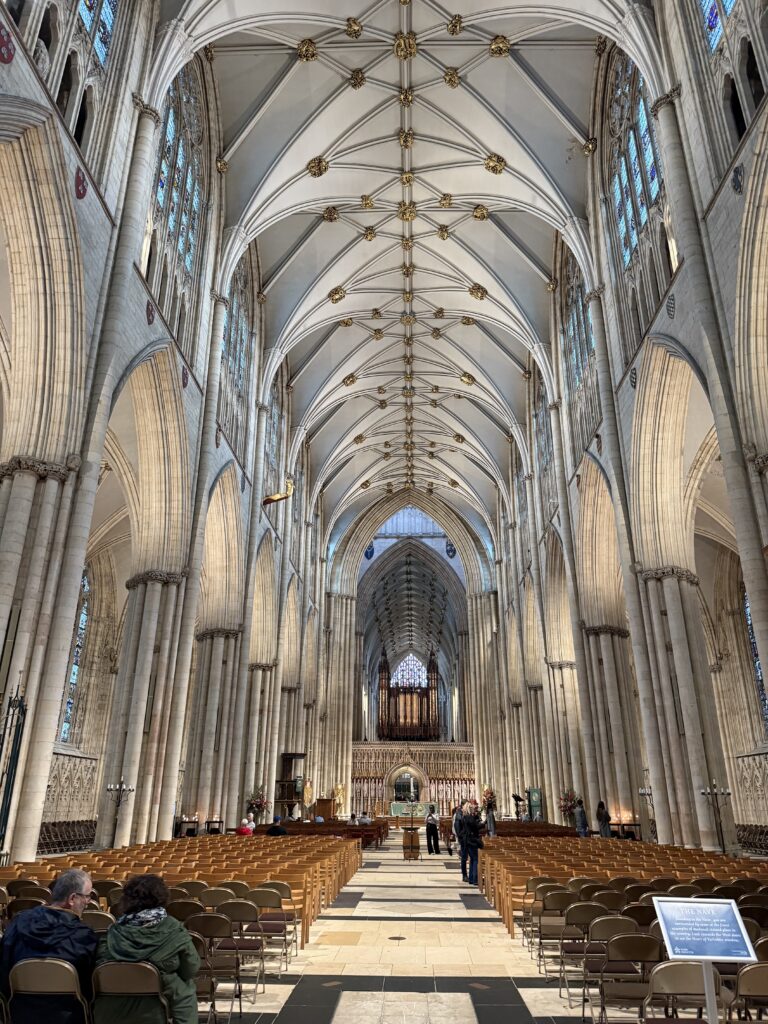
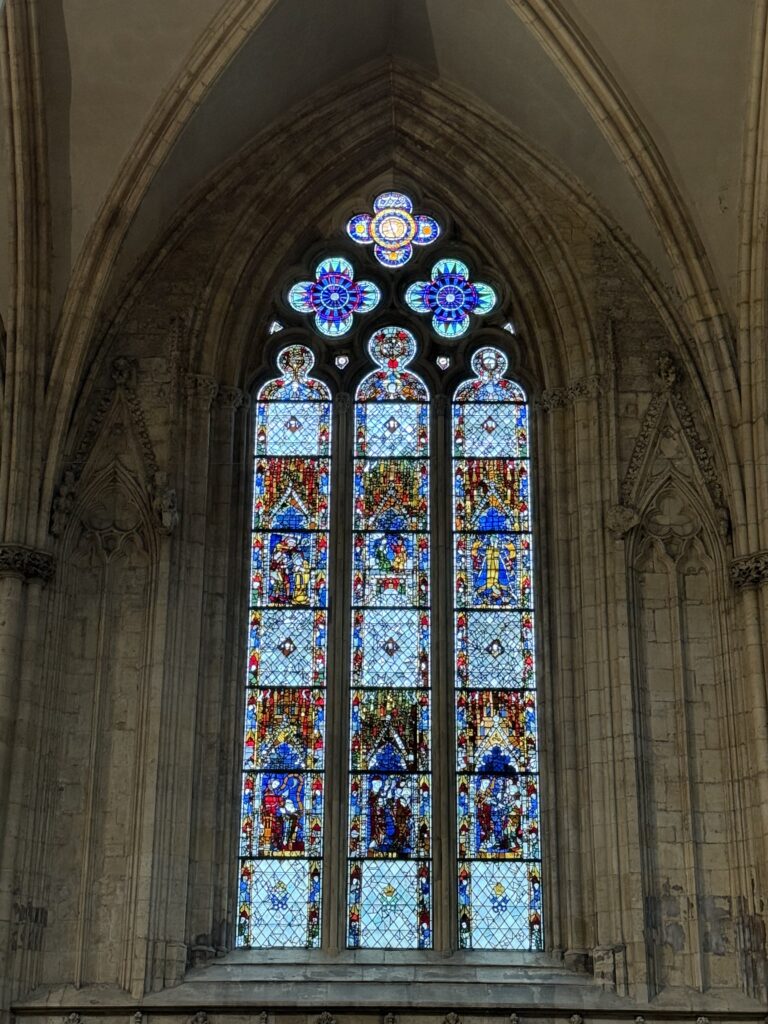
The church began as a monastery in the 7th century, then on that site they built a Norman style church, and finally the Gothic behemoth of today, begun in 1220 and finished 250 years later. It has more medieval stained glass than all the rest of England. It is stunning.
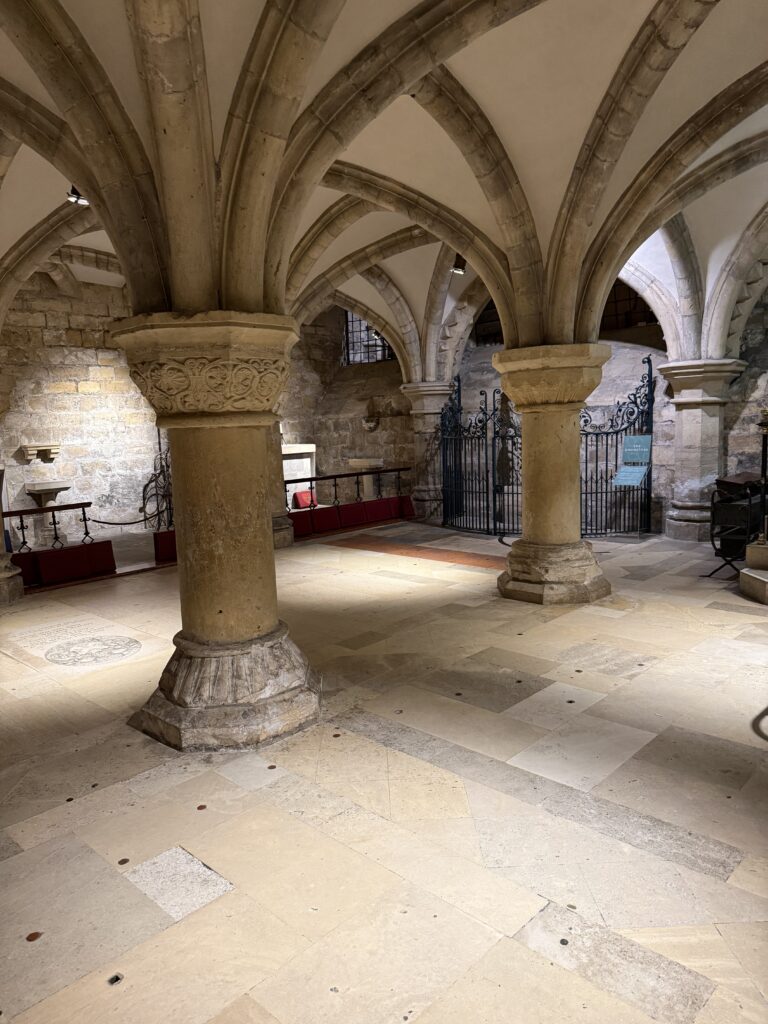
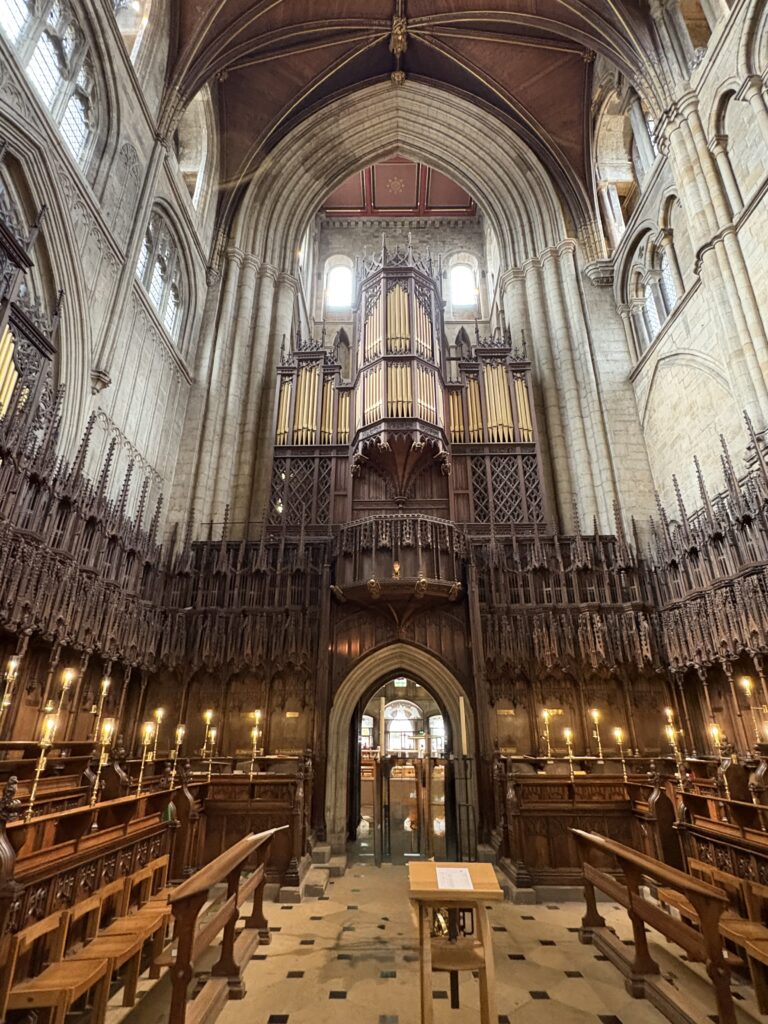
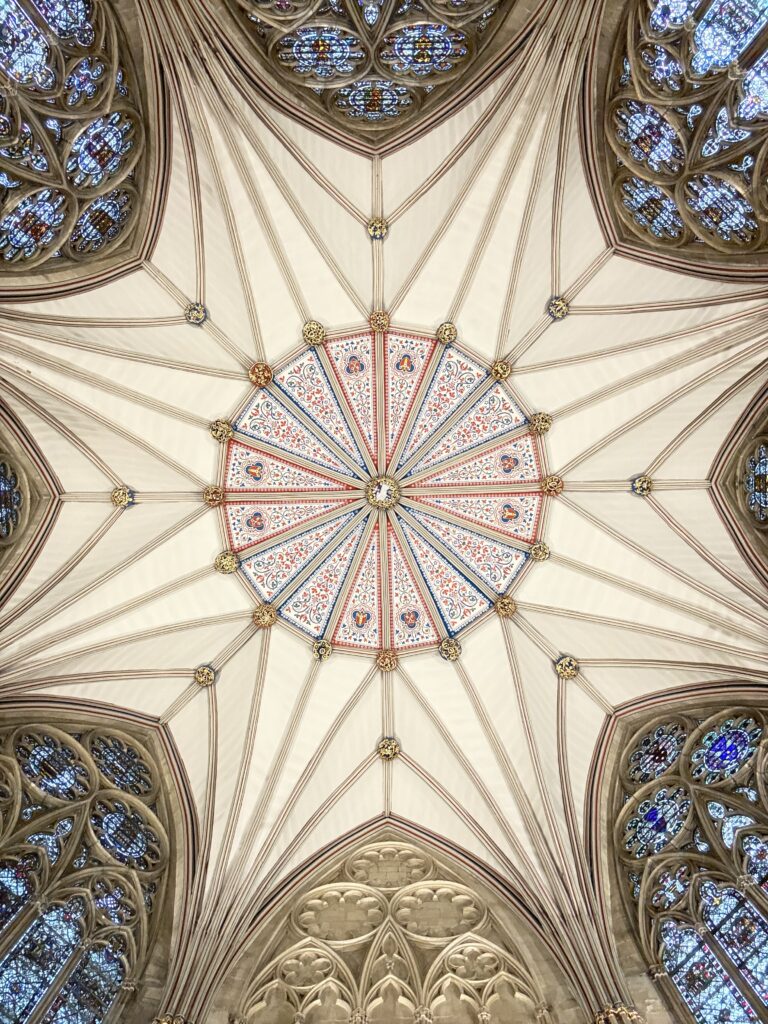
Here are pictures of the crypt, the choir and the ceiling of the Chapter house.

Because we just stayed after our tour, we were first in line for Evensong, and got to sit right beside the choir. The choir was gorgeous, with two rows of the most ethereal boy choir voices, blended with adult altos, tenors and basses, and led by a great choirmaster. The service, in the ancient, beautiful surroundings, brought me to tears.

Dinner was light (no one was hungry after that lunch!), then we came back to our B&B to relax. Let it rain!

Lotta Sittin’

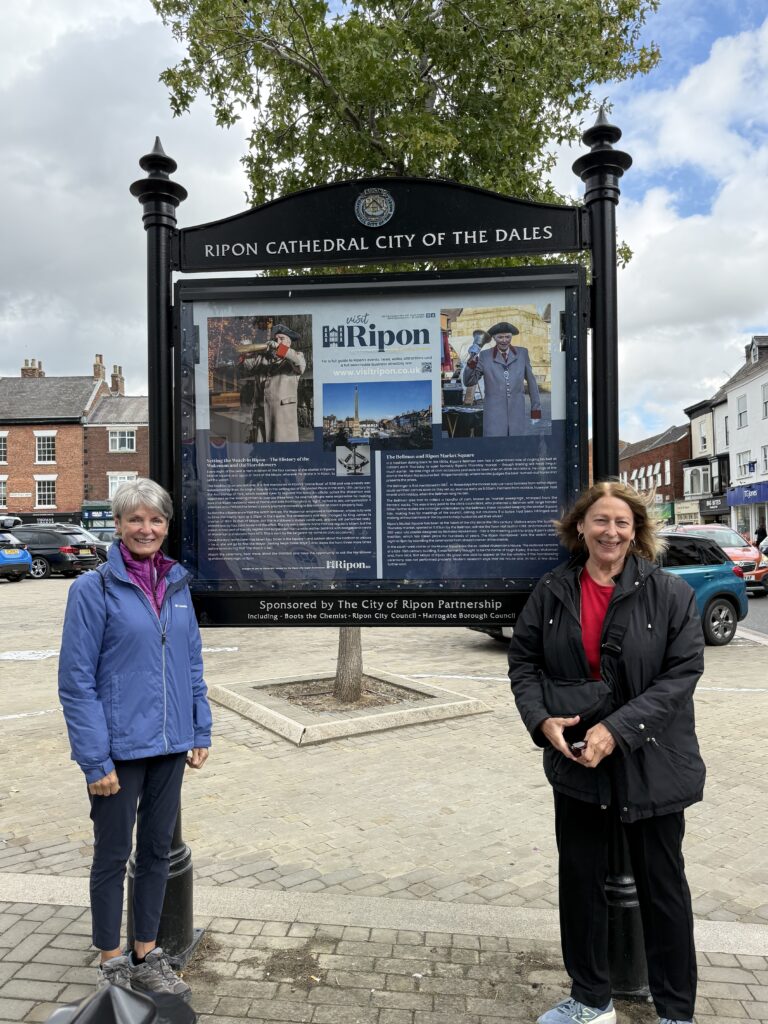
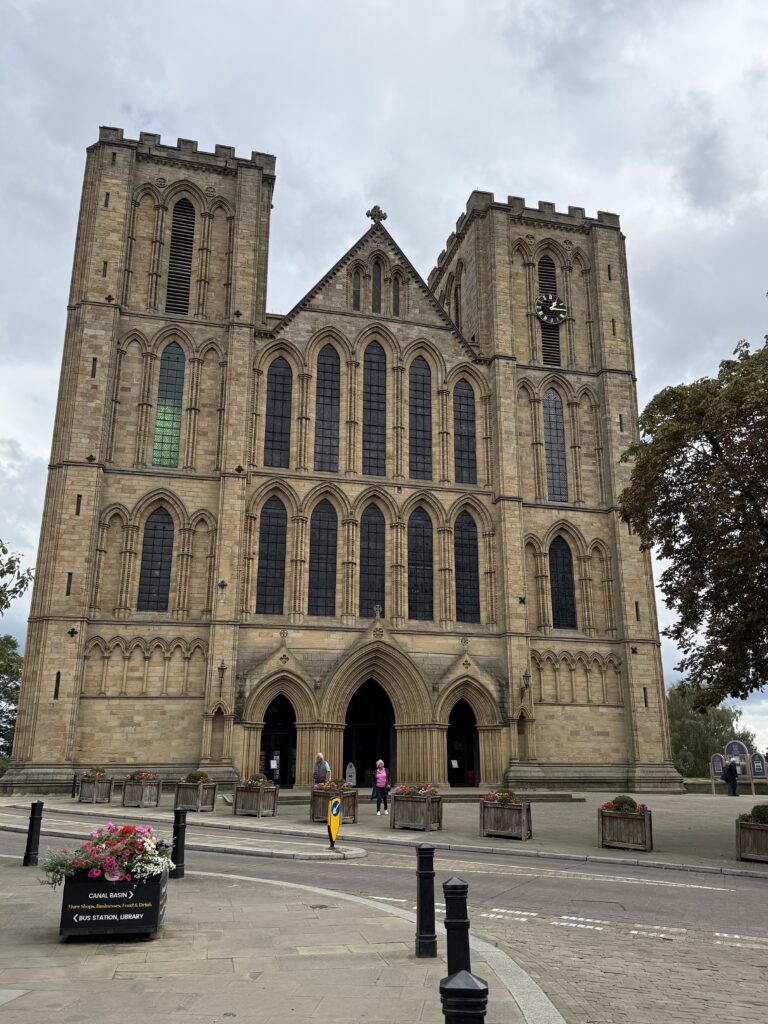
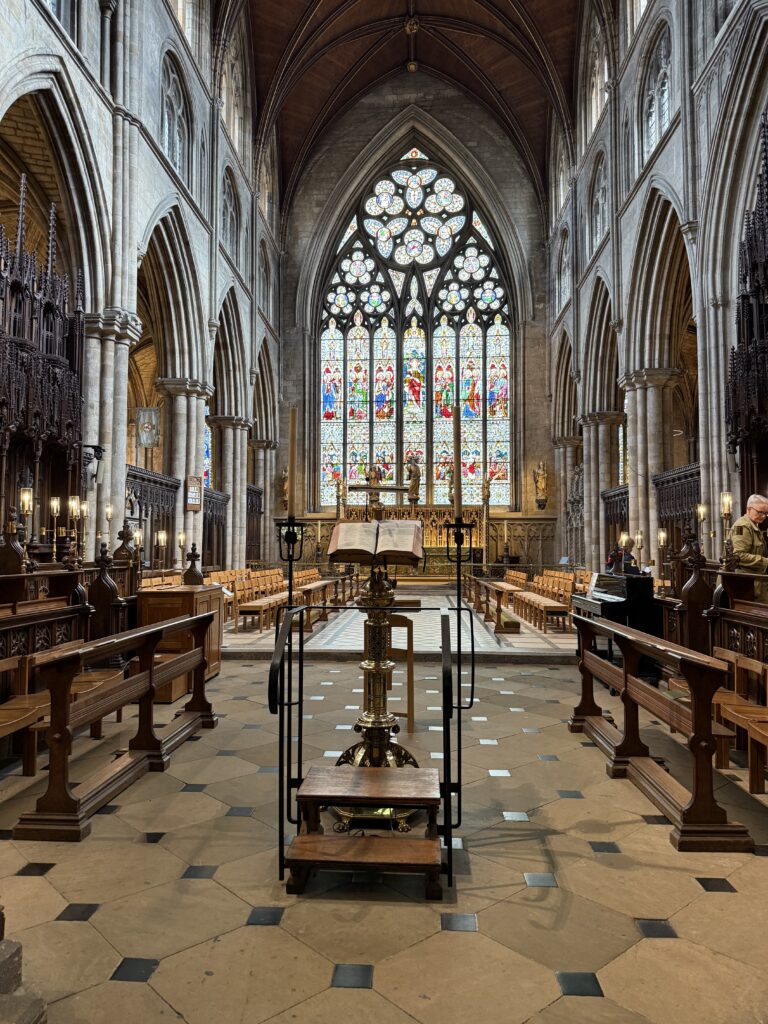
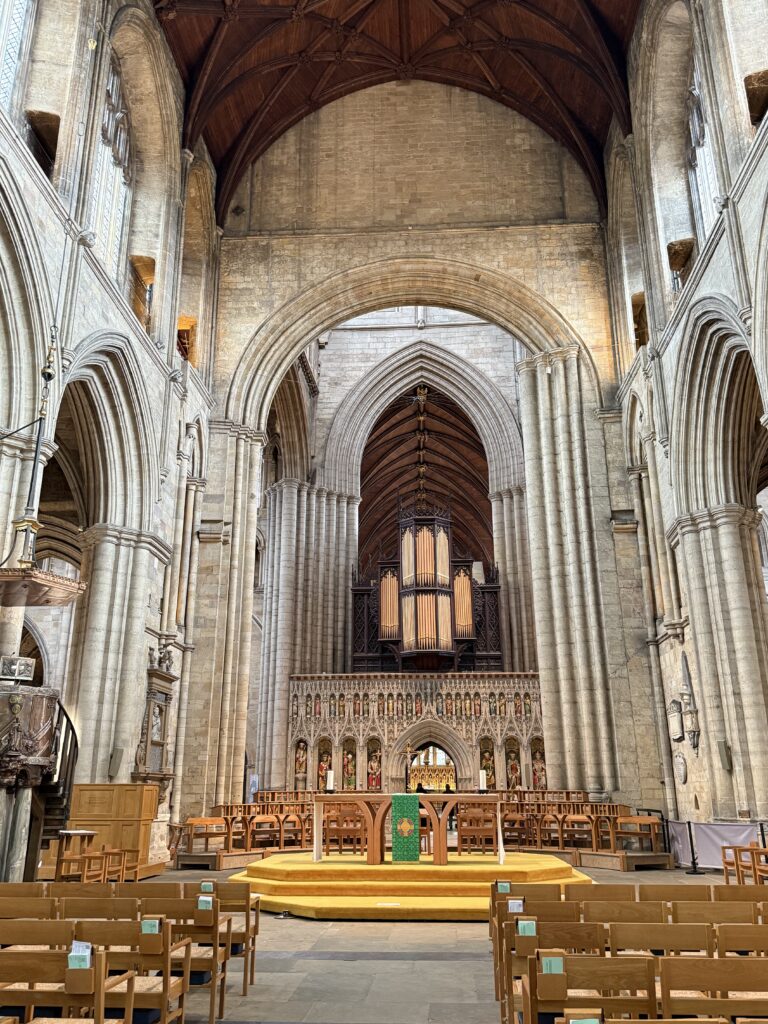
Yesterday (Wednesday, September 10) was our day to explore the Yorkshire Dales, the land to the east of the Lake District, where All Creatures Great and Small was filmed. We decided to drive on larger roads all the way to Ripon. Mary and Elaine were raised in Ripon, Wisconsin, and my great-grandfather grew up there as well. We were surprised by how lovely the town was, and how impressive was the cathedral!

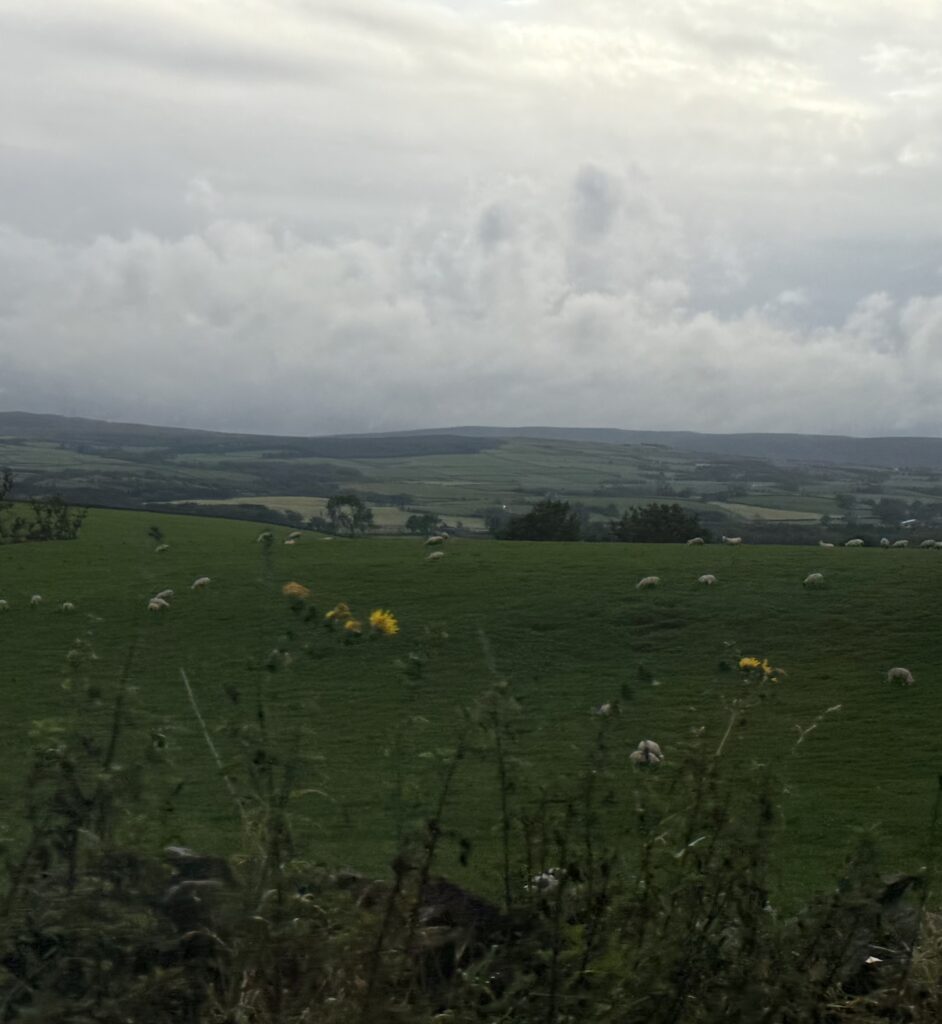
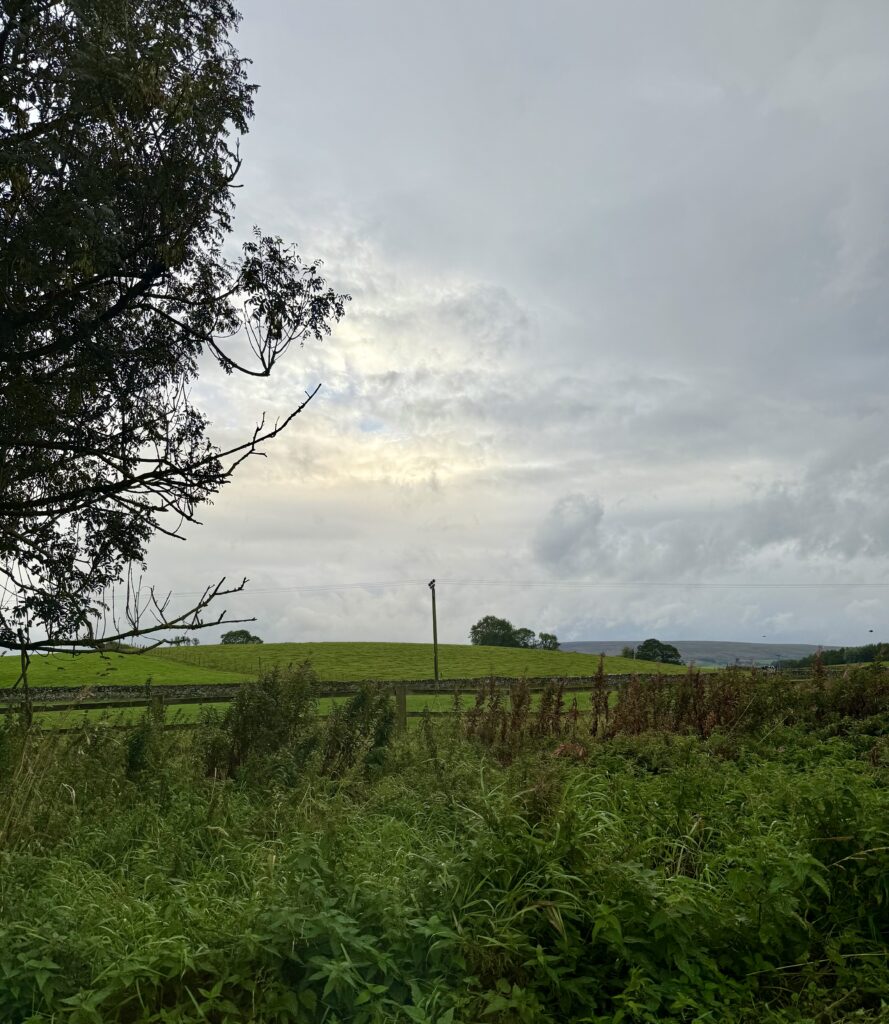
The weather was rainy and cloudy enough to make it difficult to take pictures of the beautiful landscapes. Gone were the towering hills of the Lake District, replaced by tidy fields of green, criss-crossed with sturdy stone fences. There were many more cattle here than we have seen before, and more trees. (The Lake District hills are curiously barren, save for heather.) In many ways it reminded us of Wisconsin, minus the corn fields.

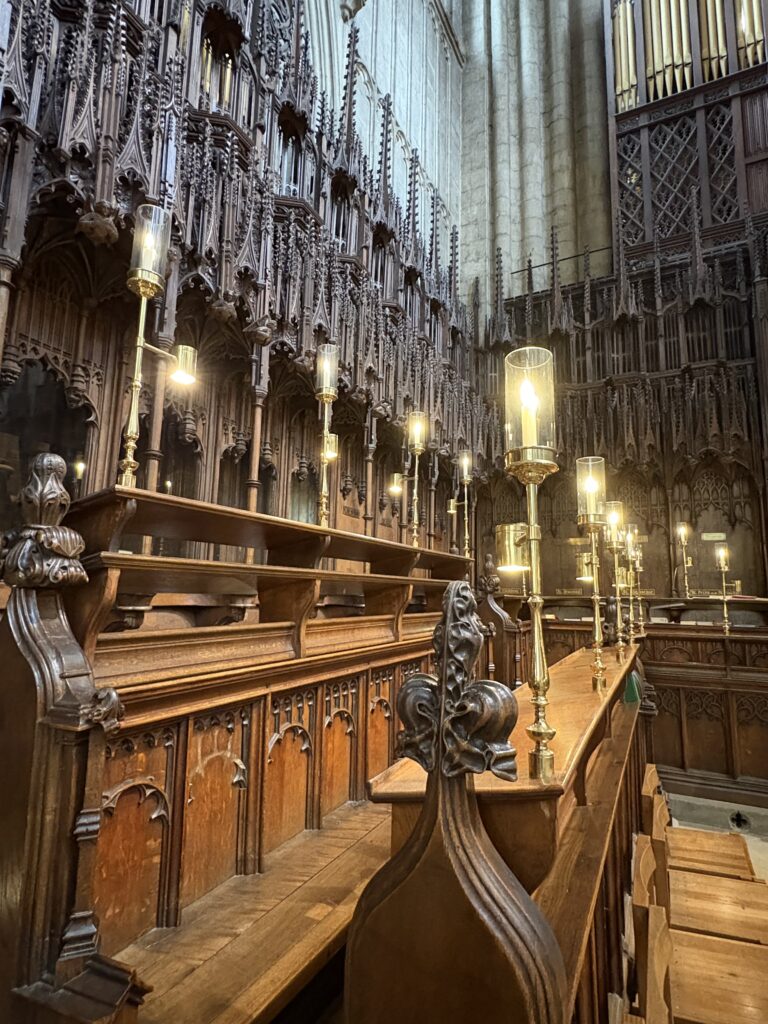
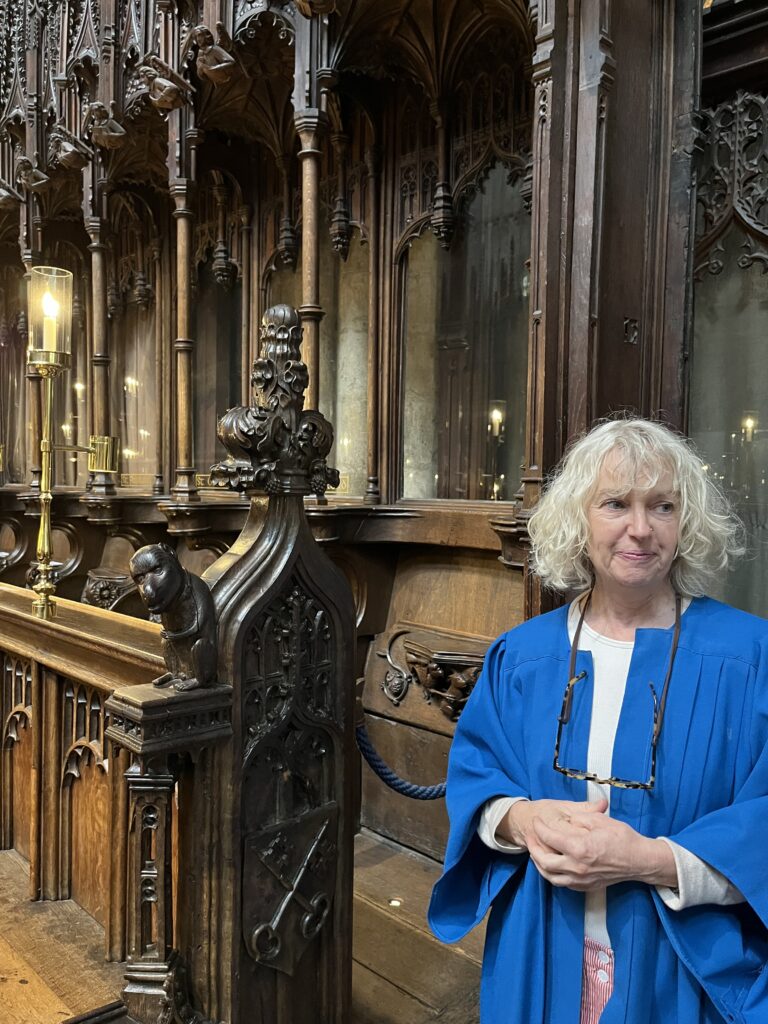
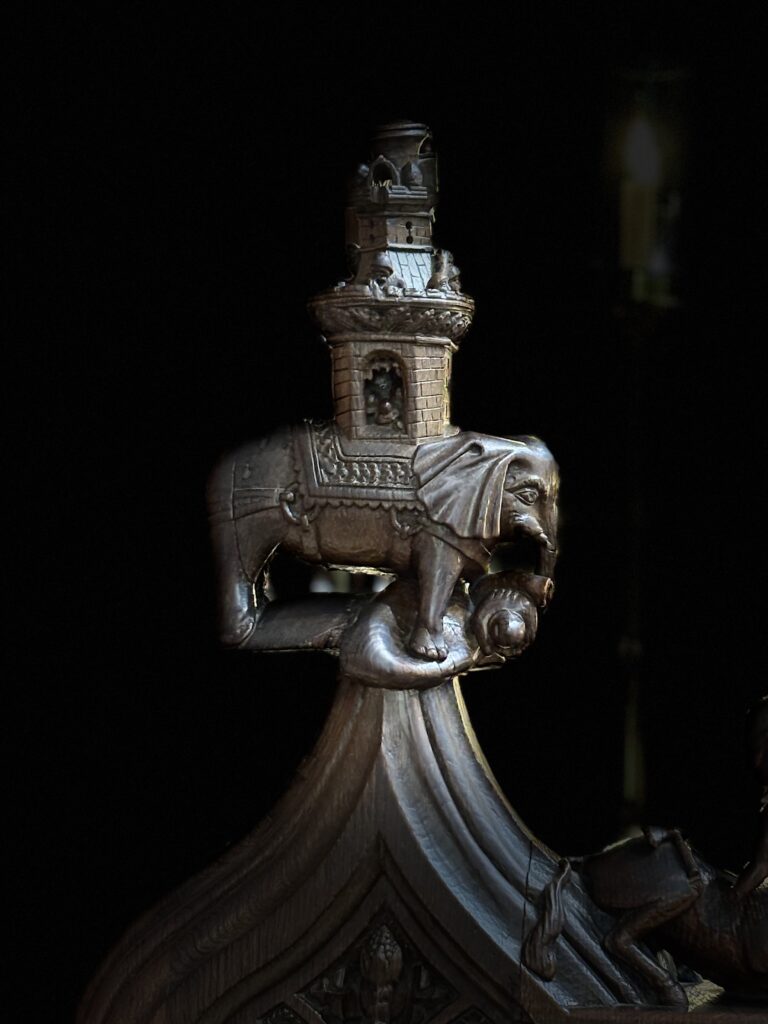
The cathedral started as a monastery in 627, and has been functioning ever since. It has seen fires and a tower collapse and expansions, so it is a mixture of different styles. A lovely guide told us the most wonderful stories. She showed us the carvings in the choir seating, including an elaborate one of an elephant with a church on its back. She explained that in medieval times, the people (who had only heard of, but never seen elephants) thought elephants reproduced by “chaste reproduction.” They couldn’t imagine two elephants having sex. So when Oliver Cromwell went around ordering all churches to take out representations of the Virgin Mary, they carved elephants instead. Fascinating.

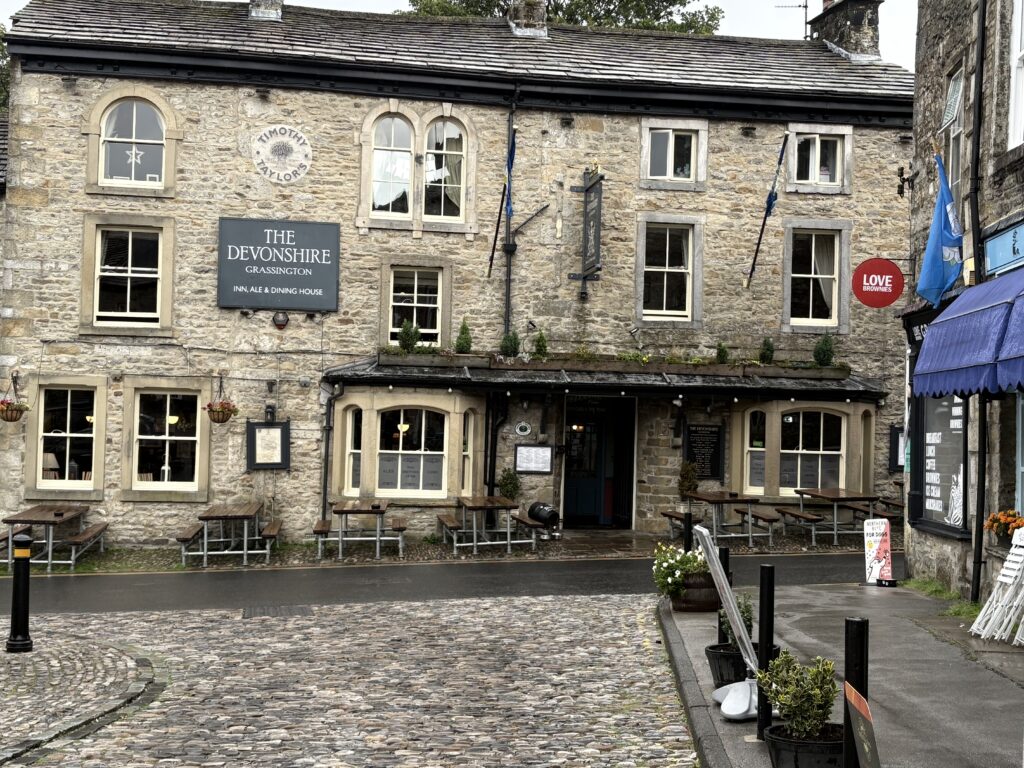
After wandering around Ripon, lunching at a sweet old cafe and touring the cathedral, we got back in the car to drive to Grassington. It was fun to walk the cobblestoned streets, see the old stone buildings and pop into the Drovers Arms for a quick ginger beer before heading home.

Driving was again quite a slog, seemingly impossible to get anywhere without being on one lane roads, where you have to pull over onto a cutout every time another car comes by. And then we got stuck in a lot of construction, where the speed limit was sometimes 10 miles per hour. By the time we got home, it was after 8 and we were too tired to go out for dinner, fixing pasta and cheese and crackers for dinner instead. We have another long drive today, to York, but then we will park the car for 2 days and walk everywhere. That should go a long way towards soothing our nerves. We are ready to stop sitting!

« Older posts

© 2025 Wanderer

Theme by Anders NorenUp ↑